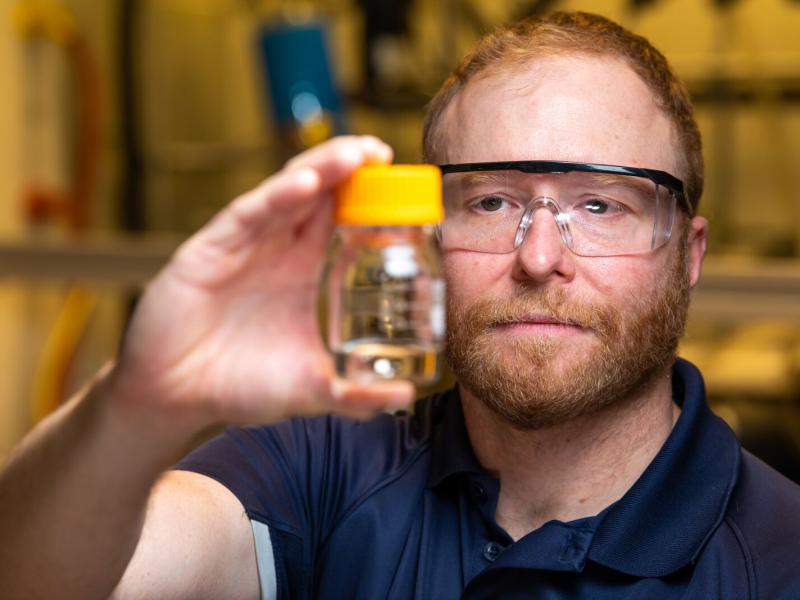
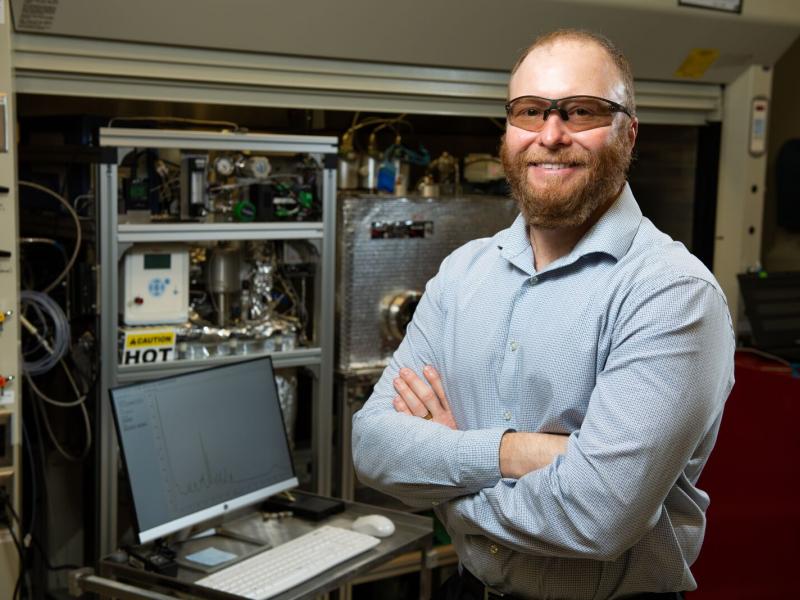
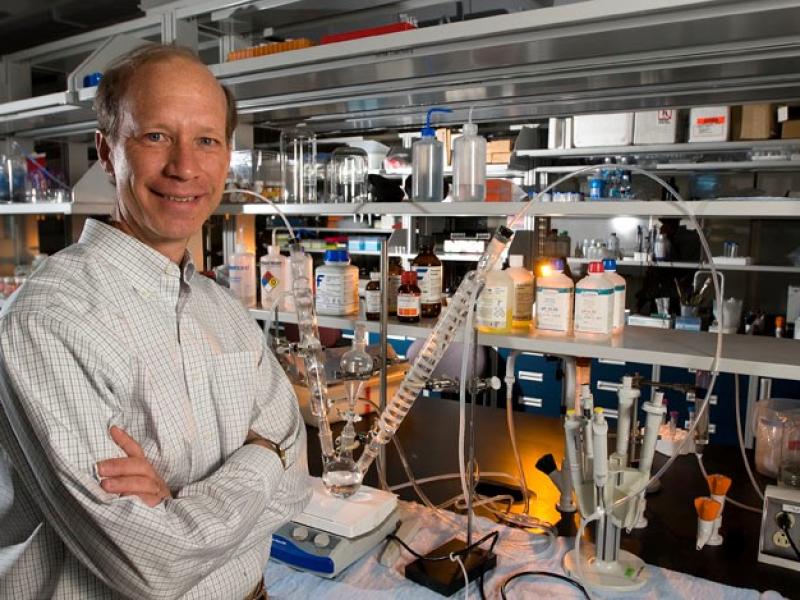
This PNNL project was the focus of Nune’s talk when he delivered the keynote for the Carbon Capture and Utilization track at the 2nd Annual Baker Hughes Energy Frontiers Summit.
PNNL scientists carve a path to profit from carbon capture by creating a system that efficiently captures CO2 and converts it into one of the world’s most widely used chemicals: methanol.
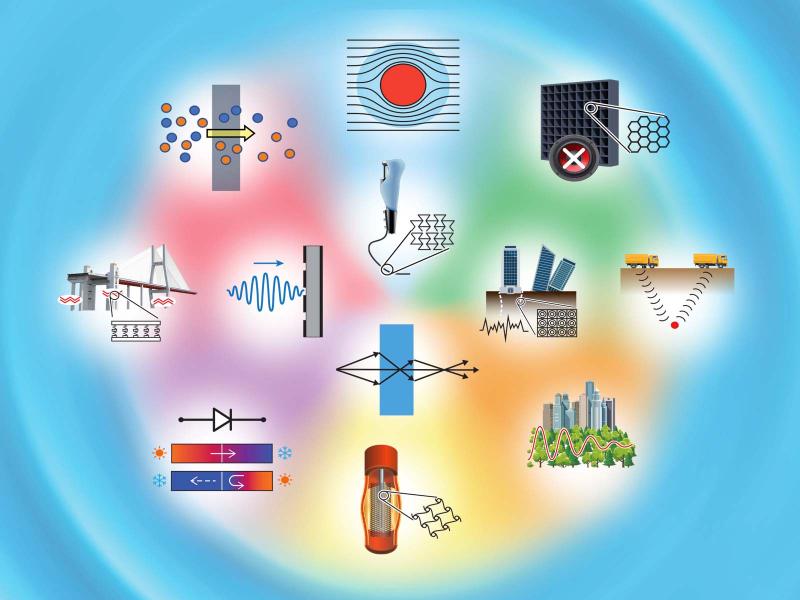
A review article led by researcher Jade Holliman explores the different classes of metamaterials, from the underlying fundamental science to potential applications.
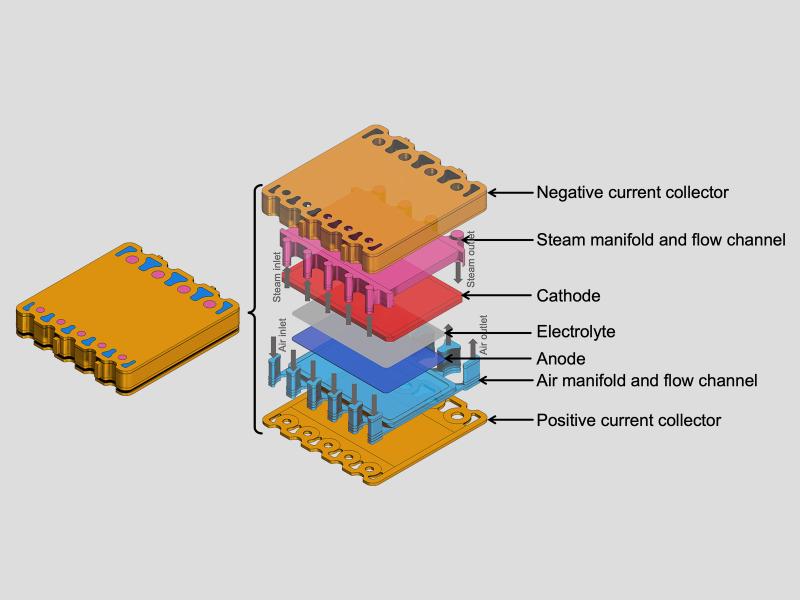
A PNNL team developed and used a model framework to understand the performance and structural reliability of a state-of-the-art solid oxide electrolysis cell design.
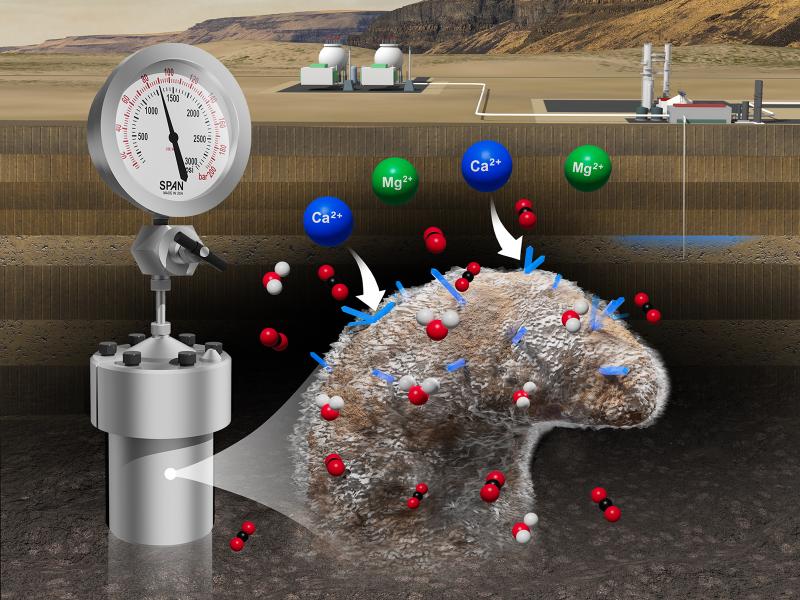
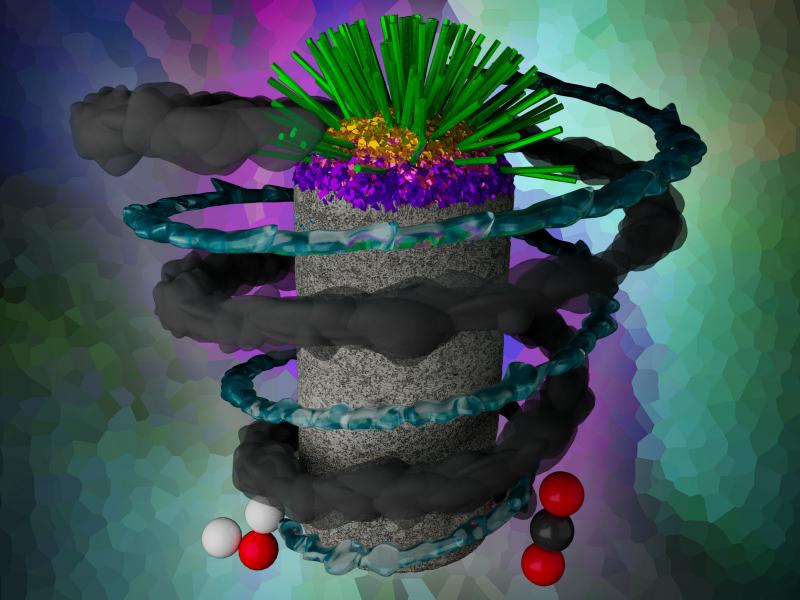
Some rocks can potentially convert injected carbon dioxide into more stable solid minerals. A new review article explores what scientists know about the atom-by-atom process.
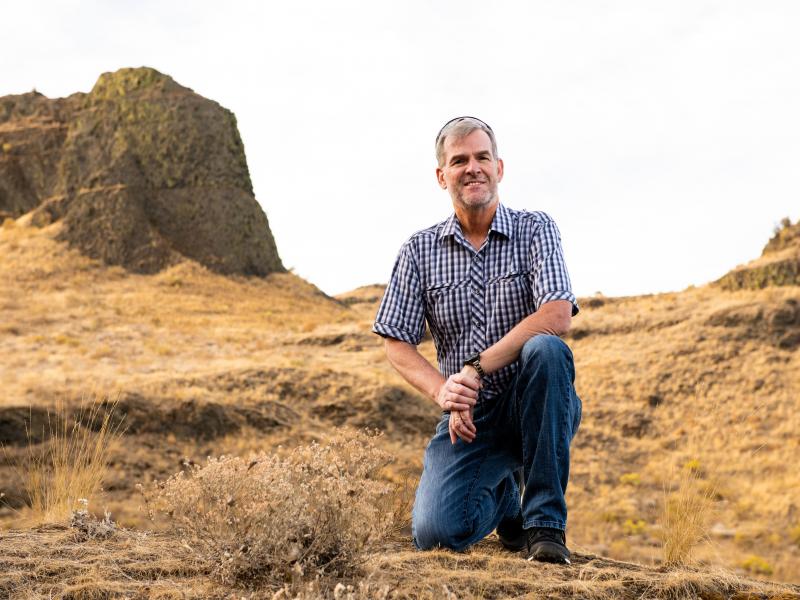
Tim C. Johnson was awarded the Frank Frischknecht Leadership Award this spring at the 34th Symposium on the Application of Geophysics of Engineering and Environmental Problems held in Denver, Colorado.
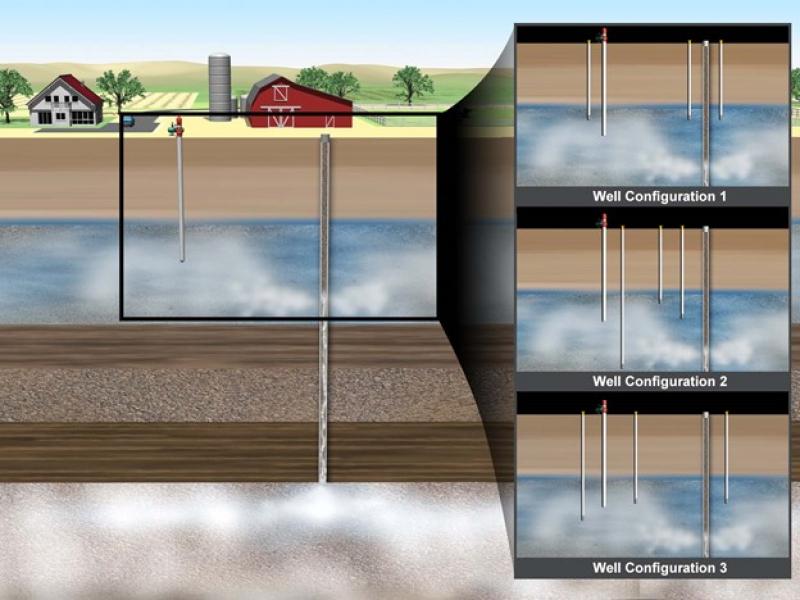
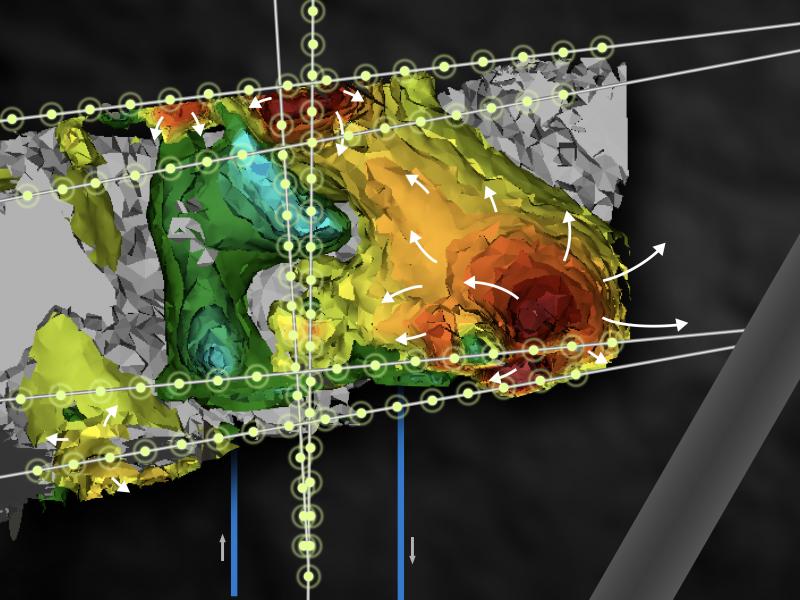
Updated flexible software generates and optimizes monitoring programs for detecting potential leaks from geological carbon storage with an enhanced user experience.
A new perspective article discusses how integrating carbon dioxide capture and conversion in solvents can lead to cheaper and more efficient carbon management systems.
This PNNL-developed separation system quickly and successfully separates larger particles from smaller ones at various scales, in different solid-liquid mixtures and at different flow rates.
PNNL’s Mike Hochella receives Geochemical Society’s Patterson Award and ACS Geochemistry medal for discovery of toxic particles produced during coal combustion.