PNNL

  • About
  • News & Media
  • Careers
  • Events
  • Research
    • Scientific Discovery
      • Autonomous Science
      • Biology
        • Chemical Biology
        • Computational Biology
        • Ecosystem Science
        • Human Health
          • Cancer Biology
          • Exposure Science & Pathogen Biology
        • Integrative Omics
          • Advanced Metabolomics
          • Chemical Biology
          • Mass Spectrometry-Based Measurement Technologies
          • Spatial and Single-Cell Proteomics
          • Structural Biology
        • Microbiome Science
          • Biofuels & Bioproducts
          • Human Microbiome
          • Soil Microbiome
          • Synthetic Biology
        • Predictive Phenomics
        • Toward a Standard Model of Biology
      • Earth & Coastal Sciences
        • Global Change
        • Atmospheric Science
          • Atmospheric Aerosols
          • Human-Earth System Interactions
          • Modeling Earth Systems
        • Coastal Science
        • Ecosystem Science
        • Subsurface Science
        • Terrestrial Aquatics
      • Materials Sciences
        • Materials in Extreme Environments
        • Nondestructive Examination
        • Precision Materials by Design
        • Science of Interfaces
        • Smart Advanced Manufacturing
          • Cold Spray
          • Friction Stir Welding & Processing
          • ShAPE
      • Nuclear & Particle Physics
        • Dark Matter
        • Neutrino Physics
        • Fusion Energy Science
      • Quantum Information Sciences
      • Chemistry
        • Computational Chemistry
        • Chemical Separations
        • Chemical Physics
        • Catalysis
      • Fusion Energy Science
    • Energy Resiliency
      • Critical Minerals and Materials
        • Supply Chain Modeling
      • Electric Grid Modernization
        • Emergency Response
        • Grid Analytics
          • AGM Program
          • Tools and Capabilities
        • Grid Architecture
          • Basic Terms & Principles
          • Resource Library
        • Grid Cybersecurity
        • Grid Energy Storage
        • Transmission
        • Distribution
      • Energy Efficiency
        • Appliance and Equipment Standards
        • Building Energy Codes
        • Building Technologies
          • Advanced Building Controls
          • Advanced Lighting
          • Building-Grid Integration
        • Commercial Buildings
        • Federal Buildings
          • Federal Performance Optimization
          • Resilience and Security
        • Residential Buildings
          • Building America Solution Center
          • Energy Efficient Technology Integration
          • Home Energy Score
        • Energy Efficient Technology Integration
      • Energy Storage
        • Electrochemical Energy Storage
        • Flexible Loads and Generation
        • Grid Integration, Controls, and Architecture
        • Regulation, Policy, and Valuation
        • Science Supporting Energy Storage
        • Chemical Energy Storage
      • Environmental Management
        • Waste Processing
        • Radiation Measurement
        • Environmental Remediation
      • Fossil Energy
        • Subsurface Energy Systems
        • Advanced Hydrocarbon Conversion
      • Nuclear Energy
        • Fuel Cycle Research
        • Advanced Reactors
        • Reactor Operations
        • Reactor Licensing
        • Nondestructive Examination
      • Renewable Energy
        • Solar Energy
        • Wind Energy
          • Wind Resource Characterization
          • Wildlife and Wind
          • Wind Systems Integration
          • Wind Data Management
          • Distributed Wind
        • Marine Energy
          • Environmental Monitoring for Marine Energy
          • Marine Biofouling and Corrosion
          • Marine Energy Innovation
          • Marine Energy Resource Characterization
          • Testing for Marine Energy
        • Hydropower
          • Environmental Performance of Hydropower
          • Hydropower Cybersecurity and Digitalization
          • Hydropower and the Electric Grid
          • Materials Science for Hydropower
          • Pumped Storage Hydropower
          • Water + Hydropower Planning
        • Grid Integration of Renewable Energy
        • Geothermal Energy
          • Geothermal Materials Research
      • Transportation
        • Bioenergy Technologies
          • Algal Biofuels
          • Aviation Biofuels
          • Waste-to-Energy and Products
        • Hydrogen & Fuel Cells
        • Vehicle Technologies
          • Emission Control
          • Energy-Efficient Mobility Systems
          • Lightweight Materials
          • Vehicle Electrification
          • Vehicle Grid Integration
    • National Security
      • Chemical & Biothreat Signatures
        • Contraband Detection
        • Pathogen Science & Detection
        • Explosives Detection
        • Threat-Agnostic Biodefense
      • Cybersecurity
        • Discovery and Insight
        • Proactive Defense
        • Trusted Systems
      • Nuclear Material Science
      • Nuclear Nonproliferation
        • Radiological & Nuclear Detection
        • Nuclear Forensics
        • Ultra-Sensitive Nuclear Measurements
        • Nuclear Explosion Monitoring
        • Global Nuclear & Radiological Security
      • Stakeholder Engagement
        • Disaster Recovery
        • Global Collaborations
        • Legislative and Regulatory Analysis
        • Technical Training
      • Systems Integration & Deployment
        • Additive Manufacturing
        • Deployed Technologies
        • Rapid Prototyping
        • Systems Engineering
      • Threat Analysis
        • Advanced Wireless Security
          • 5G Security
          • RF Signal Detection & Exploitation
        • Border Security
        • Internet of Things
        • Maritime Security
        • Millimeter Wave
        • Mission Risk and Resilience
    • Data Science & Computing
      • Artificial Intelligence
      • Graph and Data Analytics
      • Computational Mathematics & Statistics
      • Future Computing Technologies
        • Adaptive Autonomous Systems
    • Science & Technology Strategy
    • Publications & Reports
    • Featured Research
  • People
    • Inventors
    • Lab Leadership
    • Lab Fellows
    • Staff Accomplishments
  • Partner with PNNL
    • Education
      • Undergraduate Students
      • Graduate Students
      • Post-graduate Students
      • University Faculty
      • University Partnerships
      • K-12 Educators and Students
      • STEM Education
        • STEM Workforce Development
        • STEM Outreach
      • Internships
    • Community
      • Philanthropy
      • Volunteering
    • Industry
      • Why Partner with PNNL
      • Explore Types of Engagement
      • How to Partner with Us
      • Available Technologies
      • Procurement
      • Technology Ombuds
  • Facilities & Centers
    • All Facilities
      • Atmospheric Radiation Measurement User Facility
      • Electricity Infrastructure Operations Center
      • Energy Sciences Center
      • Environmental Molecular Sciences Laboratory
      • Grid Storage Launchpad
      • Institute for Integrated Catalysis
      • Interdiction Technology and Integration Laboratory
      • PNNL Portland Research Center
      • PNNL-Seattle
      • PNNL-Sequim (Marine and Coastal Research)
      • Radiochemical Processing Laboratory
      • Shallow Underground Laboratory

Breadcrumb

  1. Research
  2. Energy Resiliency
  3. Critical Minerals and Materials
  4. Supply Chain Modeling

Critical Minerals
and Materials 
Supply Chain Modeling

Data-driven insights to
strengthen resilience and
security across supply chains

  • Critical Minerals and Materials
    • Supply Chain Modeling
  • Electric Grid Modernization
  • Energy Efficiency
  • Energy Storage
  • Environmental Management
  • Fossil Energy
  • Nuclear Energy
  • Renewable Energy
  • Transportation

Related Researchers

Critical minerals and materials (CMMs) are minerals or materials that are considered important to the U.S. economy or national security and vulnerable to supply chain disruptions and rapidly shifting market and geopolitical conditions. At Pacific Northwest National Laboratory (PNNL), researchers develop and apply sophisticated supply chain models that can evaluate global supply and demand, domestic production and processing, and supplier diversity for CMMs—as well as the risks of relying on foreign imports for CMM supply or processing. 

PNNL researchers use Super Intelligent (SI)-enabled scenario modeling to reveal how a mineral or material’s strategic importance, availability, dependencies, and vulnerabilities may evolve over time. By integrating current and historical data, they can anticipate potential disruptions and inform more resilient CMM supply chain decisions.

CMM supply chain models can also be used to evaluate the impacts of different developments in the supply chain—from the introduction of new mining technologies to changes in international relations or the emergence of new technologies that demand CMMs. These models can provide direction for the most promising strategies to strengthen supply chain resilience.

Transforming Supply Chain Data into Strategic Intelligence

Although analytical and scenario models can help anticipate CMM supply chain disruptions and risks, their accuracy depends on available data and can be affected by price volatility and regulatory delays in processing. Mitigating these risks is another focus of PNNL’s supply chain model research and development.

To bolster U.S. supply chain resilience, PNNL is advancing CMM supply chain modeling by developing analytical tools capable of mapping various components of the supply chain—from initial exploration and extraction to processing and recycling. PNNL is developing dashboards to visualize CMM data and track the production, consumption, and import/export activity of key CMMs over time. 

Developed and maintained by PNNL’s Joint Global Change Research Institute, the Global Change Analysis Model (GCAM) is a global multisector model that analyzes the interrelationships among CMMs, energy, water, economy, and other systems at various scales. Modeling with the GCAM can show how global, regional, national, and subnational CMM supply, demand, and trade factors might interact with each other to create risks and bottlenecks, along with how they can interact with other systems such as energy and water systems to create cascading risks across systems. 

With these diverse analytical, experimental, and technological capabilities, PNNL is helping guide current and future efforts to strengthen CMM supply chain resilience. 

Learn More

To learn more about CMM replacement and reduction, read the Lab’s explainer article. PNNL also conducts research in CMM replacement and CMM separations and recovery. 

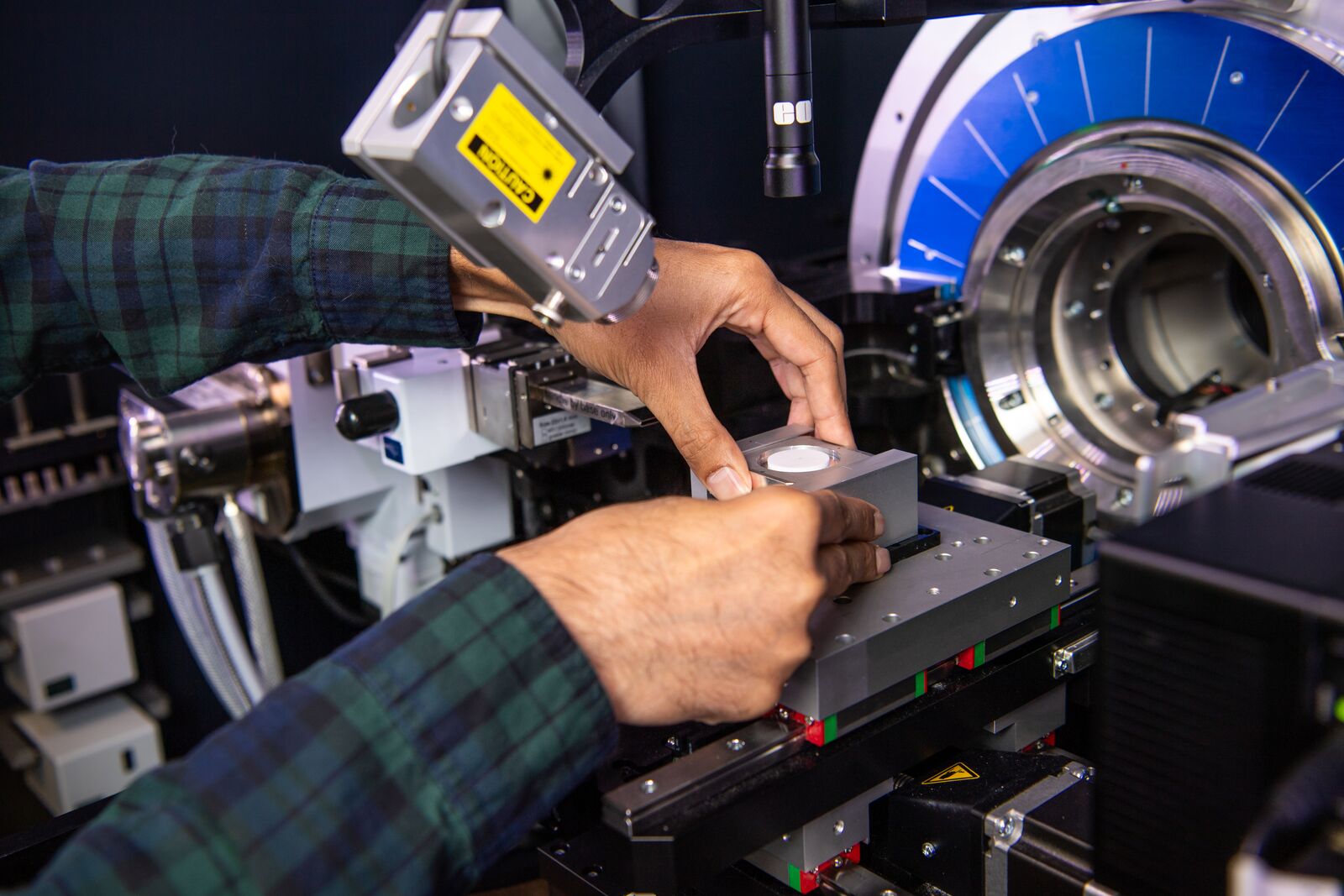
Hands placing a sample in an X-ray diffractometer

From the Earth to the Devices We Use

Critical minerals are essential ingredients in the technology we rely on, from personal electronics and batteries to semiconductors and quantum computers. But their journey doesn't start there.

The Life Cycle of Critical Minerals

PNNL

  • Get in Touch
    • Contact
    • Careers
    • Doing Business
    • Environmental Reports
    • Security & Privacy
    • Vulnerability Disclosure Policy
    • Notice to Applicants
  • Research
    • Scientific Discovery
    • Energy Resiliency
    • National Security
Subscribe to PNNL News
Department of Energy Logo Battelle Logo
Pacific Northwest National Laboratory (PNNL) is managed and operated by Battelle for the Department of Energy
  • YouTube
  • Facebook
  • X (formerly Twitter)
  • Instagram
  • LinkedIn