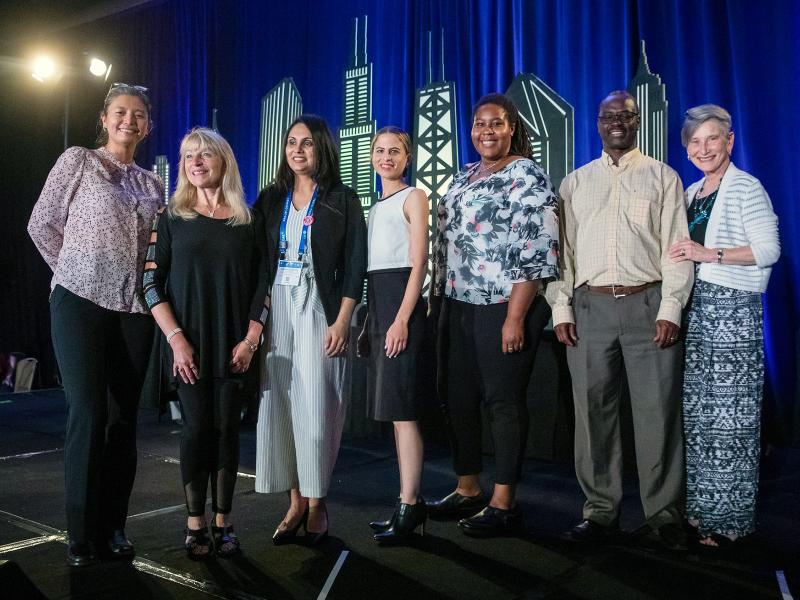
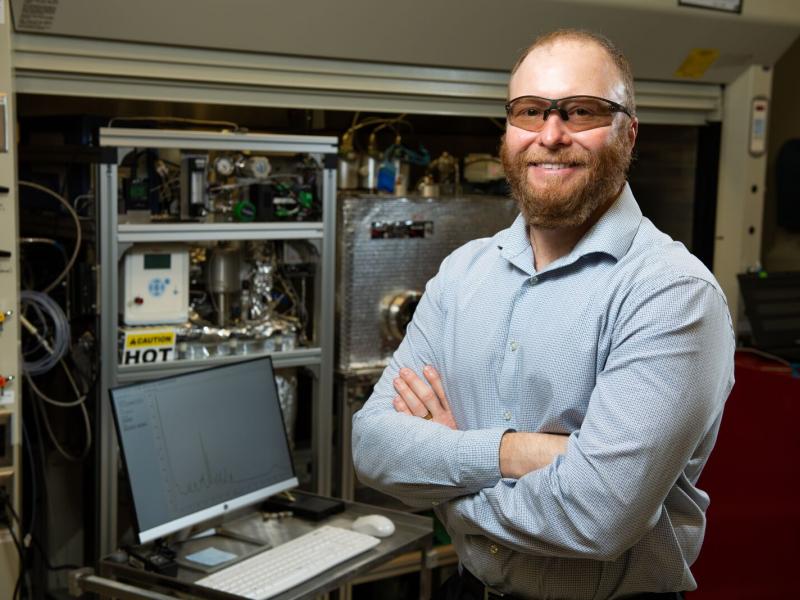
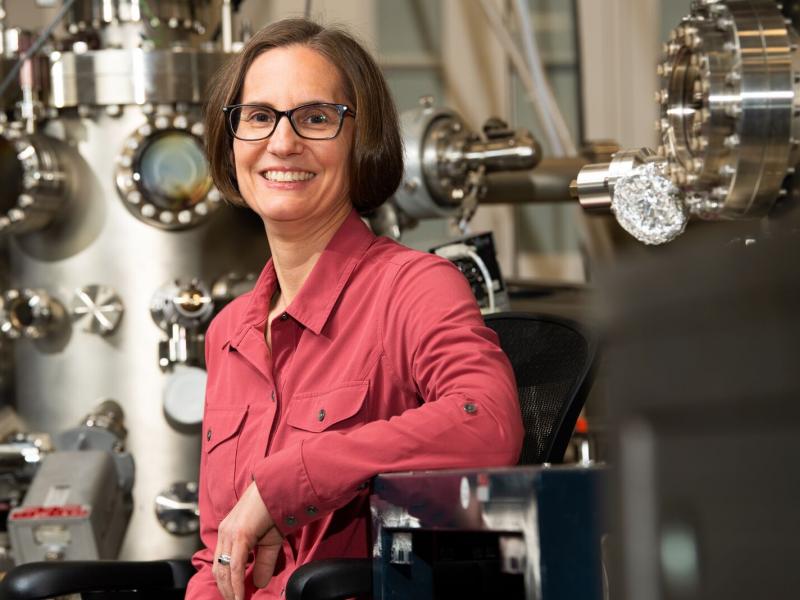
Tiffany Kaspar’s work has advanced the discovery and understanding of oxide materials, helping develop electronics, quantum computing, and energy production. She strives to communicate her science to the public.
A new longer-lasting sodium-ion battery design is much more durable and reliable in lab tests. After 300 charging cycles, it retained 90 percent of its charging capacity.
Three PNNL bioenergy experts have received adjunct appointments at Washington State University (WSU), working closely with the WSU-PNNL Bioproducts Institute and students.
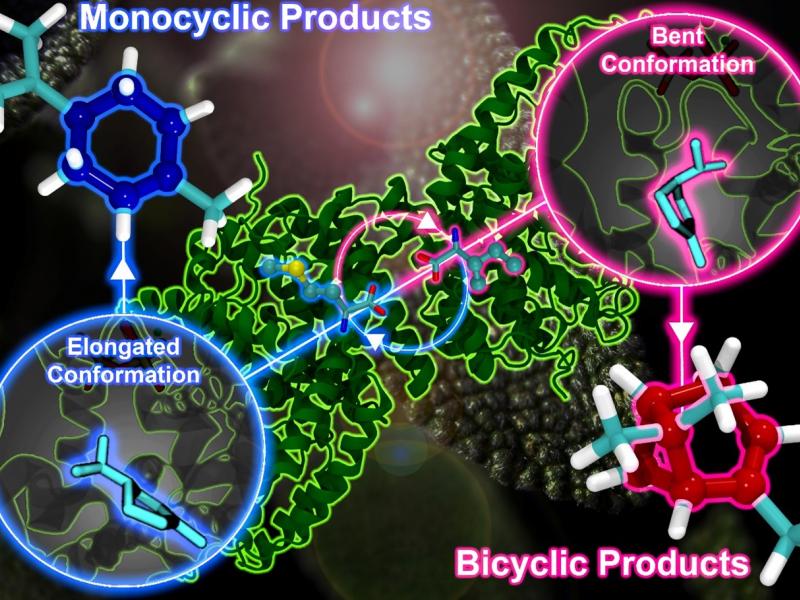
An innovative artificial enzyme has shown it can chew through woody lignin, an abundant carbon-based substance that stores tremendous potential for renewable energy and materials.
PNNL nuclear engineer Casey Spitz has qualified as a Criticality Safety Engineer-Analyst, making him one of nine staff members who are responsible for the safe condition of fissionable materials.
To support federal energy agencies in meeting renewed environmental policies, PNNL is identifying the mechanisms and practices that could enhance agencies’ existing environmental justice programs, policies, and activities.
Business Interns Maryam Masood and Eden Yonas presented a framework for building a better discourse around climate change and environmental justice at the Battelle Conference on Innovations in Climate Resilience.
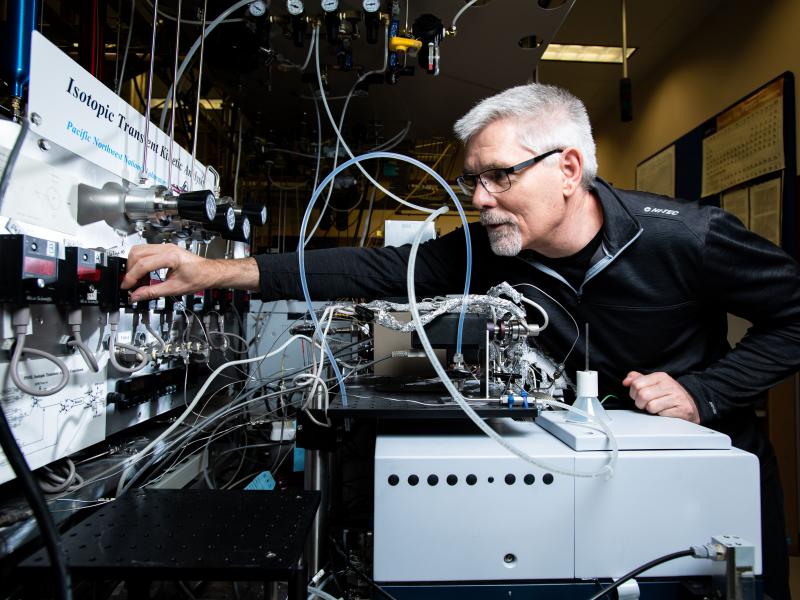
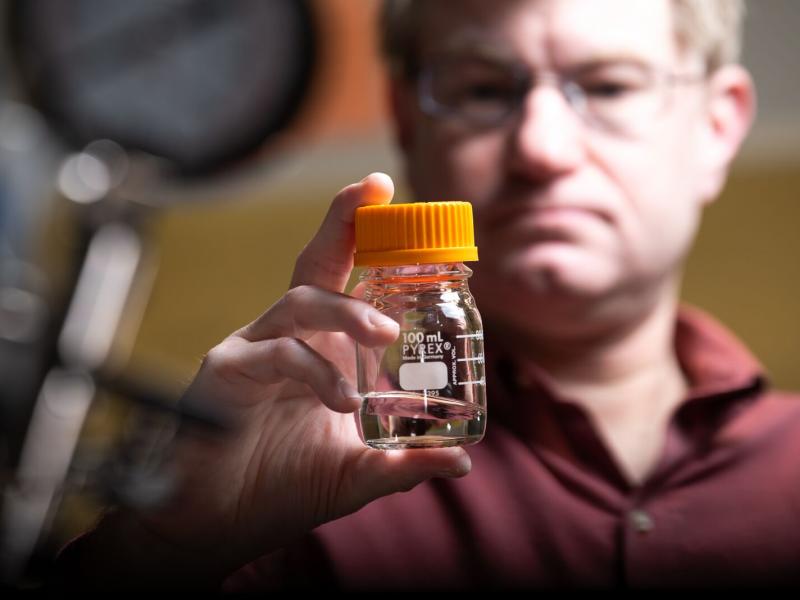
Morris Bullock has led PNNL's pursuit of the efficient conversion of electrical energy and chemical bonds through control of electron and proton transfers.