David Senor, PNNL researcher and tritium expert, has been named to the Texas A&M University Nuclear Engineering Advisory Council. This appointment follows Senor’s eight consecutive years of mentoring Texas A&M’s nuclear engineering senior
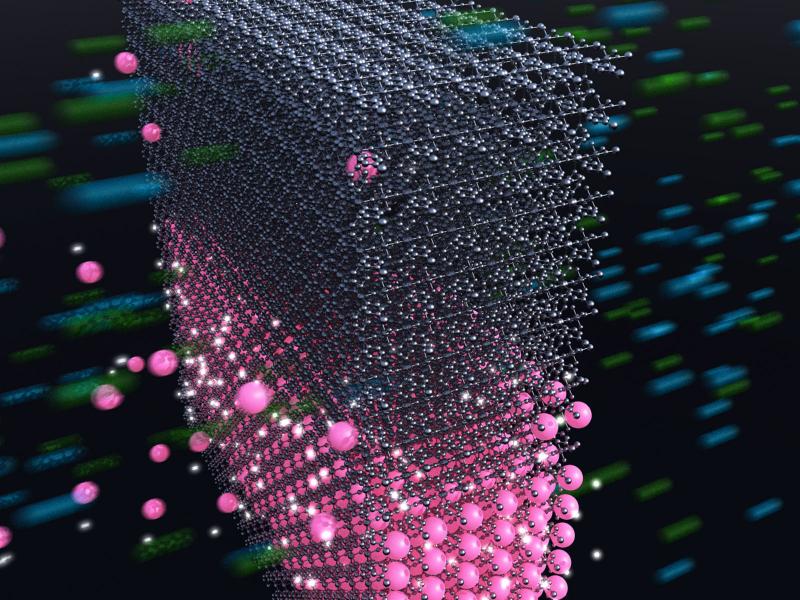
Researchers found that certain oxide interface configurations remain stable in extreme environments, suggesting ways to build better performing, more reliable devices for fuel cells, space-based electronics, and nuclear energy.
The Federal Laboratory Consortium for Technology Transfer has honored three innovations at the U.S. Department of Energy’s Pacific Northwest National Laboratory.
Performing nuclear safeguards work safely and developing the next generation workforce are complementary goals of a longstanding program sponsored by the National Nuclear Security Administration’s Office of International Nuclear Safeguards.
PNNL coastal ecologist Heida Diefenderfer was a featured speaker in February at the National Academies of Sciences, Engineering, and Medicine’s Government-University-Industry Research Roundtable on policy and global affairs.
PNNL’s Juliet Homer was an invited panelist at a California Energy Commission workshop, which highlighted research on water treatment, delivery, and energy.
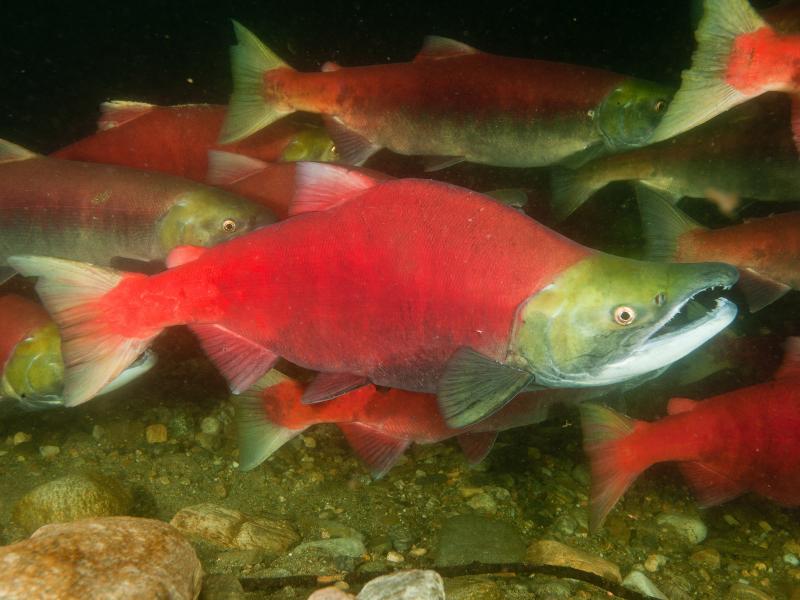
PNNL's Sensor Fish were deployed at Ice Harbor Dam to collect data from a new turbine. The data indicates the design changes are making travel through the dam less arduous for fish.
PNNL will provide technical support to finalists in the Incubate stage and to Grand Prize Winners following the Pitch contest stage of the Fish Protection Prize competition, which is now accepting submissions.
Researchers have identified two processes responsible for fracturing rock at lower pressures for geothermal energy production using PNNL’s fracturing fluid, StimuFrac™.
The world’s largest scientific society honored Sue B. Clark, a PNNL and WSU chemist, for contributions toward resolving our legacy of radioactive waste, advancing nuclear safeguards, and developing landmark nuclear research capabilities.
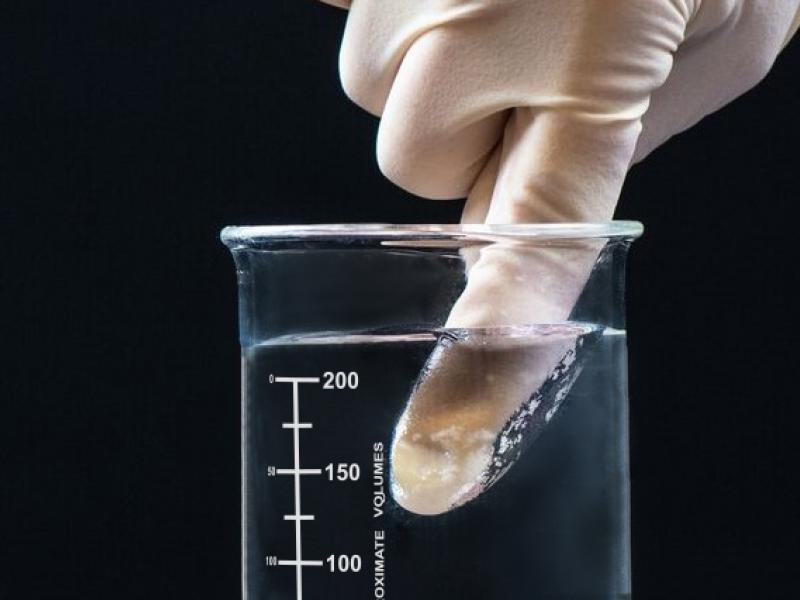
PNNL and Argonne researchers developed and tested a chemical process that successfully captures radioactive byproducts from used nuclear fuel so they could be sent to advanced reactors for destruction while also producing electrical power.
Pumped-storage hydropower offers the most cost-effective storage option for shifting large volumes of energy. A PNNL-led team wrote a report comparing cost and performance factors for 10 storage technologies.
A gathering of international experts in Portland, Oregon, explored the future of electron microscopy and surfaced potential solutions in areas including new instrument designs, high-speed detectors, and data analytics capabilities.