PNNL has earned “Best Paper” at an international resilience conference for research on hydropower’s capabilities and constraints in the event of extreme events, like hurricanes and rolling blackouts.
Five PNNL technologies were recently awarded six R&D 100 honors. The R&D 100 Awards, now in its 58th year, recognize pioneers in science and technology from industry, the federal government, and academia.
A new agreement between Pacific Northwest National Laboratory and The University of Texas at El Paso will create research and internship opportunities.
In a new review, PNNL researchers outline how to convert stranded biomass to sustainable fuel using electrochemical reduction reactions in mini-refineries powered by renewable energy.
A cadre of physical scientists, engineers and computing experts at Pacific Northwest National Laboratory is poised to participate in the launch of three new DOE Office of Science-sponsored quantum information science research centers.
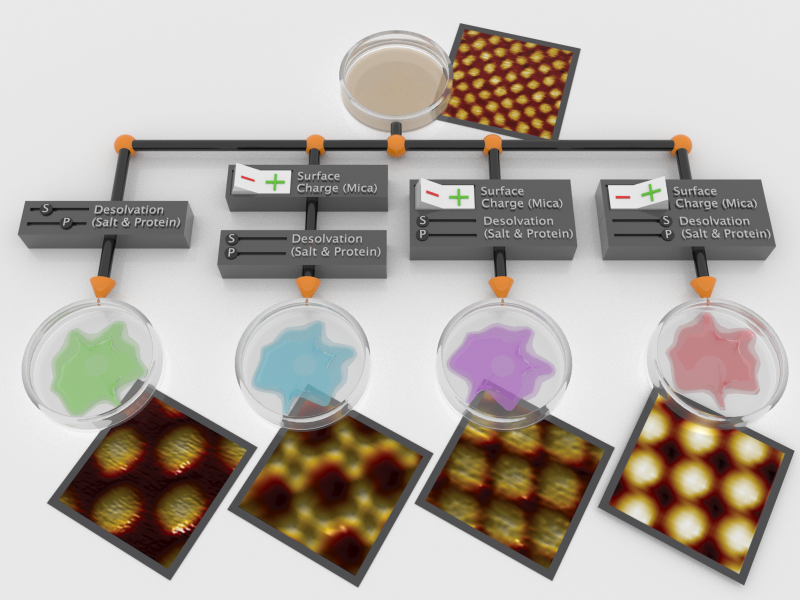
This research addresses two topics that are not well understood in literature: the interplay between organic linkers and substrates during MOF crystallization, as well as the mechanisms that control heterostructure formation in solutions.
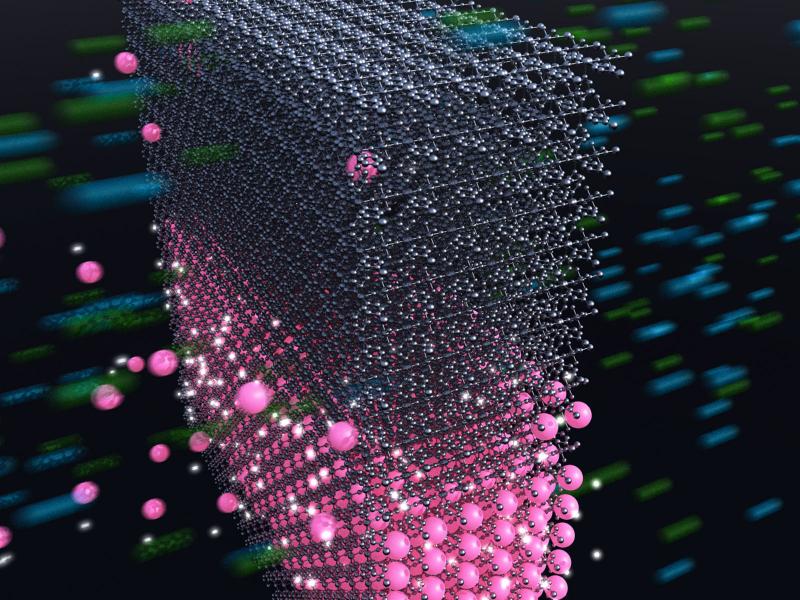
A new radiation-resistant material for the efficient capture of noble gases xenon and krypton makes it safer and cheaper to recycle spent nuclear fuel.
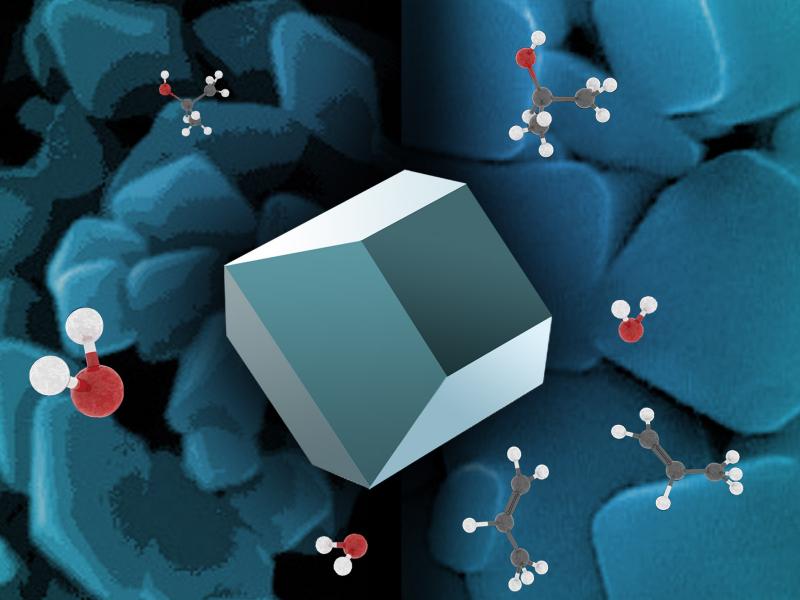
PNNL atomic-scale research shows how certain metal oxide catalysts behave during alkanol dehydration, an important class of oxygen-removal reactions for biomass conversion.
International editing team provided 15-year update, with Devanathan focused on intersection of nuclear science, materials science, and multiscale modeling.
PNNL scientists have created an improved metal-organic framework (MOF) for adsorption cooling, that performs at least 40 percent better than its predecessors.
PNNL and Oklahoma State University join forces to understand the chemistry of sodium-ion and potassium-ion batteries thanks to an award from the U.S. Department of Energy's Established Program to Stimulate Competitive Research (EPSCoR).