The DOE Early Career Research Program supports exceptional researchers during the crucial early years of their careers and helps advance scientific discovery in fundamental sciences
National Nuclear Security Administration Graduate Fellow Marc Wonders has spent the past year working with researchers exploring artificial intelligence in the national security mission space.
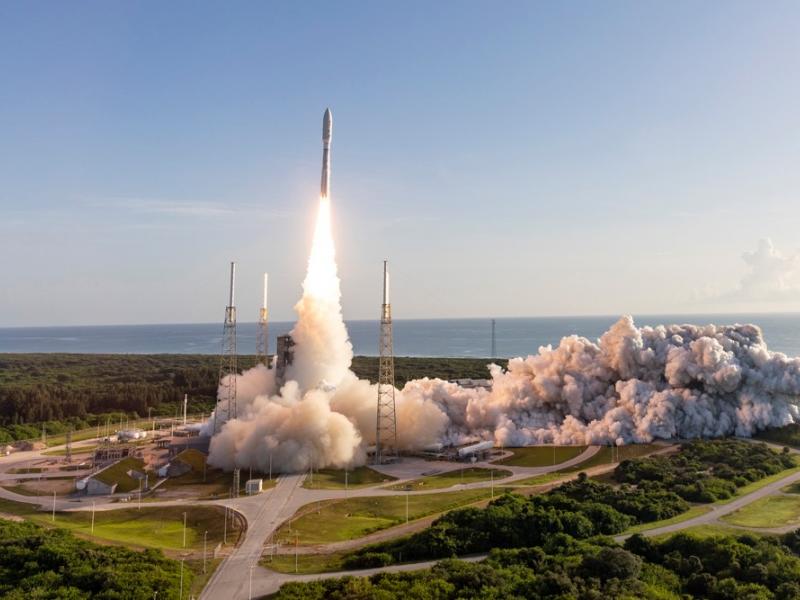
Risk analysis on the plutonium-fueled power system that supplies electricity to the Mars rover answered the “what if” nuclear safety questions for NASA.
Marcel Baer is a computational scientist working in PNNL’s Physical Sciences Division with a prominent effort in materials science and physical bioscience.
High school students from across Washington State competed in the Pacific Northwest Regional Science Bowl, hosted online by PNNL, for a chance to advance to the national competition in May.
Johnson is among the PNNL scientists preparing to move into the Energy Sciences Center, the new $90 million, 140,000-square-foot facility that is expected to open in late 2021.
For the second straight year, PNNL researchers are featured in a special edition of the Journal of Information Warfare. This issue explores the topic of macro cyber resiliency.
PNNL has published a cybersecurity guidance report for marine renewable energy devices to prepare the blue economy for harnessing ocean power from waves, tides, and currents.
One year ago, Verizon announced a partnership that made PNNL the U.S. Department of Energy’s first national laboratory with Verizon 5G ultra-wideband wireless technology.
PNNL highlights four researchers whose joint appointments are creating new and diverse opportunities for expanding knowledge and scientific impact across institutions.