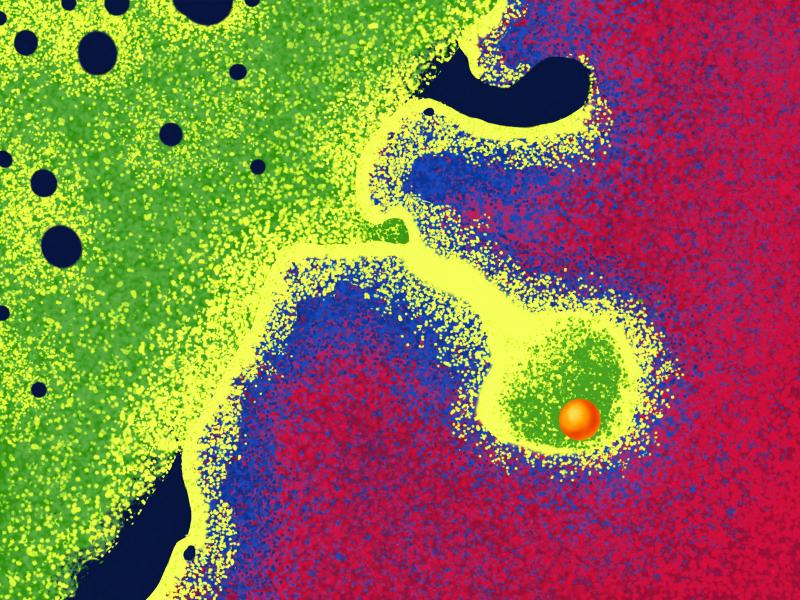
Researchers at PNNL have come up with a novel way to use silicon as an energy storage ingredient, replacing the graphite in electrodes. Silicon can hold 10 times the electrical charge per gram, but it comes with problems of its own.
David Senor, PNNL researcher and tritium expert, has been named to the Texas A&M University Nuclear Engineering Advisory Council. This appointment follows Senor’s eight consecutive years of mentoring Texas A&M’s nuclear engineering senior
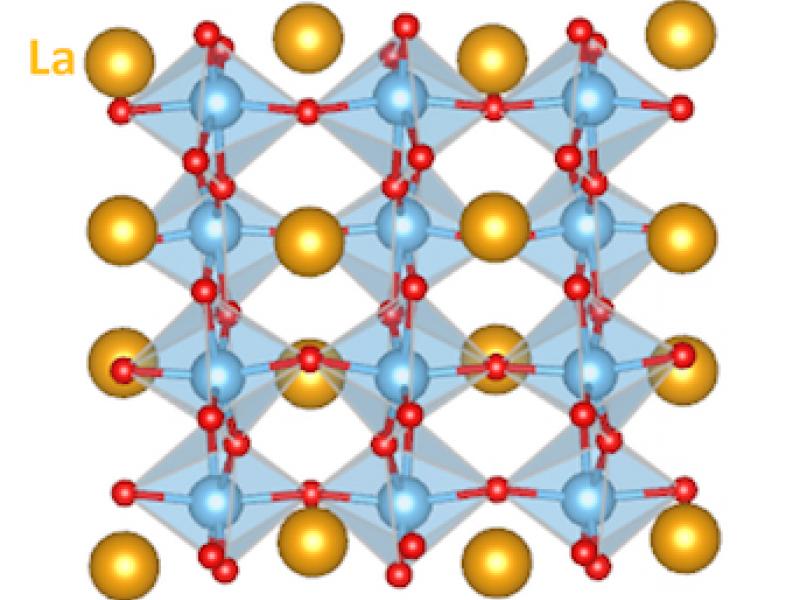
Researchers found that certain oxide interface configurations remain stable in extreme environments, suggesting ways to build better performing, more reliable devices for fuel cells, space-based electronics, and nuclear energy.
Performing nuclear safeguards work safely and developing the next generation workforce are complementary goals of a longstanding program sponsored by the National Nuclear Security Administration’s Office of International Nuclear Safeguards.
The world’s largest scientific society honored Sue B. Clark, a PNNL and WSU chemist, for contributions toward resolving our legacy of radioactive waste, advancing nuclear safeguards, and developing landmark nuclear research capabilities.
PNNL and Argonne researchers developed and tested a chemical process that successfully captures radioactive byproducts from used nuclear fuel so they could be sent to advanced reactors for destruction while also producing electrical power.
Scientists have uncovered a root cause of the growth of needle-like structures—known as dendrites and whiskers—that plague lithium batteries, sometimes causing a short circuit, failure, or even a fire.
PNNL researchers have created a chemical cocktail that could help electric cars power their way through extreme temperatures where current lithium-ion batteries don’t operate as efficiently as needed.
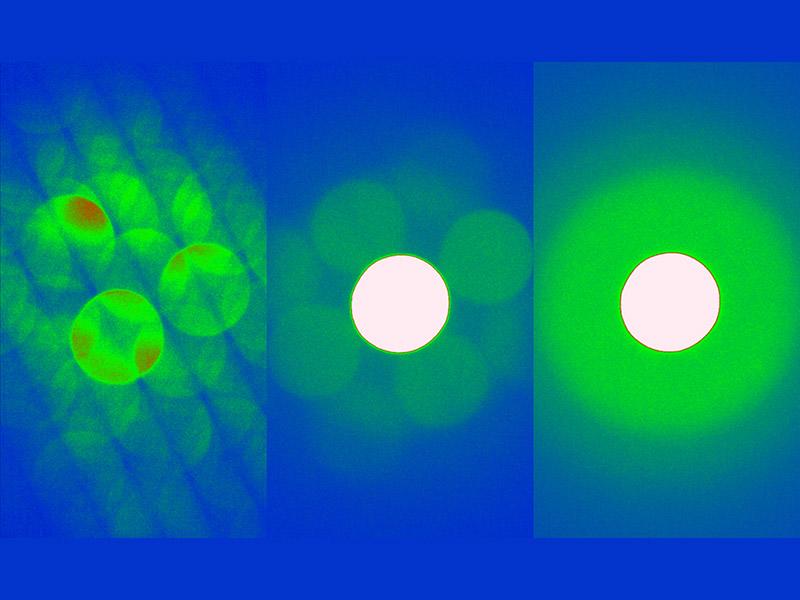
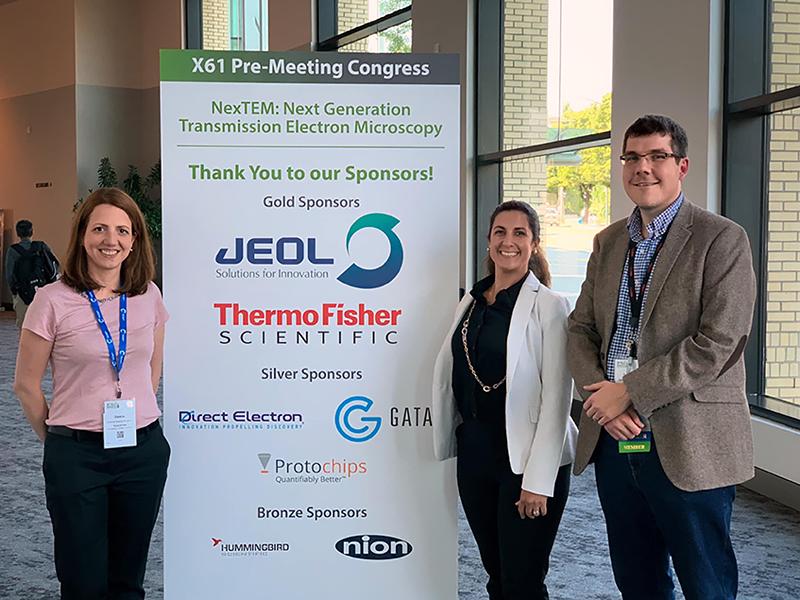
A gathering of international experts in Portland, Oregon, explored the future of electron microscopy and surfaced potential solutions in areas including new instrument designs, high-speed detectors, and data analytics capabilities.
A multi-institute team develops an imaging method that reveals how uranium dioxide (UO2) reacts with air. This could improve nuclear fuel development and opens a new domain for imaging the group of radioactive elements known as actinides.
The ANS award will be presented at the Global Top Fuel 2019 Conference this September in Seattle, and comes amid several recent recognitions for Paviet.
PNNL researchers demonstrate how the excitation of oxygen atoms that contributes to better performance of a lithium-ion battery also triggers a process that leads to damage, explaining a phenomenon that has been a mystery to scientists.
Researchers apply numerical simulations to understand more about a sturdy material and how its basic structure responds to and resists radiation. The outcomes could help guide development of the resilient materials of the future.
The U.S. Nuclear Regulatory Commission, U.S. Army Corps of Engineers, and PNNL partnered to complete—in record time—an environmental impact statement for the nation’s first small modular nuclear reactor, to be sited at Clinch River, Tenn.