August 20, 2026
Feature

New Life for Used Nuclear Fuel

PNNL is exploring the untapped potential of used nuclear fuel to produce optimized waste forms and strengthen the nation’s energy security

Key Takeaways

  • Nuclear fuel retains more than 90% of its original energy-producing potential.
  • New tools developed at PNNL could make recycling nuclear fuel more viable.
  • Recovering usable materials could strengthen the nation’s fuel supply, reduce long-term waste, and help power the next generation of reactors.
  • A newly selected DOE Genesis Mission project will develop AI tools to help design and operate fuel-recycling systems.
Amanda Lines

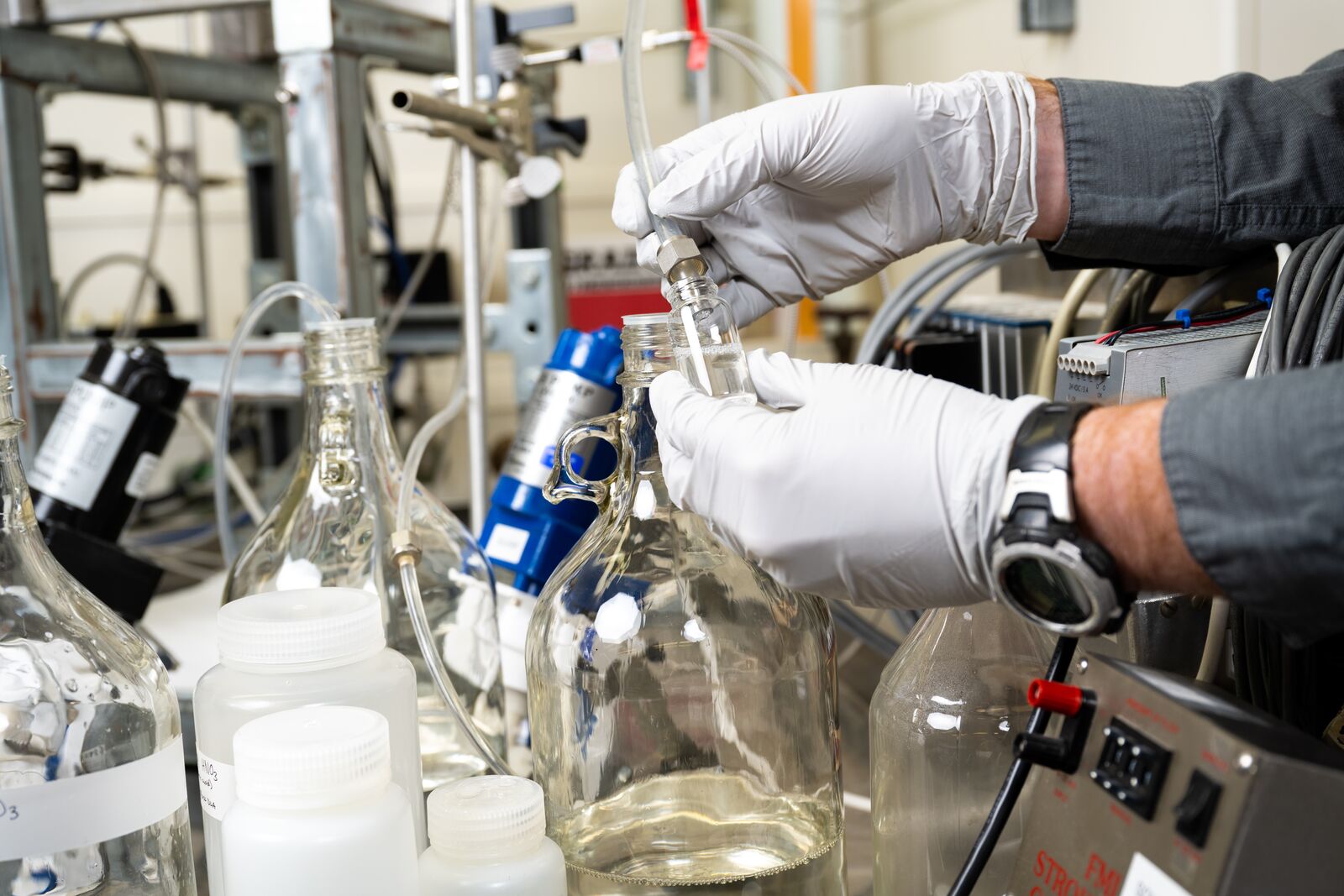
PNNL chemist Amanda Lines is an expert in nuclear fuel processes and monitoring technologies. 

(Photo by Andrea Starr | Pacific Northwest National Laboratory) 

For decades, we have treated used nuclear fuel as high-level waste to be buried and forgotten. Now, scientists and energy experts are asking a fundamental question: What if we recycle that waste as an untapped power source? 

Rising global demand for nuclear energy, coupled with enabling technologies such as AI, has created an opportune time to reinvent fuel recycling and “close the nuclear fuel cycle,” said Amanda Lines, an expert in nuclear fuel processes and monitoring technologies at Pacific Northwest National Laboratory (PNNL). 

The nuclear fuel cycle spans every stage in the life of nuclear material, from uranium mining and electricity generation to used fuel management. By “closing” this cycle through advanced recycling, potentially reusable materials can be separated from used fuel and fabricated into new reactor fuel, minimizing waste and environmental impact. 

The power left behind

Used nuclear fuel — sometimes called “spent” fuel — contains a complex mixture of radioactive elements, leftover fissile material, and chemical byproducts. Researchers at PNNL are working to unlock its remaining energy potential through nuclear fuel recycling, a suite of chemical and physical processes that recover materials for reuse as reactor fuel or other industrial applications. 

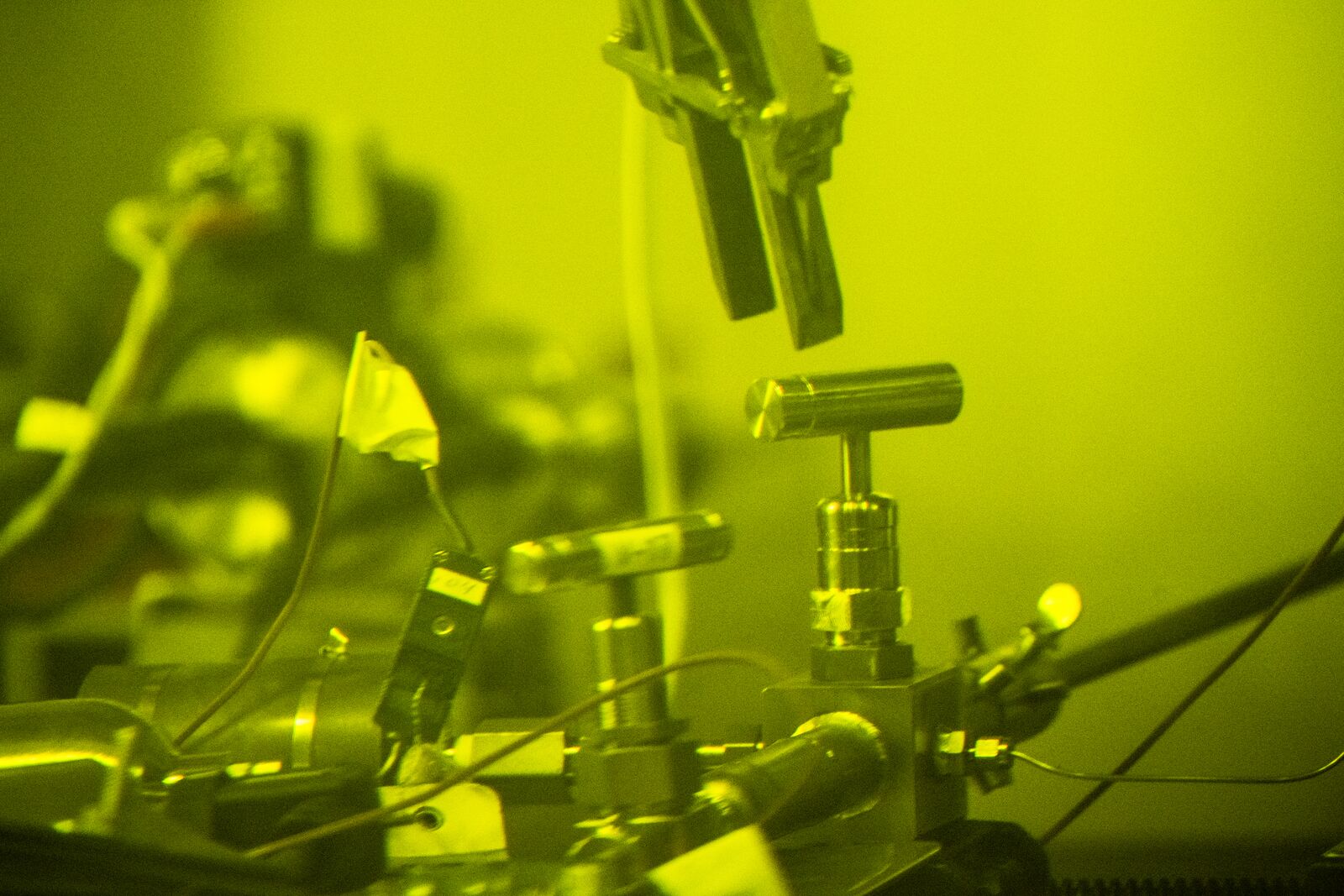
Close-up view of testing technologies in a laboratory for the back end of the nuclear fuel cycle.
Scientists at PNNL are developing and testing technologies for the back end of the nuclear fuel cycle, including used nuclear fuel recycling and durable waste forms. (Photo by Andrea Starr | Pacific Northwest National Laboratory)

The goal is to develop more effective methods to recover usable materials, both to reduce longterm waste and to help fuel the next generation of nuclear reactors. 

Yet the challenge of managing used fuel is only part of the story. Just beneath the surface lies a surprising truth: the fuel we once called “spent” still holds enormous potential. 

Today’s commercial nuclear power plants remove fuel not because all the energy is gone, but because the buildup of byproducts reduces reactor efficiency. Much of today’s used fuel still retains more than 90 percent of its original energy-producing potential. However, recovering a substantial share would require advanced recycling technologies and reactors designed to use recycled materials. 

"We are reimagining the entire nuclear fuel cycle,” Lines said. “That means studying how fuels behave under irradiation, how used materials change over time, how best to recover valuable components and how to contain what remains.” 

Sponsored by the Department of Energy (DOE)’s Office of Nuclear Energy, PNNL studies over the past several decades have explored how innovations in chemistry, materials science and safeguards are redefining what fuel recycling can look like

Genesis Mission takes on fuel recycling 

Nuclear fuel recycling received a recent boost when DOE announced Phase I funding awards for the Genesis Mission. The initiative brings together national laboratories, industry and universities to use artificial intelligence to advance scientific discovery, energy innovation and national security. 

One of the funded projects, “AI-Driven Co-Optimization of Closed Fuel Cycles: Balancing Economics, Security, and Waste,” is a collaboration among the lead institution Colorado School of Mines with PNNL and materials-informatics company Citrine Informatics. The project will develop AI-assisted tools for evaluating fuel-cycle designs and operating strategies across three interconnected considerations: cost, security, and waste generation.  

During the first phase, researchers will build a prototype and assess whether it can accelerate analyses, evaluate more scenarios, and provide better information for decision-makers. 

The Genesis project builds on PNNL-led research that brings together specialists from several fields to address the economic, security, and waste-management challenges of nuclear fuel recycling. Recent examples include:

  • Improved recycling efficiency: In Analytical Chemistry, researchers described an automated system that uses Raman spectroscopy, a laser-based method that identifies chemicals by their molecular signatures, to monitor and adjust acidity during the recycling of used nuclear fuel. The approach could increase material recovery, reduce waste, and improve process reliability.
  • Managing waste streams: An ACS Omega review examined phosphate-based materials that can stabilize hazardous elements in radioactive salt waste while enabling the recovery of reusable fuel components. The findings could simplify disposal and support the recovery of valuable materials.
  • Advancing nuclear fuel cycle understanding: A Materials Advances study showed how specially designed molecules can separate actinides — radioactive elements found in used nuclear fuel — from chemically similar rare-earth elements. The findings could improve recycling and reduce the long-term hazards associated with high-level radioactive waste.

Balancing cost, security and performance

Even with scientific advances, the future of fuel recycling depends on more than technology alone. Economic realities and security considerations continue to shape whether — and how — these processes are adopted. 

Scientists examine nuclear fuel rods in a radiochemical processing laboratory.
Nuclear fuel rods are examined at PNNL’s Radiochemical Processing Laboratory, a hazard category 2 nonreactor nuclear research facility that has supported critical nuclear science missions for more than seven decades. (Photo by Andrea Starr | Pacific Northwest National Laboratory)

France, for example, operates one of the world’s largest commercial reprocessing programs, while other countries, including Japan, have pursued various recycling strategies. Although several countries reprocess spent fuel, the United States largely adopted a “once-through fuel cycle” in the 1970s because of policy and nuclear nonproliferation concerns. 

Fuel recycling is not a single technology, Lines notes. Several pathways exist, each suited to different reactor types and material streams. The suitability of each method depends on the fuel’s composition and physical form, the materials to be recovered, the reactor in which they might be reused and the desired waste forms.

Economic and security goals often overlap, and they represent two major challenges: 

  • Economics: Recycling must be practical and affordable. Researchers are evaluating technologies that reduce costs, increase efficiency and improve reliability.
  • Security: Safeguarding nuclear materials is essential. Researchers are exploring ways to track and manage materials throughout the recycling process while maintaining cost-effective security measures.

PNNL teams analyze how materials behave at the microscopic and atomic levels, test new extraction chemistries and design waste forms, such as durable glass that securely contains radioactive elements for millennia. 

For more than 60 years, PNNL scientists and engineers have worked with and studied nuclear materials. Today, research at PNNL spans every stage of a fuel’s life cycle: development, reactor performance, recycling, waste management, materials science, safety, and modeling. 

For example, the Radiochemical Processing Laboratory allows researchers to work safely with radioactive materials. Sophisticated computer modeling helps assess fuel-cycle options, forecast waste behavior, and inform regulatory planning. And increasingly, scientists are using AI and machine learning to interpret complex data and accelerate discovery.

Supporting next-generation reactors 

Support for next-generation reactors will progress in stages. Because many of their fuels have different compositions and higher enrichments, advanced reactor designs could increase interest in recycling by enabling the use of fuel streams that conventional reactors cannot use. 

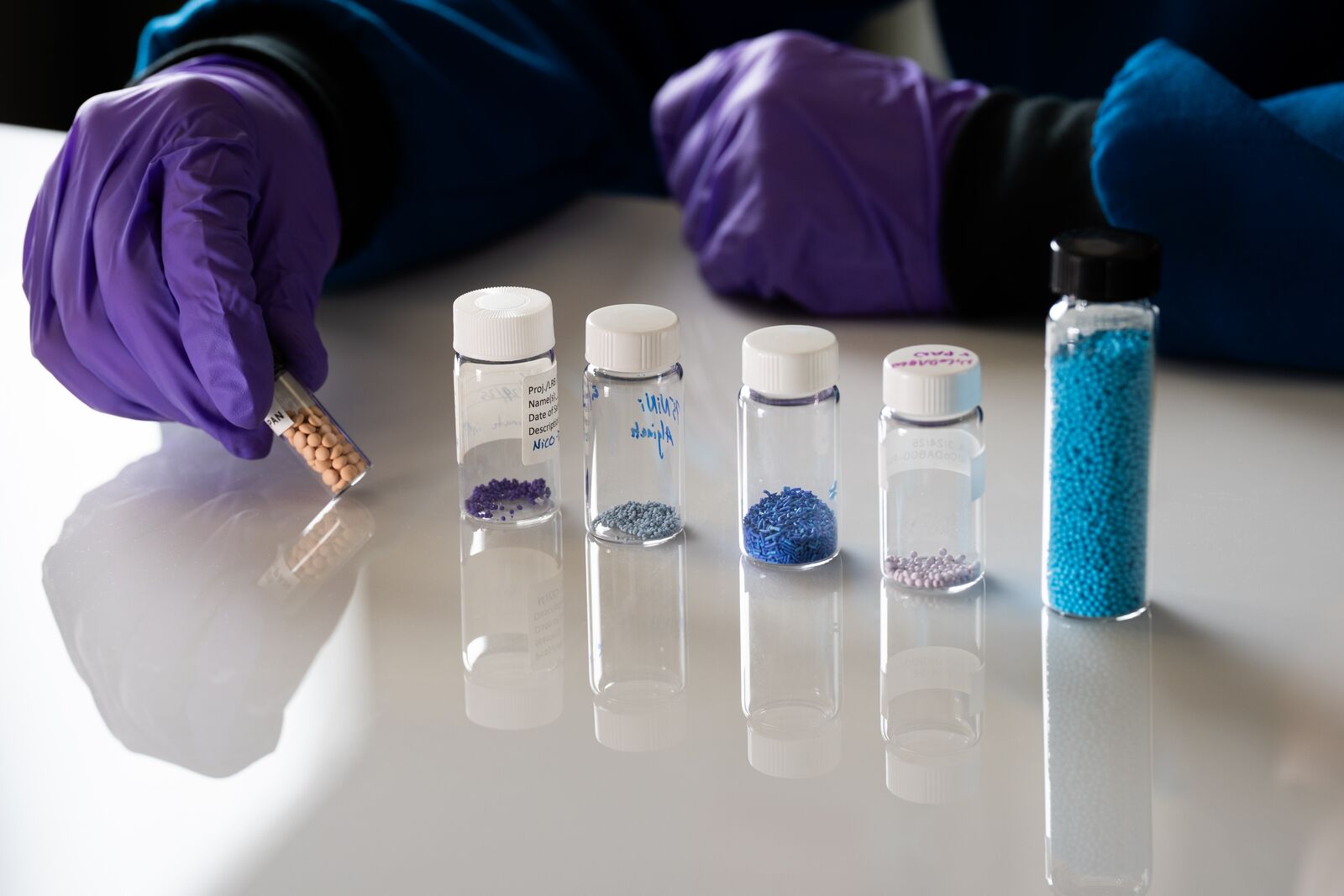
Scientist examines vials of used nuclear fuel materials.
While energy production remains the focus of most used nuclear fuel recycling efforts, some recycled nuclear materials have potential applications in isotope production for medical, industrial or scientific uses. (Photo by Andrea Starr | Pacific Northwest National Laboratory)

Some recycled nuclear materials may have potential applications in isotope production for medical, industrial or scientific uses, although energy production remains the primary focus of most fuel recycling efforts. Looking further ahead, certain isotopes could support deep-space missions that require compact, long-lasting power sources. 

The long-term vision includes integrated systems in which advanced reactors and recycling facilities operate together — maximizing resources, minimizing waste, and delivering reliable energy. 

“This is one pathway to strengthening the long-term fuel supply and operational resilience of advanced reactor systems,” Lines said.

A different future for used nuclear fuel

As these technologies mature, they’re reshaping not only science and engineering conversations but also public discourse. The growing emphasis on energy security and resource stewardship is opening the door to a broader reconsideration of how used nuclear fuel can be used.  

Public views of nuclear energy are shifting. In recent years, support for nuclear power plants has grown. According to a 2025 Pew Research Center survey, 59% of U.S. adults now say they favor more nuclear power plants to generate electricity.  

PNNL’s work reflects that shift. By demonstrating that used fuel contains materials that may be recovered, reused or repurposed through advanced recycling technologies, rather than being treated solely as waste, research is laying the scientific and technological foundation for a safer, more efficient and more sustainable nuclear future. 

“The promise of nuclear fuel recycling is not only about producing more energy,” said Lines. “It is about strengthening America’s energy security, supporting scientific advances, and redefining what spent nuclear fuel can become.”  

Learn more about PNNL nuclear energy capabilities and research. 

###

About PNNL

Pacific Northwest National Laboratory draws on its distinguishing strengths in chemistry, Earth sciences, biology and data science to advance scientific knowledge and address challenges in energy resiliency and national security. Founded in 1965, PNNL is operated by Battelle and supported by the Office of Science of the U.S. Department of Energy. The Office of Science is the single largest supporter of basic research in the physical sciences in the United States and is working to address some of the most pressing challenges of our time. For more information, visit the DOE Office of Science website. For more information on PNNL, visit PNNL's News Center. Follow us on Twitter, Facebook, LinkedIn and Instagram.