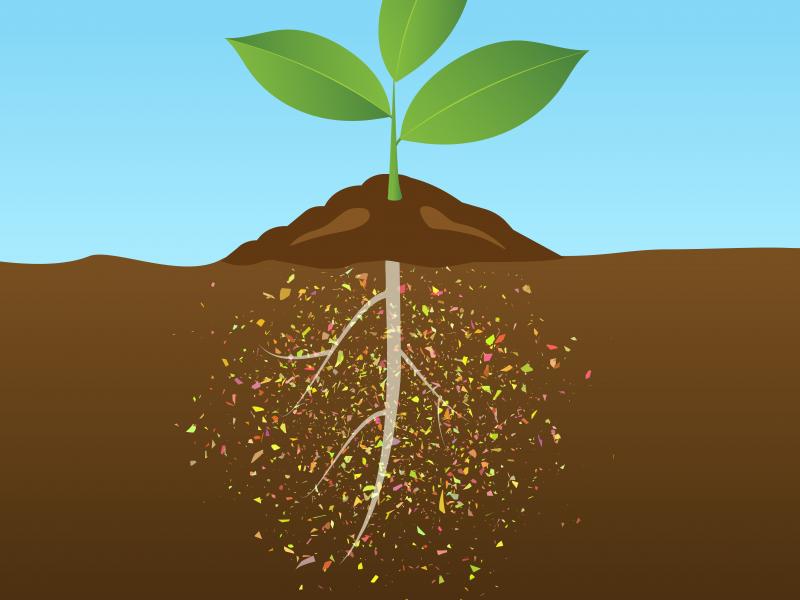
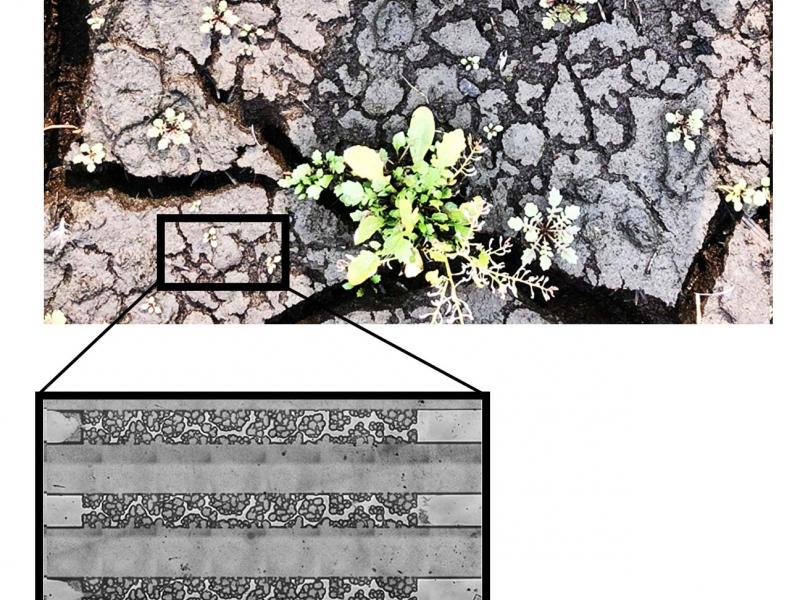
Like a toxic Trojan horse, microplastics can act as hot pockets of contaminant transport. But, can microplastics get into plant cells? Recent research shows that they can't.
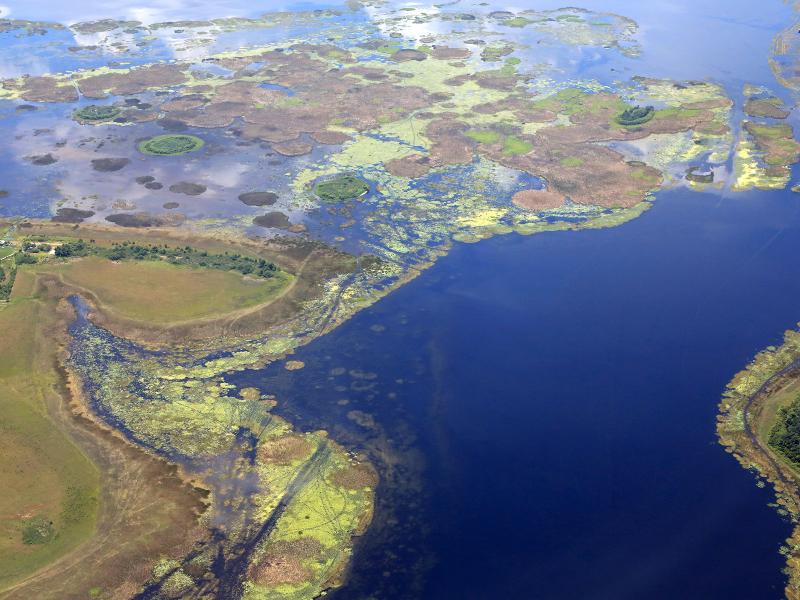
PNNL researchers are contributing expertise and hydrothermal liquefaction technology to a project that intercepts harmful algal blooms from water, treats the water, and concentrates algae for transformation to biocrude.
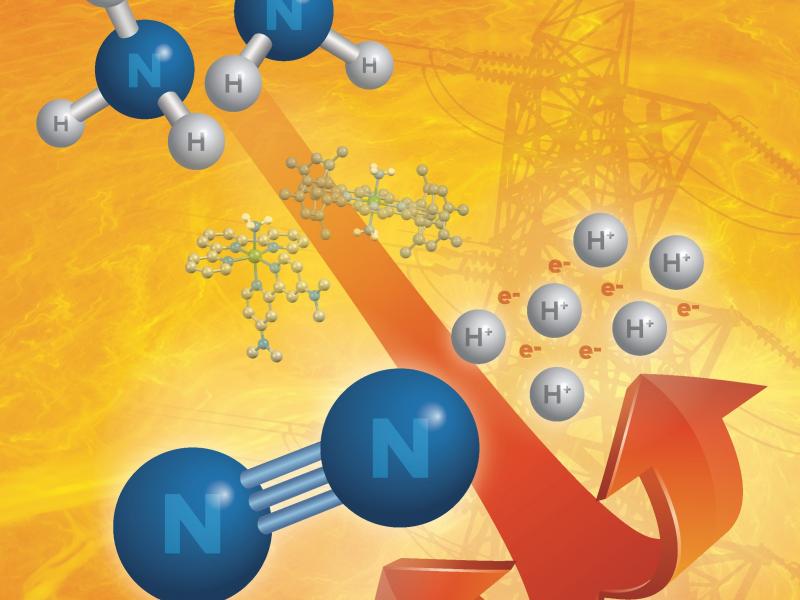
A perspective article in the Journal of the American Chemical Society by a team of PNNL researchers shows the way forward to understand ammonia oxidation.
Soil microbial communities produced more water retaining molecules when enriched with insoluble organic carbon, chitin, compared to a soluble carbon source, N-acetylglucosamine.
PNNL researchers used the Global Change Analysis Model (GCAM) to explore 15 different global scenarios that consisted of combinations of five different socioeconomic futures and four different climatic futures.
NIH awarded $1.7 million to researchers from PNNL, WSU, and NREL to continue fundamental research into catalytic bias—a phenomenon in the protein environment that shifts the direction and speed of an enzyme’s catalytic reaction.
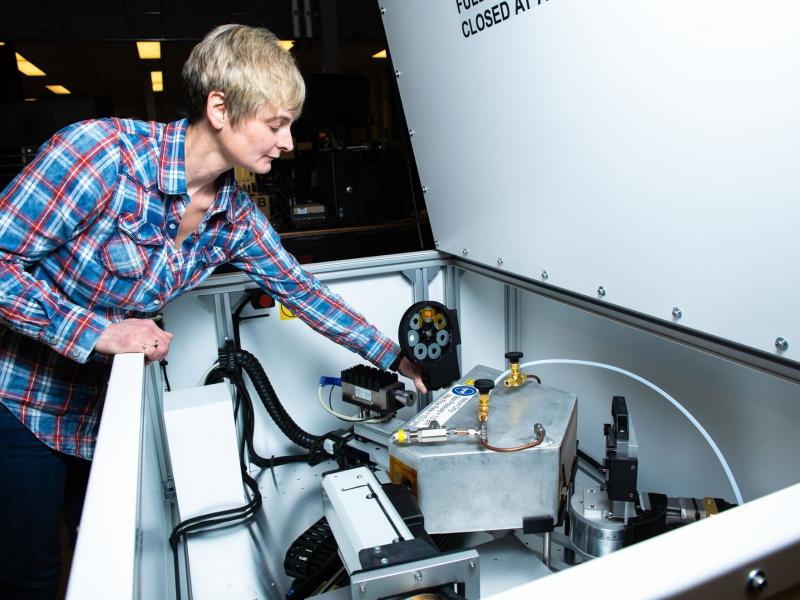
PNNL has three small-scale spectroscopy devices that are speeding up the testing and analysis of candidate novel materials used in energy storage research and environmental remediation.
Five PNNL technologies were recently awarded six R&D 100 honors. The R&D 100 Awards, now in its 58th year, recognize pioneers in science and technology from industry, the federal government, and academia.
Sharon Hammes-Schiffer, deputy director of the Center for Molecular Electrocatalysis (CME), has received awards from both the Royal Society of Chemistry and the American Chemical Society.
Culminating 10 years of study, researchers at PNNL’s Marine and Coastal Research Laboratory developed a new predictive framework for estuarine–tidal river research and management.
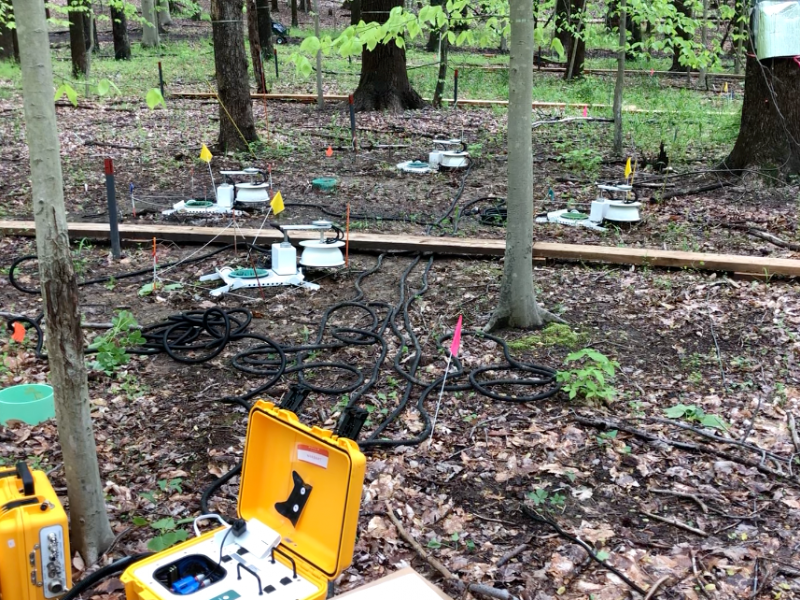
A team of researchers led by scientists from PNNL simulated carbon cycling and community composition during 100 years of forest regrowth following disturbance.