Latest Stories

594 results found
Filters applied: Catalysis, Environmental Management
AUGUST 20, 2019
Feature

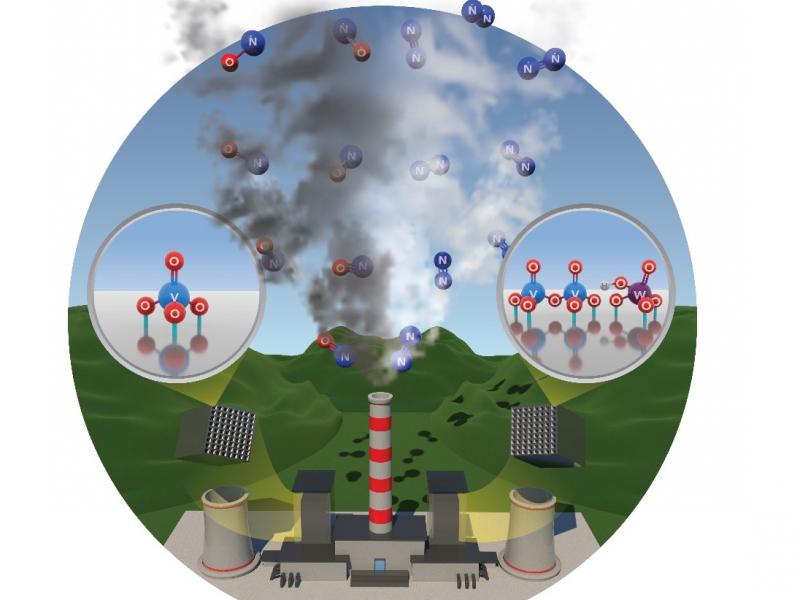
Getting Clear about Clean Air

Nitrogen oxides, also known as NOx, form when fossil fuels burn at high temperatures. When emitted from industrial sources such as coal power plants, these pollutants react with other compounds to produce harmful smog.
AUGUST 14, 2019
Feature

Modeling the Future of a Sea

The inner Salish Sea’s future response to climate change, while significant, is predicted to be less severe than that of the open ocean based on parameters like algal blooms, ocean acidification, and annual occurrences of hypoxia.
JUNE 26, 2019
Feature

Tough Materials for Tough Environments

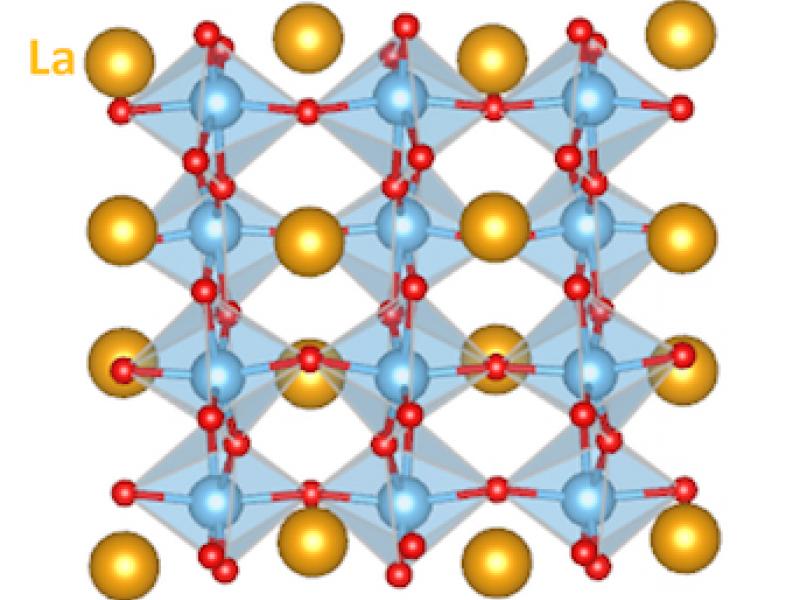
Researchers apply numerical simulations to understand more about a sturdy material and how its basic structure responds to and resists radiation. The outcomes could help guide development of the resilient materials of the future.
JUNE 11, 2019
Staff Accomplishment

Nik Qafoku Honored for Soil Chemistry Career

The Soil Science Society of America presents Nik Qafoku with the 2019 Jackson Award for contributions in soil chemistry and mineralogy—ranging from agricultural fertilizer efficiency in Albania to soil contaminant transport at Hanford.
JUNE 7, 2019
Feature

A Promising Trap for Radioactive Waste

A radioactive chemical called pertechnetate is a bad actor when it’s in nuclear waste tanks. But researchers at PNNL and the University of South Florida have a new lead on how to selectively separate it from the nuclear waste for treatment.
APRIL 10, 2019
Staff Accomplishment

Josef 'Pepa' Matyas elected Fellow of ACerS

Josef "Pepa" Matyas, a materials scientist in PNNL’s Nuclear Sciences Division, has been elected a fellow of the American Ceramic Society (ACerS). He will be recognized at the ACerS annual meeting on September 30, 2019, in Portland, Ore.
MARCH 28, 2019
Feature

Culprit Nabbed in the Death of a Catalyst

Several years ago, a relatively new catalyst for vehicle emission control began showing failure. A team at PNNL found that this seemingly suicidal catalyst wasn’t actually self-destructing but was the victim of an external assailant.