
Data Readiness for Artificial Intelligence Applications in Environmental Remediation
- Tuesday, November 10, 2026
- 9:00 – 10:30 a.m. PST | 12:00 – 1:30 p.m. EST | 5:00 – 6:30 p.m. BST
- Register in advance on Zoom
Presenters

Anurag Acharya, PhD | Data Scientist | Pacific Northwest National Laboratory
Presentation: Introduction to AI and Large Language Models
Abstract: As AI-enabled tools become part of everyday research and operational workflows, understanding how these systems work is essential for using them effectively and evaluating their outputs critically. In this talk, Acharya will give a working explanation of modern AI, covering the distinctions among AI, ML, deep learning, and generative AI, along with the core mechanics underlying LLMs. These mechanics explain why data quality is central to model performance, why context-level adaptation is typically preferred over retraining, and why LLMs are subject to fundamental limitations that in turn motivate the use of AI agents to extend model capabilities.
Bio: Anurag Acharya, PhD, is a data scientist at Pacific Northwest National Laboratory. His research focuses on LLMs, natural language processing, agentic AI systems, and AI evaluation and benchmarking. He leads multidisciplinary efforts designing and evaluating LLM-based systems and AI agents that help researchers work across scientific domains such as catalysis, computational fluid dynamics, and watershed modeling, as well as regulatory and mission areas—including environmental permitting, geothermal development, and nuclear waste remediation. A central theme of his research is the reliability, trustworthiness, and effectiveness of advanced AI systems in real-world, mission-driven settings.
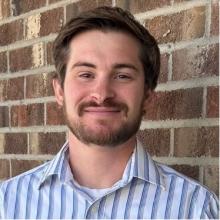
Nick Sayresmith, PhD | Data Scientist | ddms Inc.
Presentation: AI-Ready Environmental Data: Building a Defensible Foundation for AI
Abstract: AI is transforming how organizations access, analyze, and act on environmental information. But the defensibility of every AI-generated result depends on the data beneath it. Given ambiguous, unvalidated, or context-stripped inputs, AI can produce incomplete, misleading, or incorrect results. And what’s more, when AI fails, it often does so quietly and confidently.
Drawing on ddms’s environmental data management expertise, Sayresmith’s talk will synthesize established guidance from the Interstate Technology and Regulatory Council, the U.S. Environmental Protection Agency, the U.S. Geological Survey, and the International Commission on Environmental Data Management with emerging AI-readiness concepts from the data science literature. From this foundation, five characteristics of AI-ready environmental data will be explored: trust, structure, context, accessibility, and governance.
Using real-world examples from databases, geographic information systems, documents, and monitoring programs, attendees will learn how to recognize where their data is already AI-ready, where gaps may exist, and what matters most when preparing for AI-enabled workflows.
Bio: Nick Sayresmith, PhD, is a data scientist at ddms, a company specializing in environmental data validation and management. He holds a PhD in nanoscale science from the University of North Carolina at Charlotte and completed a postdoctoral fellowship at the US Environmental Protection Agency, specializing in data quality assurance and quality control for quantitative non-targeted analysis workflows. His work at ddms focuses on predictive modeling and Bayesian statistics as it relates to environmental site investigations and remedial outcomes. Sayersmith is also interested in implementing generative AI workflows and products, including agentic harnessing, retrieval augmented generation, and knowledge graph construction.

Theresa Pham | Data Science Post Masters Research Associate | Pacific Northwest National Laboratory
Presentation: Data Preparation for AI-Enabled Environmental Workflows
Abstract: Data preparation is the necessary, but often overlooked, process that bridges raw information and defensible AI results. In practice, transforming raw environmental data into an AI-ready form can take as much time and effort as building the AI tools themselves. This talk will walk through the steps of building an AI-ready dataset, beginning with an assessment of how the nature of the data aligns with the AI use case and proceeding with steps for extraction, cleaning, and preparation of data. Validation is also highlighted as an important aspect across all steps. Approaches for working with different types of data and AI frameworks will be examined, with discussion of tools and examples from relevant environmental data workflows and common pitfalls at each step. Taken together, these steps provide a repeatable, practical framework that practitioners can apply to their own environmental data workflows to produce AI-ready data.
Bio: Theresa Pham has a master's degree in data science with technical experience in data-processing-pipeline automation and machine learning. Prior to joining Pacific Northwest National Laboratory in 2025, Theresa graduated from the University of Texas at Austin with a bachelor's degree in mathematics and a certificate in applied statistical modeling. She has a diverse research background, from software development testing at the National Aeronautics and Space Administration (NASA) to data analytics in healthcare policy research. At Pacific Northwest National Laboratory, she develops AI tools to support the environmental remediation process.
Moderators
- Rebecka Iveson is a RemPlex advisor and Earth scientist at Pacific Northwest National Laboratory. Her work includes developing innovative, field-based characterization and monitoring methods to quantify contaminant distribution and remedy performance in the subsurface. She holds a master of science degree in hydrogeology from Newcastle University.
- Inci Demirkanli, PhD, is a RemPlex advisor and senior technical advisor at Pacific Northwest National Laboratory with experience in analytical and numerical modeling of subsurface flow and transport with applications in remediation research and radionuclide mobility in the vadose zone and in subsurface energy and storage systems. She holds a doctorate in environmental engineering and Earth sciences from Clemson University.