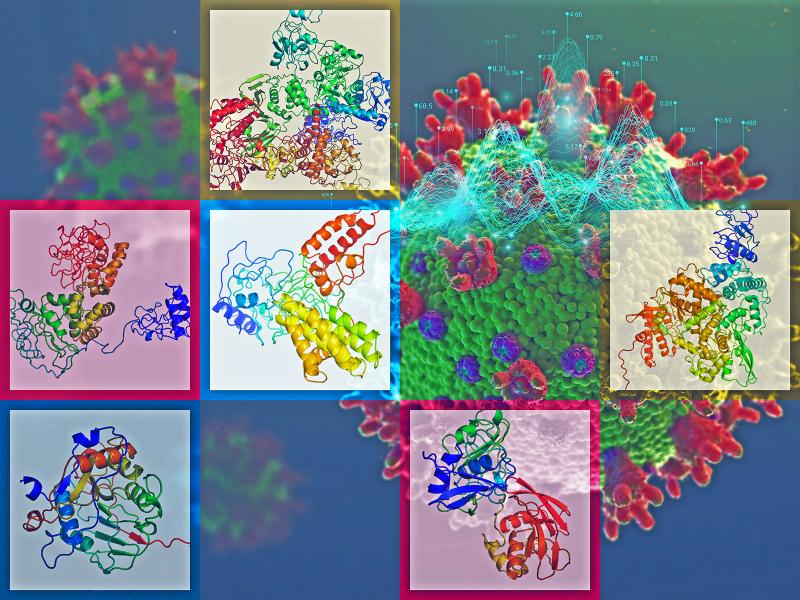
High-throughput biochemical assays targeting a vital viral protein identified one molecule out of more than 13,000 with promising antiviral activity against SARS-CoV-2.
Vigorous and rapid air exchanges might not always be a good thing when it comes to levels of coronavirus particles in a multiroom building, according to a new modeling study.
For the second straight year, PNNL researchers are featured in a special edition of the Journal of Information Warfare. This issue explores the topic of macro cyber resiliency.
PNNL researchers Leo Fifield, Mike Larche, and Bishnu Bhattarai were recently elected to the board of the Institute of Electrical and Electronics Engineers Richland, Washington section.
Sentry-SECURE is a new communication and response platform developed by PNNL, VPI, and Microsoft Azure that rapidly and securely transfers radiological alarm data through the cloud.
Night shift work disrupts the natural 24-hour rhythms in the activity of certain cancer-related genes, making workers more vulnerable to damage to their DNA.
Red teaming for CPS, the process of challenging systems, involves a group of cybersecurity experts to emulate end-to-end cyberattacks following a set of realistic tactics, techniques, and procedures.
In a first-of-its-kind study, PNNL scientists are learning about how e-cigarettes can lead to changes in proteins at the molecular level that could contribute to disease or other health problems.
Researchers at PNNL have developed a bacteria testing system called OmniScreen that combines biological and synthetic chemistry with machine learning to hunt down pathogens before they strike.
The nation’s ability to test for COVID-19 has expanded, thanks to work at Pacific Northwest National Laboratory, where scientists have established the performance of testing equipment to detect the virus.
Researchers from PNNL have helped colleagues at OHSU identify lipid molecules required for Zika infection in human cells. The specific lipids involved could also be a clue to why the virus primarily infects brain tissue.
Biomedical scientist Brian Thrall co-edited the issue published in the journal NanoImpact. Three of the articles in the issue include multiple PNNL authors.