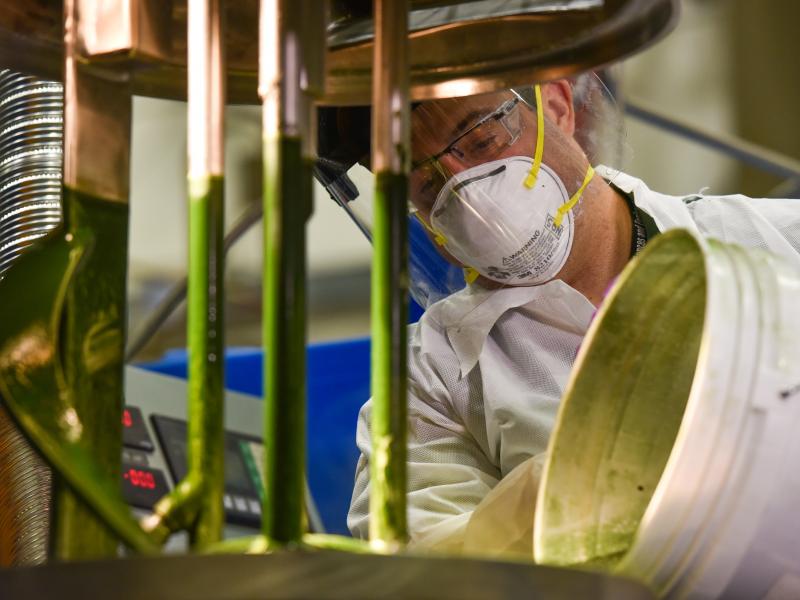
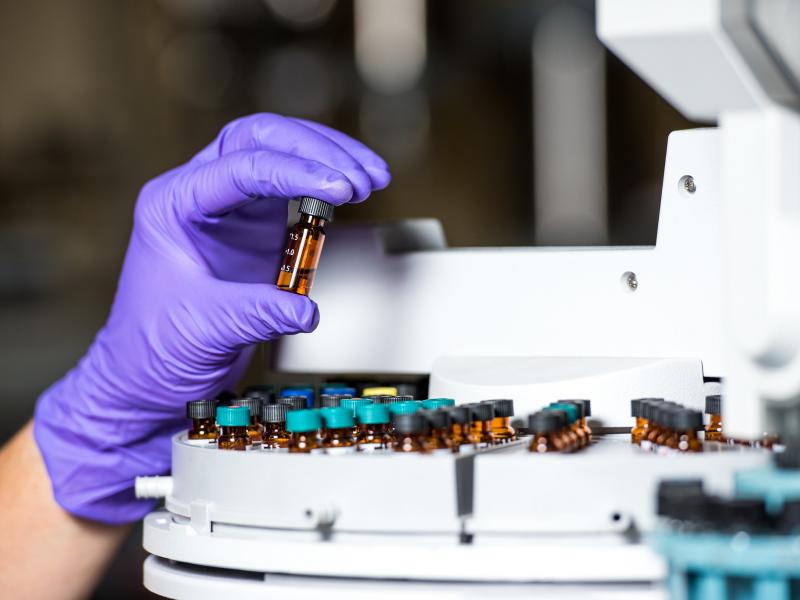
Researchers at PNNL have developed a model that predicts outcomes from the algae hydrothermal liquefaction process in a way that mirrors commercial reality much more closely than previous analyses.
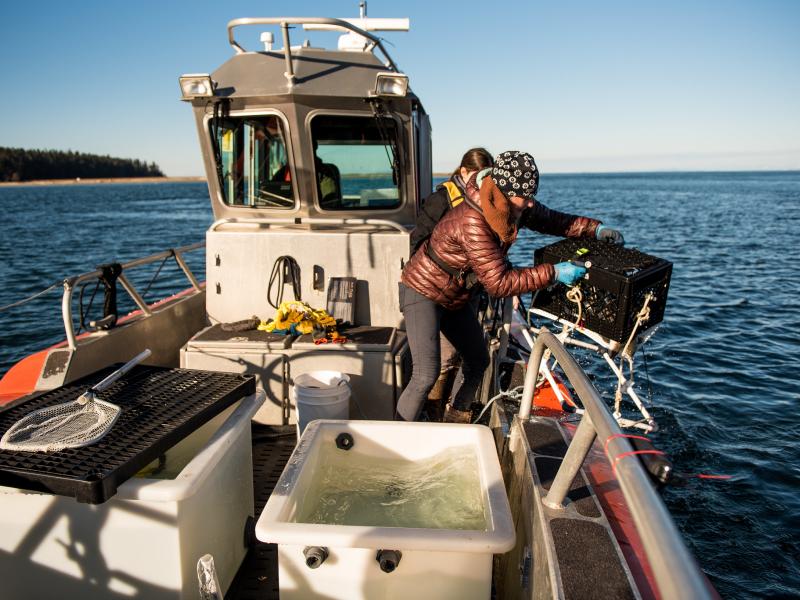
Alicia Gorton, marine scientist and project manager in the PNNL’s Coastal Sciences Division, has joined the editorial board of the Marine Technology Society Journal.
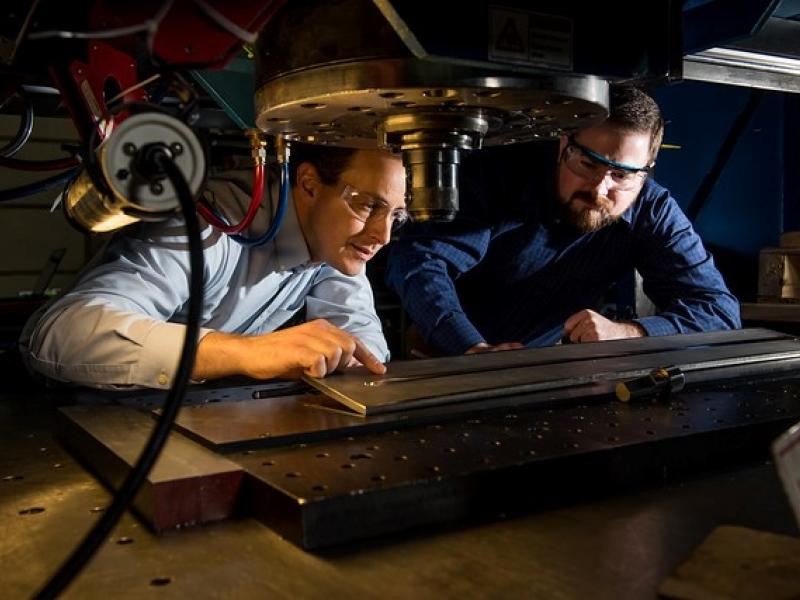
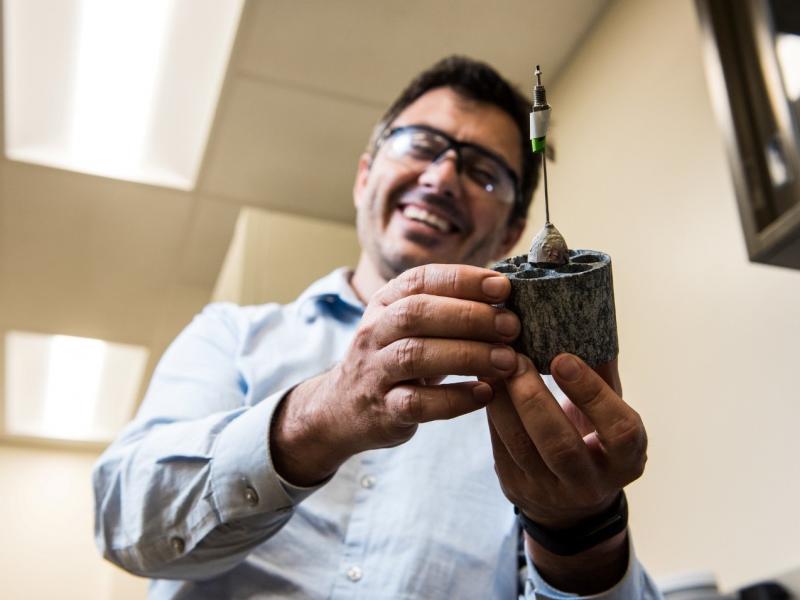
A PNNL study that evaluated the use of friction stir technology on stainless steel has shown that the steel resists erosion more than three times that of its unprocessed counterpart.
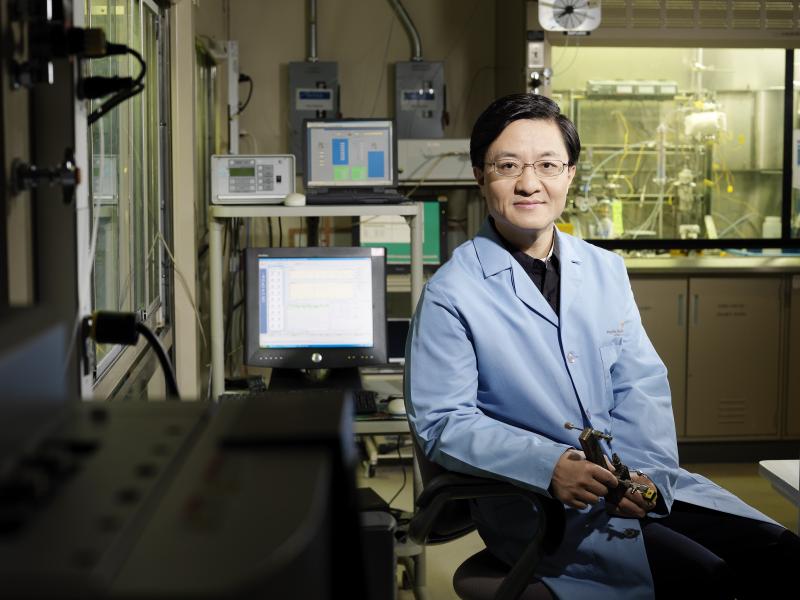
Yong Wang, a PNNL laboratory fellow, has received the 2019 Catalysis and Reaction Engineering Practice Award from the American Institute of Chemical Engineers.
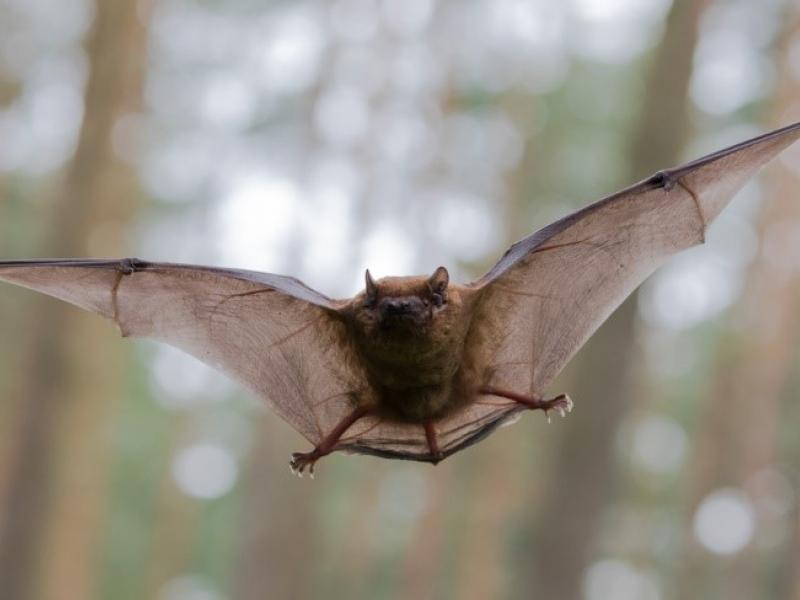
PNNL researchers are developing and evaluating bat tagging and tracking tools that will help design solutions to protect the bat population from wind turbines.
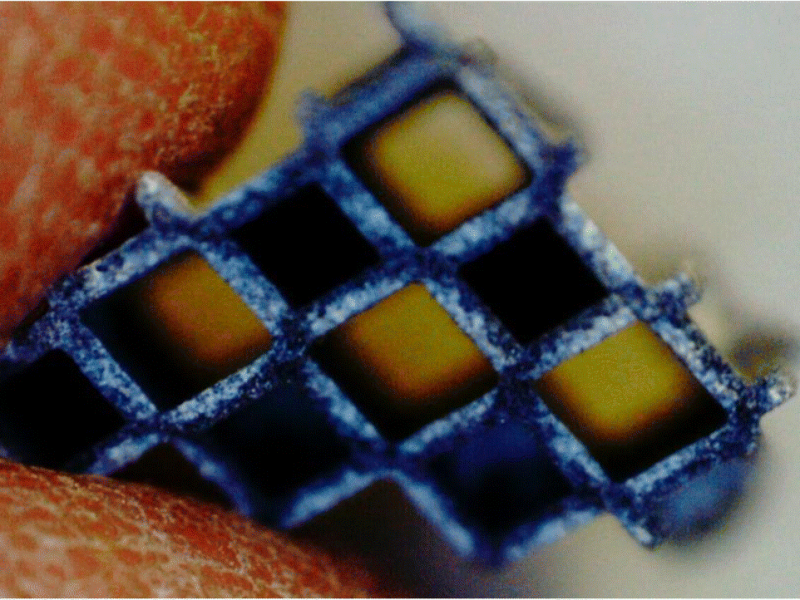
Editors of the journal Emission Control Science and Technology deemed “Coating Distribution in a Commercial SCR Filter” Best Paper in 2018. The authors include PNNL's Mark Stewart, Carl Justin Kamp, Feng Gao, Yilin Wang, and Mark Engelhard.
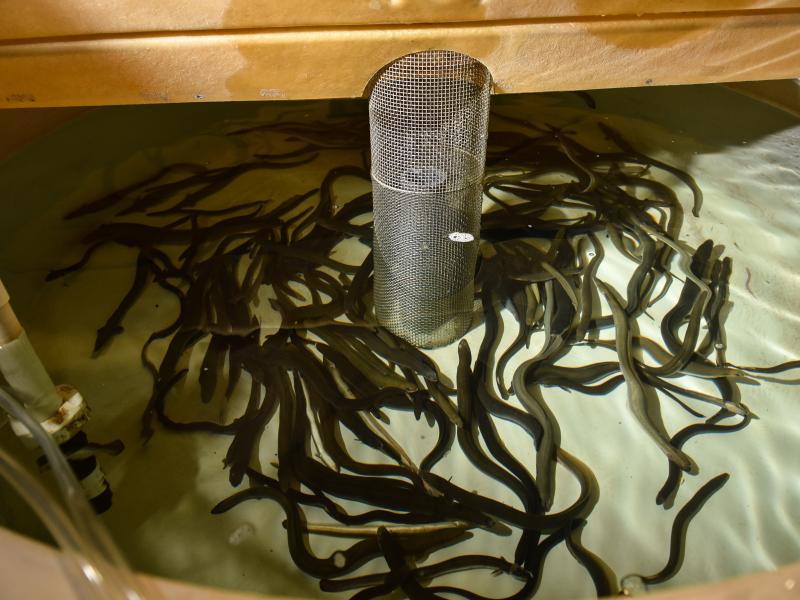
Three PNNL fish researchers recently published a video journal article on how to properly implant miniature acoustic tags in juvenile Pacific lamprey and American eel and how the tags could benefit migration.
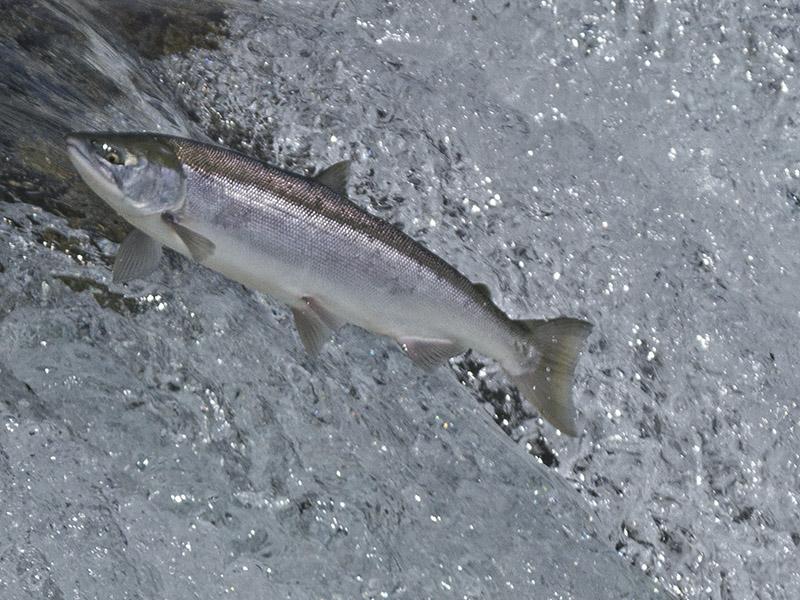
During his doctorate work in southeastern Australia, PNNL fisheries engineer Brett Pflugrath examined weirs, or small dams built across rivers, and how they impact fish passage.
Like its namesake, Triton, a Greek god dubbed the herald of the sea, the Triton Initiative aims to deliver messages from the ocean about marine energy and how it affects nearby marine animals.
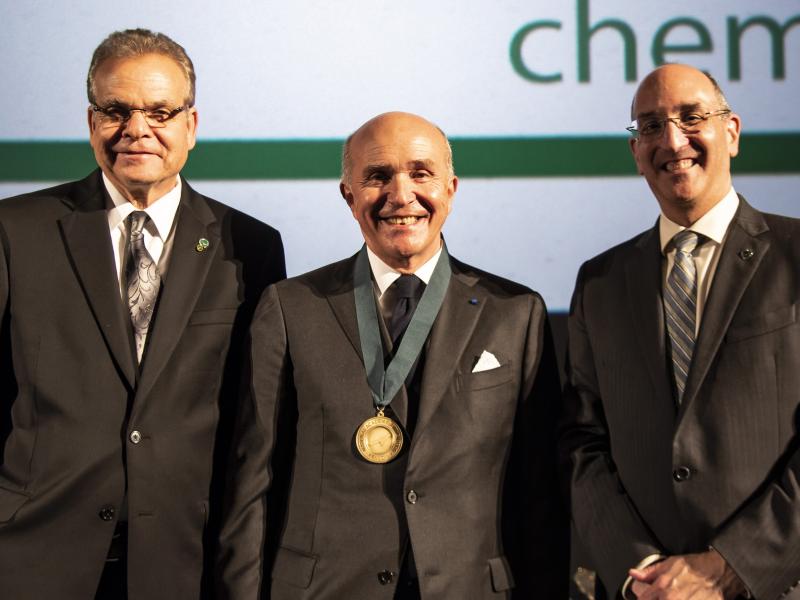
PNNL’s Johannes Lercher was one of 148 researchers recognized at the annual conference of the National Academy of Inventors, held April 10-11, 2019 in Houston, Texas. Lercher recently achieved NAI fellow status, a highly selective honor.
Researchers at PNNL and their collaborators have made a significant improvement to a catalyst that is more rugged and can reduce tailpipe pollution at lower temperatures than existing methods.
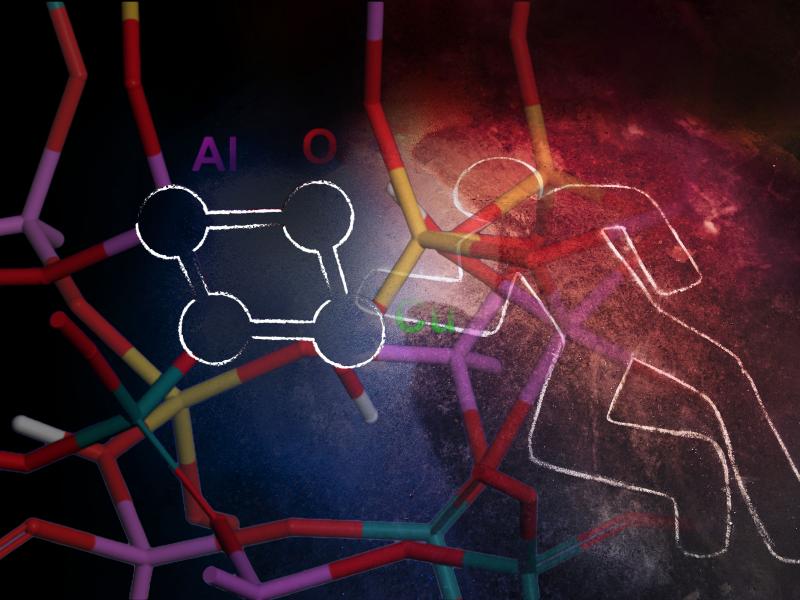
Several years ago, a relatively new catalyst for vehicle emission control began showing failure. A team at PNNL found that this seemingly suicidal catalyst wasn’t actually self-destructing but was the victim of an external assailant.
A new paper found that hydropower turbines with composite blades generate about 20 percent more power than turbines with traditional stainless steel blades at the same flow rate.
When the weather heats up, so does power demand for air conditioners and refrigerators. But what if you could cool things down by using heat itself instead of electricity?