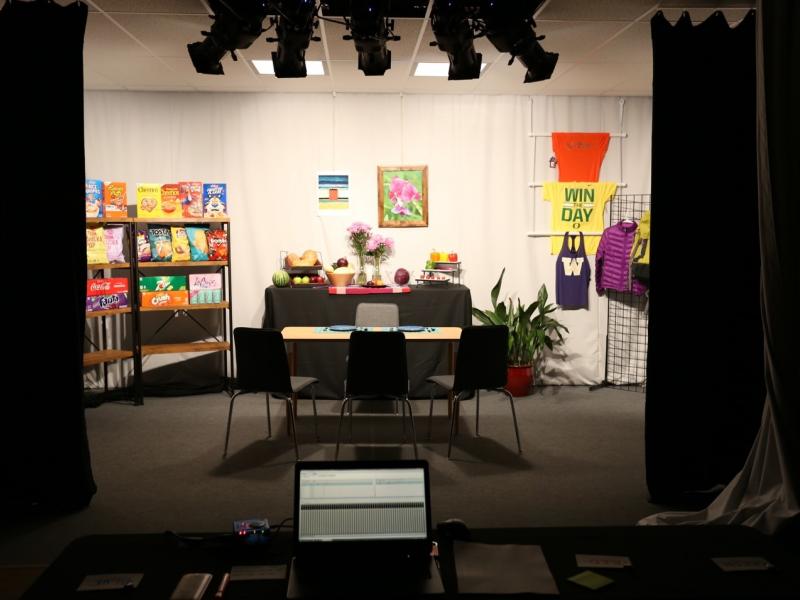
Advancements such as LEDs have changed consumers’ experience with lighting. Whereas there was once a simple choice of how much light a consumer desired, there’s now a variety of choices to be made about the appearance of light.
Through her role in the Department of Energy’s Advanced Scientific Computing Research-supported ExaLearn project, Jenna Pope is developing deep learning approaches for finding optimal water cluster structures for a variety of applications.
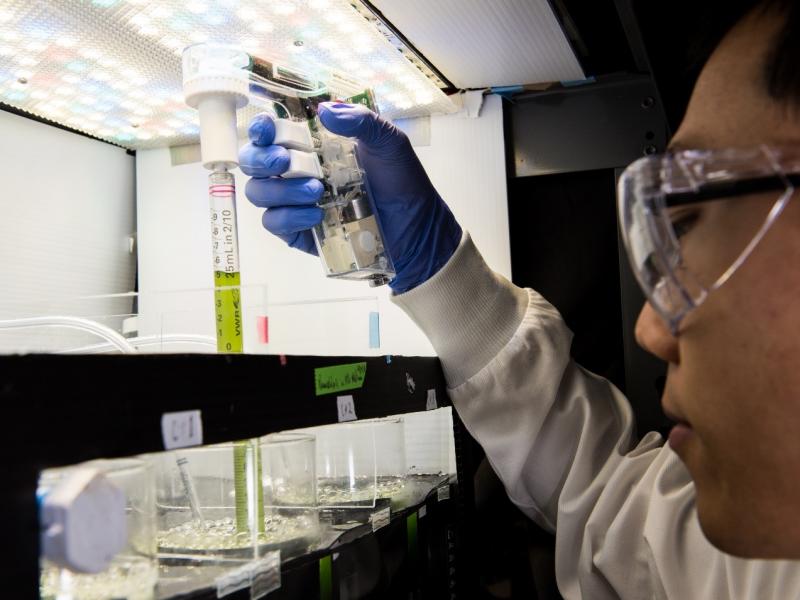
In the third year of the DISCOVR Consortium project, the consortium team has identified an algal strain that progressed successfully through multiple evaluation phases.
Quin Miller is a geochemistry postdoctoral research associate who was recently recognized for “exceptional contributions” to PNNL. The nomination criteria included productivity, innovation, dedication, hard work, and strong sponsor impact.
A multi-institute research team is exploring ways to improve residential walls across America, making homes warmer and drier and delivering significant energy savings.
A new Co-Optima report describes an assessment of 400 biofuel-derived samples and identifies the top ten candidates for blending with petroleum fuel to improve boosted spark ignition engine efficiency.
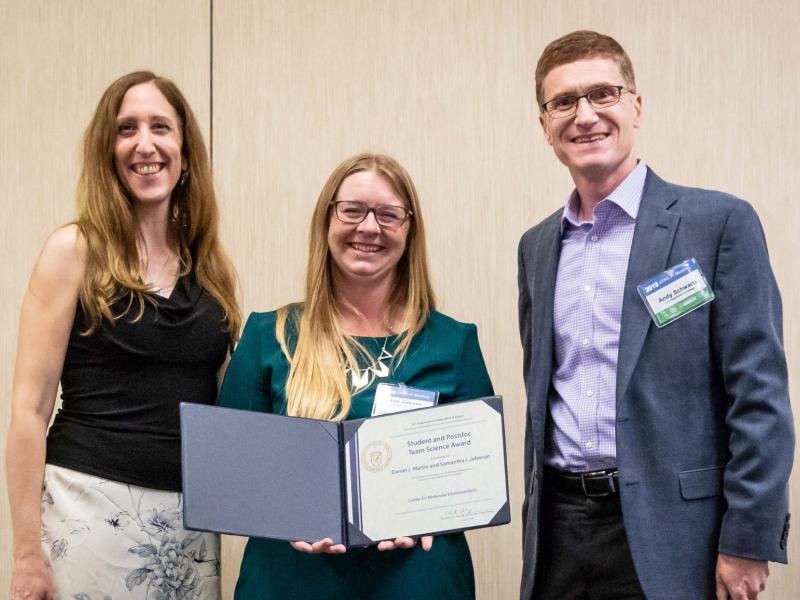
CME investigators Daniel Martin (Yale) and Samantha Johnson (PNNL) received a team science award at the 2019 Energy Frontier Research Centers (EFRC) Principal Investigators' Meeting in Washington, D.C. in July 2019.
Prof. Yogesh (Yogi) Surendranath of the Center for Molecular Electrocatalysis (CME) was honored with a Presidential Early Career Award for Scientists and Engineers.
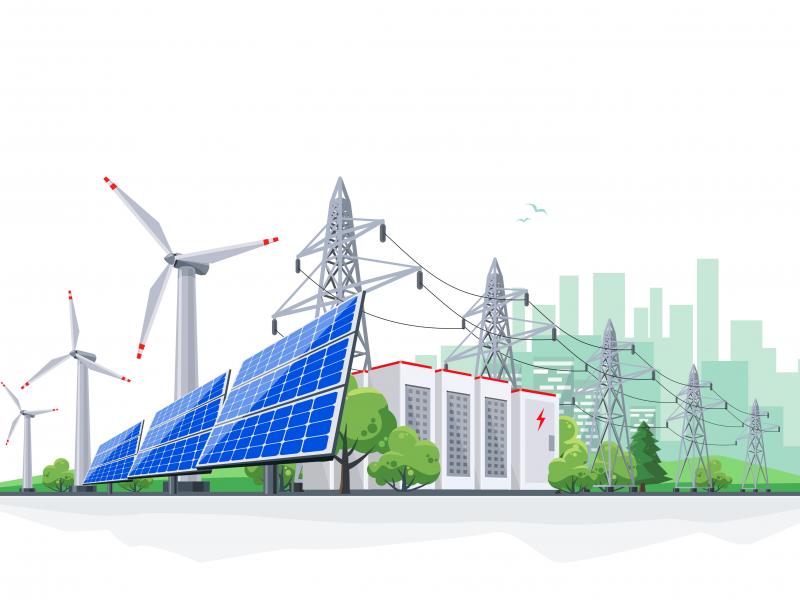
A PNNL technology enables automated Economic Dispatch, which coordinates the use of energy in a manner that enhances distributed generation, efficiency, renewables, and grid reliability.
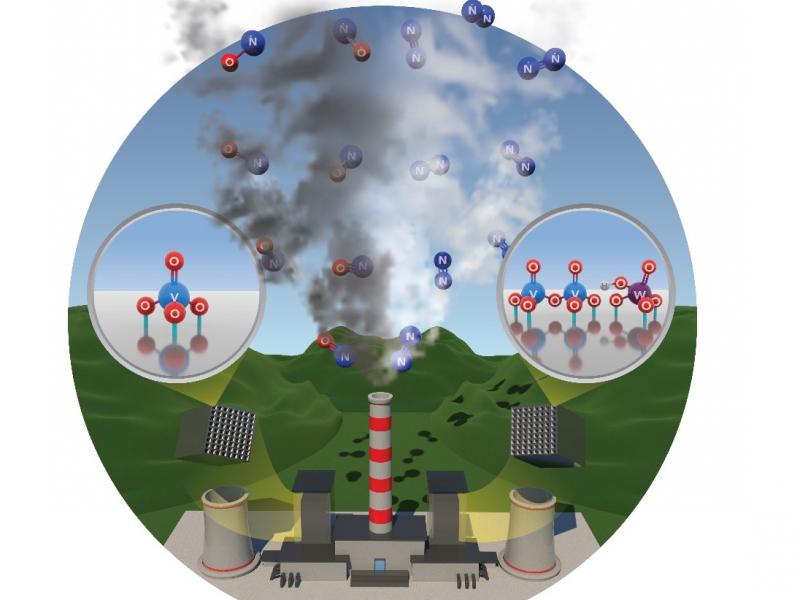
Nitrogen oxides, also known as NOx, form when fossil fuels burn at high temperatures. When emitted from industrial sources such as coal power plants, these pollutants react with other compounds to produce harmful smog.
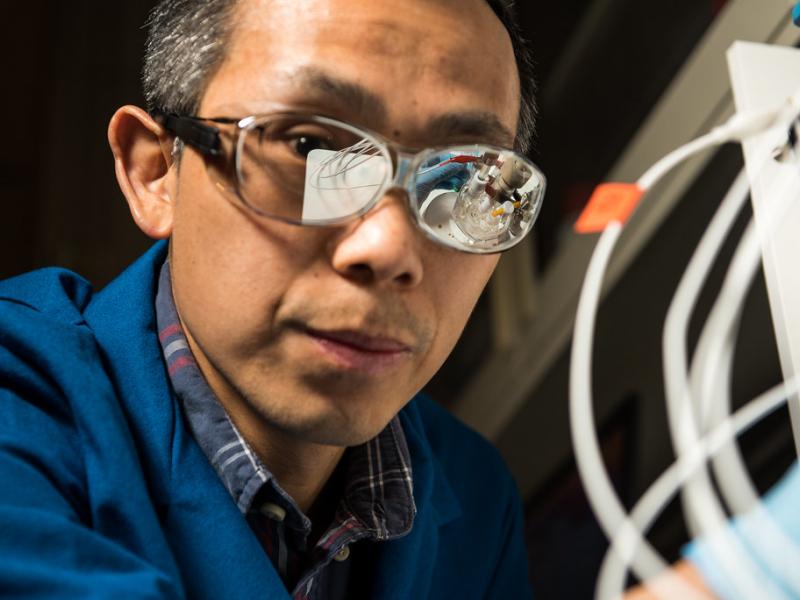
Yuyan Shao, a PNNL electrochemist and materials scientist, served as a guest editor in a recently published special issue of the journal Advanced Materials.
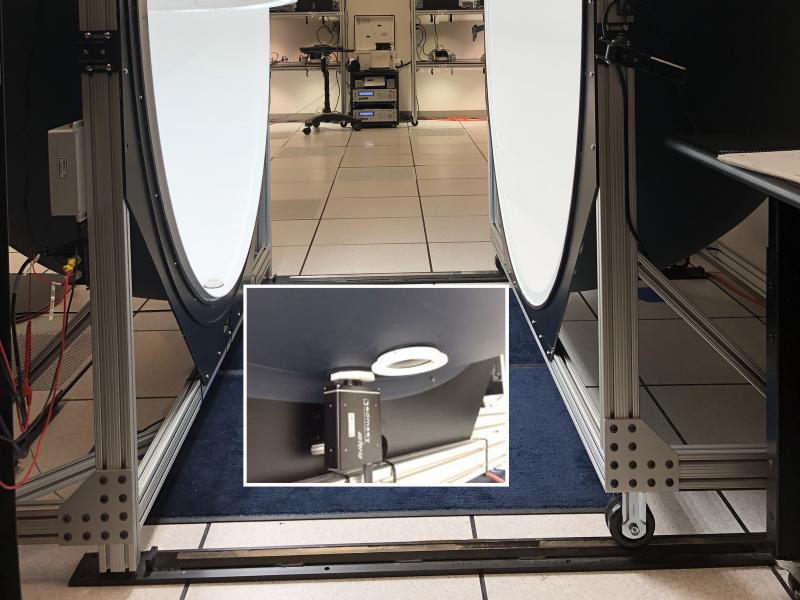
A staple in horror movies, flickering lights can also summon potential human health and productivity concerns. PNNL studied hand-held meters that measure flicker, and the results could improve future measurement and lighting strategies.
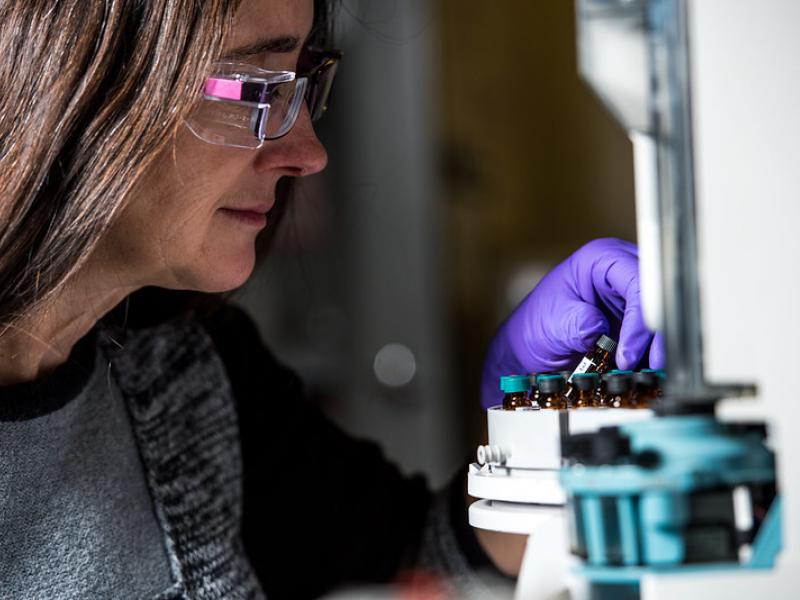
Eric Hoppe, senior scientist, was selected a 2019 American Chemical Society (ACS) fellow. Eric is being recognized for his contributions to analytical chemistry measurements and three decades of volunteer service to the ACS community.
Researchers at PNNL have developed a model that predicts outcomes from the algae hydrothermal liquefaction process in a way that mirrors commercial reality much more closely than previous analyses.