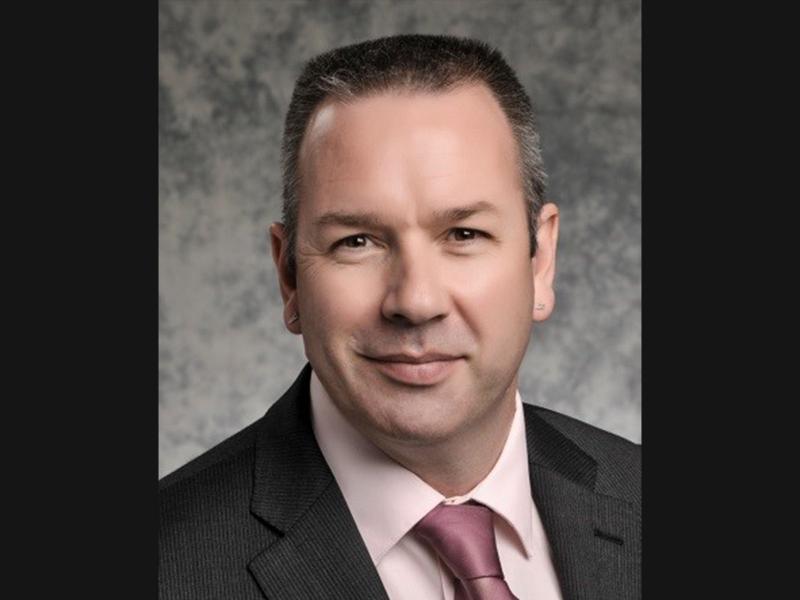
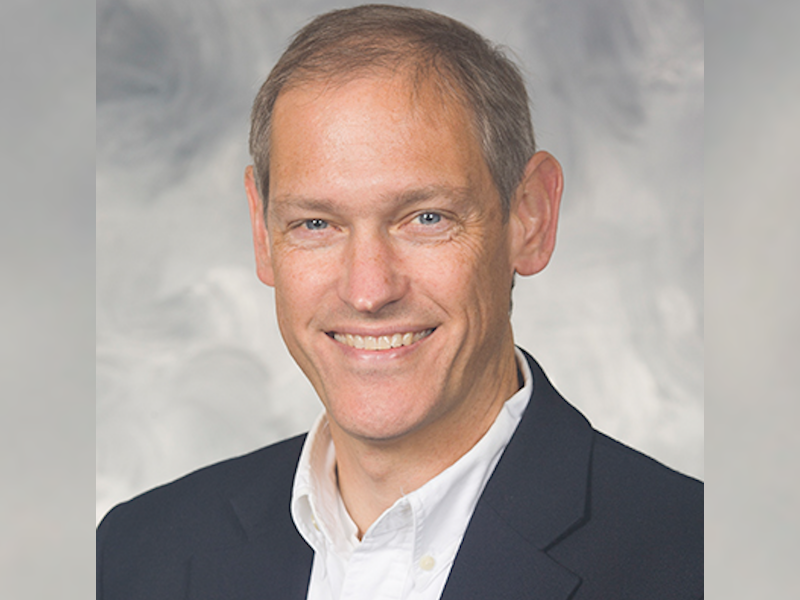
Jonathan Male originally joined PNNL in 2006 as a scientist focused on catalysis. After more than seven years leading DOE’s Bioenergy Technologies Office, he's back at PNNL as a chief scientist in the Energy Processes & Materials Division.
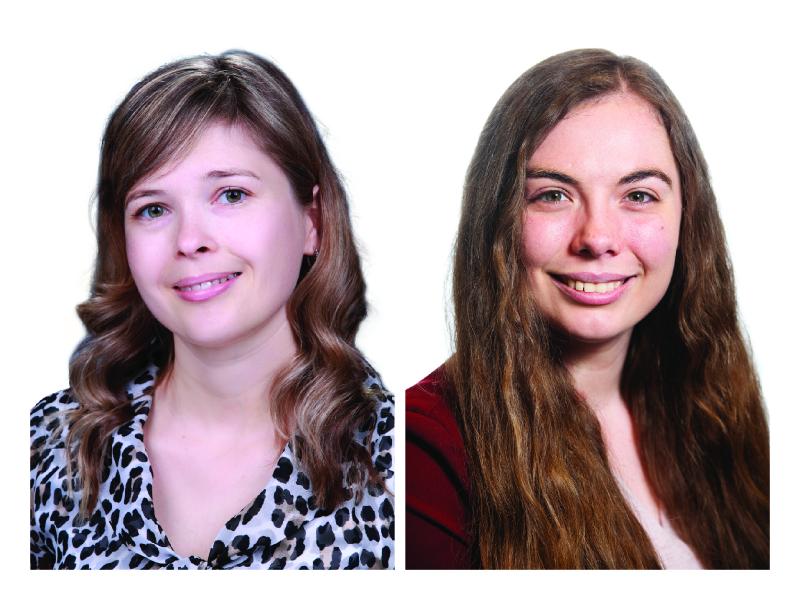
PNNL data scientists Maria Glenski and Svitlana Volkova have contributed a chapter to a book titled Disinformation, Misinformation, and Fake News in Social Media: Emerging Research Challenges and Opportunities.
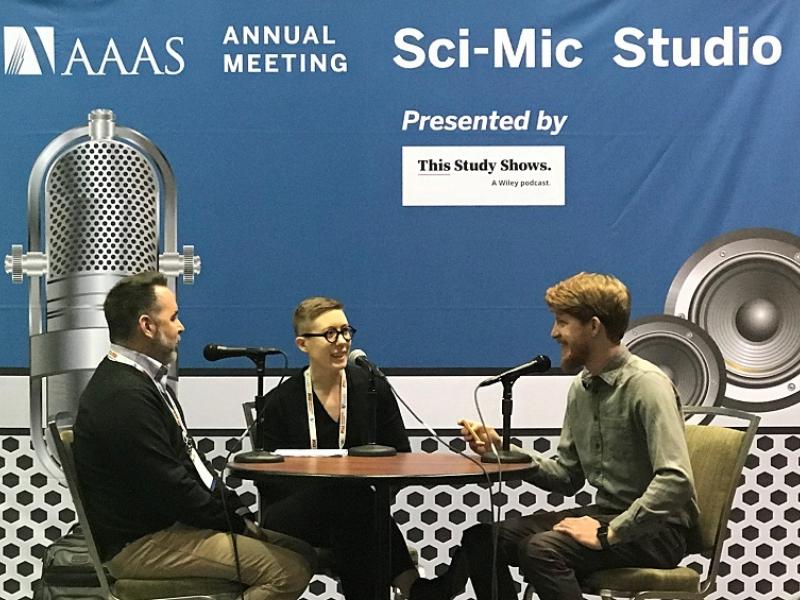
Two PNNL team members, Courtney Corley, a data scientist, and Kyle Bingman, an advisor on assured artificial intelligence (AI), were featured on a recent episode of the U.S. Department of Energy Direct Currents podcast.
Ten staff members from PNNL were invited to attend and lead the various breakout sessions at the Department of Energy Office of Science 5G Enabled Energy Innovation Workshop (5GEEIW), which was held in early March.
Two PNNL researchers are helping define the future of transparency and accountability for public and private use of autonomous and intelligent systems.
Dr. Xiao-Ying Yu, a physical chemist at PNNL, was recently invited to join the editorial board of Atmosphere, an international peer-reviewed journal that publishes work related to—you guessed it—the atmosphere.
Shannon Stahl leads the Molecular Mediators thrust in the Center for Molecular Electrocatalysis (CME). Stahl Is the winner of the 2020 American Chemical Society Catalysis Lectureship.
Bill Cannon, senior scientist and biophysicist in the Computational Mathematics Group, was a co-author of a recent article published in Nature Partner Journals-Digital Medicine.
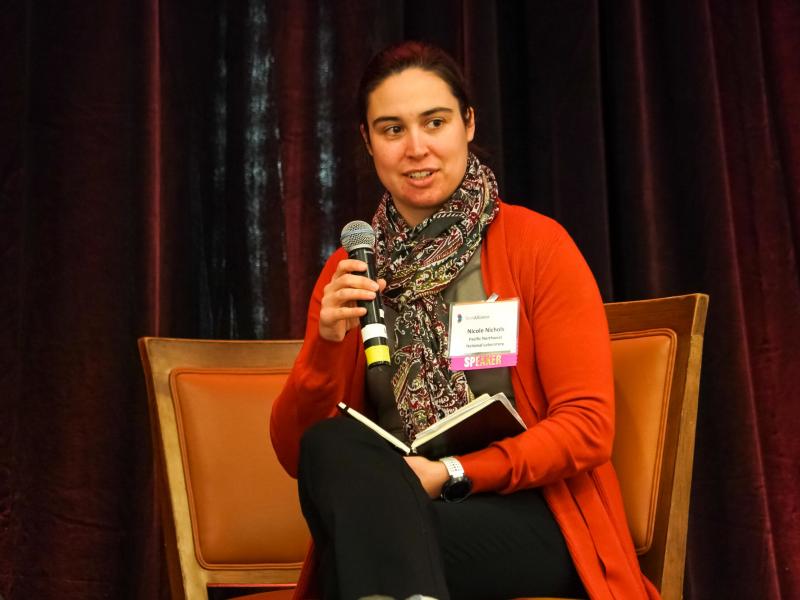
Nicole Nichols, a senior researcher at PNNL, spoke during the AI: Policy Matters Summit in Seattle, Washington on December 12. The summit, hosted by TechAlliance, brought together more than 200 leaders from across Washington State.
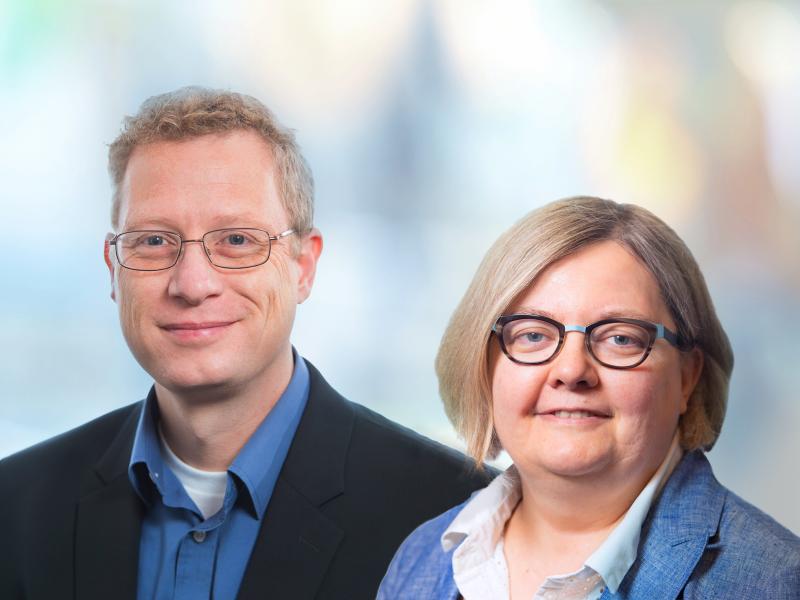
Sonja Glavaski and Kevin Schneider, both electrical engineers at PNNL, have been named as IEEE fellows. IEEE is the world's largest technical professional organization dedicated to advancing technology for the benefit of humanity.
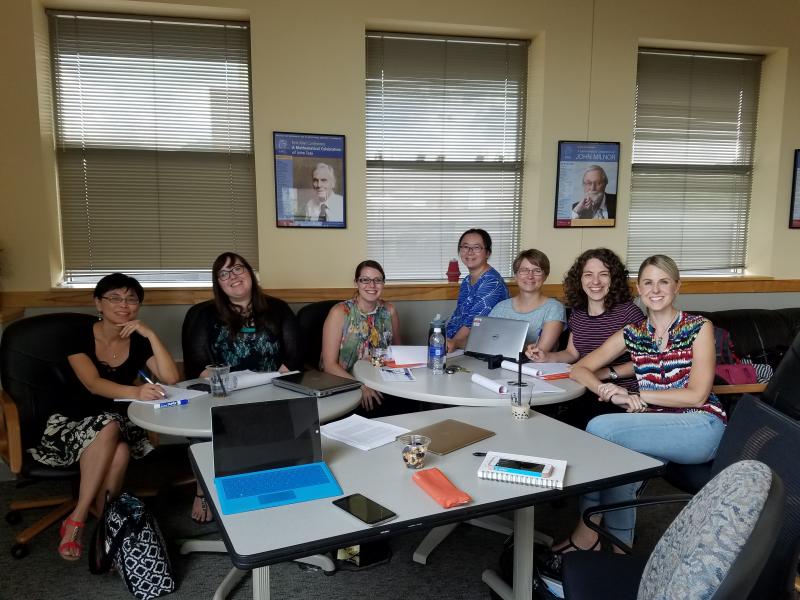
A group of female mathematicians and computer scientists, which includes PNNL’s Emilie Purvine, has published its third paper on joint research to understand and accurately represent object relationships through metric graphs.
Retired PNNL scientist Doug Elliott has received the 2019 Don Klass Award for Excellence in Thermochemical Conversion Science from the Gas Technology Institute.
Through her role in the Department of Energy’s Advanced Scientific Computing Research-supported ExaLearn project, Jenna Pope is developing deep learning approaches for finding optimal water cluster structures for a variety of applications.
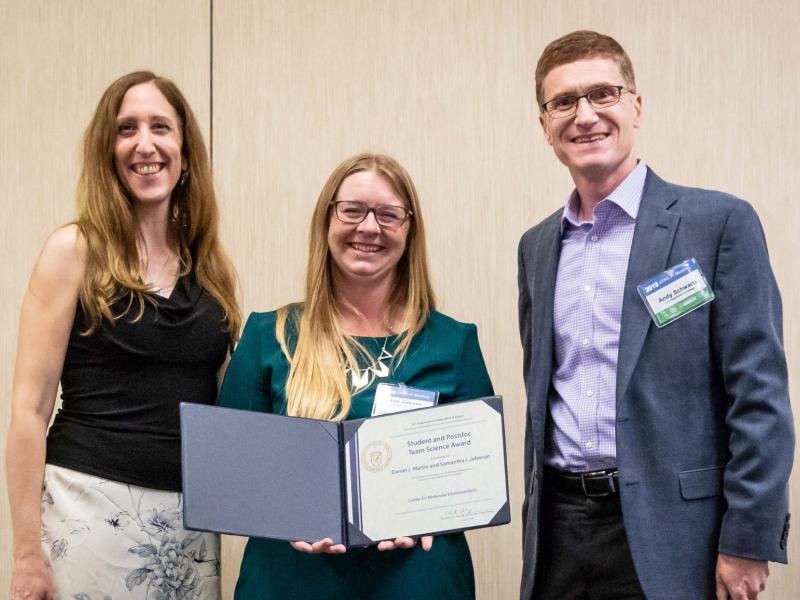
CME investigators Daniel Martin (Yale) and Samantha Johnson (PNNL) received a team science award at the 2019 Energy Frontier Research Centers (EFRC) Principal Investigators' Meeting in Washington, D.C. in July 2019.
Prof. Yogesh (Yogi) Surendranath of the Center for Molecular Electrocatalysis (CME) was honored with a Presidential Early Career Award for Scientists and Engineers.
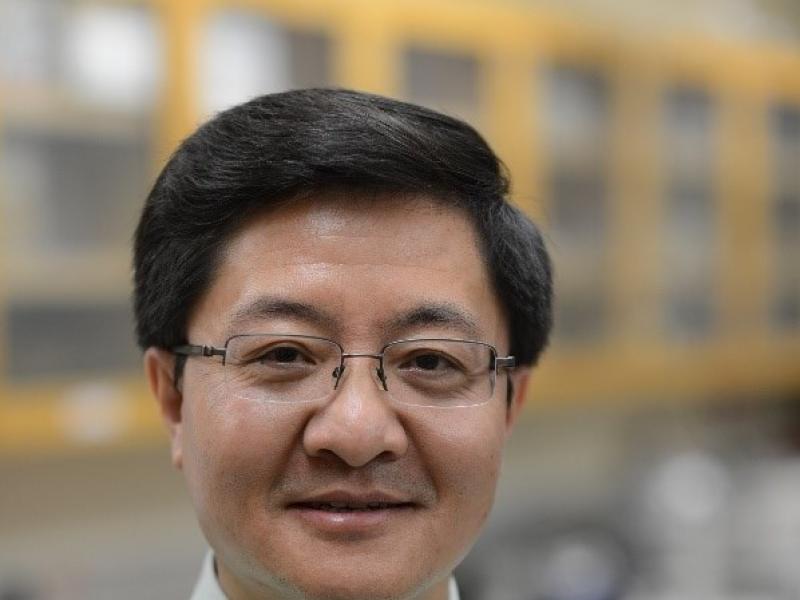
Yong Wang, a PNNL laboratory fellow, has received the 2019 Catalysis and Reaction Engineering Practice Award from the American Institute of Chemical Engineers.
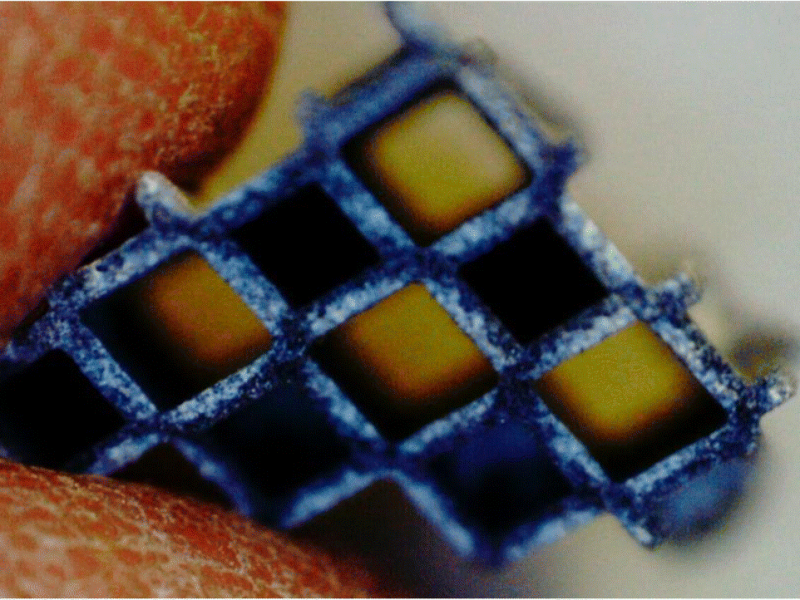
Editors of the journal Emission Control Science and Technology deemed “Coating Distribution in a Commercial SCR Filter” Best Paper in 2018. The authors include PNNL's Mark Stewart, Carl Justin Kamp, Feng Gao, Yilin Wang, and Mark Engelhard.
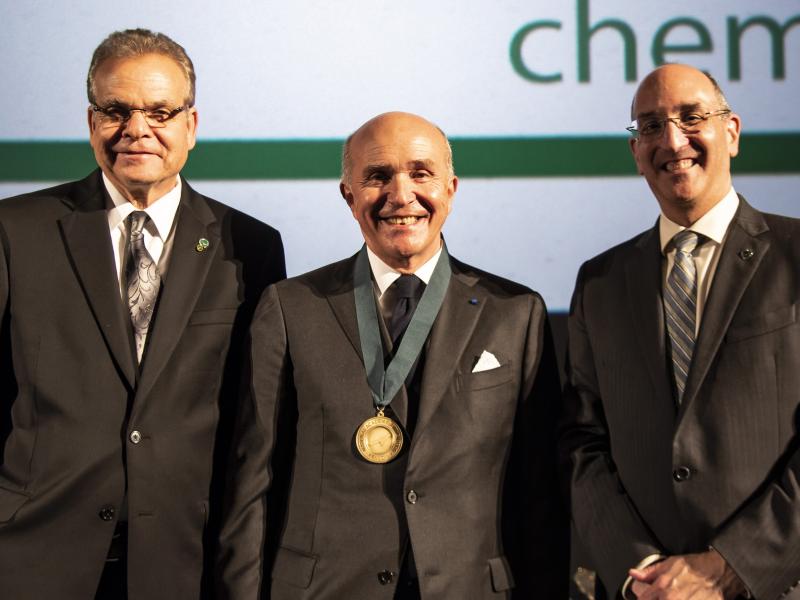
PNNL’s Johannes Lercher was one of 148 researchers recognized at the annual conference of the National Academy of Inventors, held April 10-11, 2019 in Houston, Texas. Lercher recently achieved NAI fellow status, a highly selective honor.
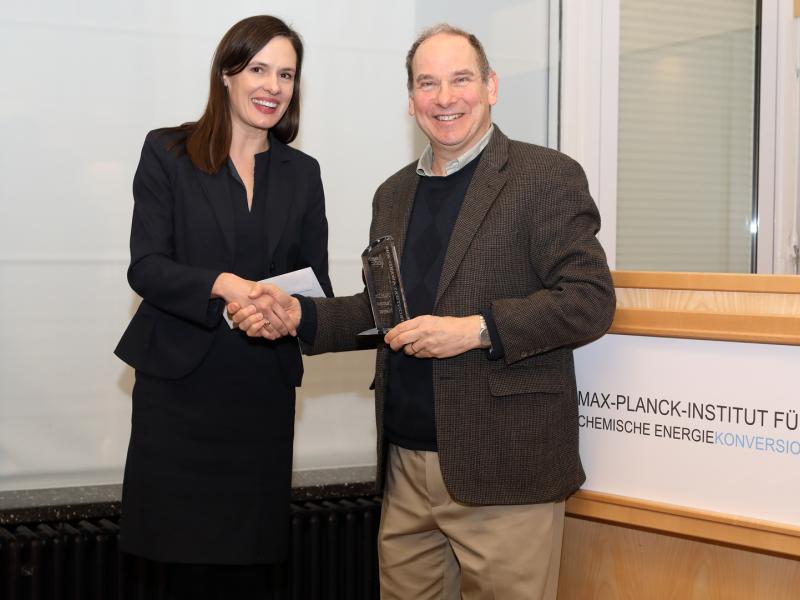
Center for Molecular Electrocatalysis thrust lead for heterogeneous interfaces, Dr. James “Jim” Mayer, was recently honored with the Frontiers Award by the Max Planck Institute for Chemical Energy Conversion.