
PNNL

  • About
  • News & Media
  • Careers
  • Events
  • Research
    • Scientific Discovery
      • Autonomous Science
      • Biology
        • Chemical Biology
        • Computational Biology
        • Ecosystem Science
        • Human Health
          • Cancer Biology
          • Exposure Science & Pathogen Biology
        • Integrative Omics
          • Advanced Metabolomics
          • Chemical Biology
          • Mass Spectrometry-Based Measurement Technologies
          • Spatial and Single-Cell Proteomics
          • Structural Biology
        • Microbiome Science
          • Biofuels & Bioproducts
          • Human Microbiome
          • Soil Microbiome
          • Synthetic Biology
        • Predictive Phenomics
      • Earth & Coastal Sciences
        • Global Change
        • Atmospheric Science
          • Atmospheric Aerosols
          • Human-Earth System Interactions
          • Modeling Earth Systems
        • Coastal Science
        • Ecosystem Science
        • Subsurface Science
        • Terrestrial Aquatics
      • Materials Sciences
        • Materials in Extreme Environments
        • Nondestructive Examination
        • Precision Materials by Design
        • Science of Interfaces
        • Smart Advanced Manufacturing
          • Cold Spray
          • Friction Stir Welding & Processing
          • ShAPE
      • Nuclear & Particle Physics
        • Dark Matter
        • Neutrino Physics
        • Fusion Energy Science
      • Quantum Information Sciences
      • Chemistry
        • Computational Chemistry
        • Chemical Separations
        • Chemical Physics
        • Catalysis
      • Fusion Energy Science
    • Energy Resiliency
      • Critical Minerals and Materials
      • Electric Grid Modernization
        • Emergency Response
        • Grid Analytics
          • AGM Program
          • Tools and Capabilities
        • Grid Architecture
          • Basic Terms & Principles
          • Resource Library
        • Grid Cybersecurity
        • Grid Energy Storage
        • Transmission
        • Distribution
      • Energy Efficiency
        • Appliance and Equipment Standards
        • Building Energy Codes
        • Building Technologies
          • Advanced Building Controls
          • Advanced Lighting
          • Building-Grid Integration
        • Commercial Buildings
        • Federal Buildings
          • Federal Performance Optimization
          • Resilience and Security
        • Residential Buildings
          • Building America Solution Center
          • Energy Efficient Technology Integration
          • Home Energy Score
        • Energy Efficient Technology Integration
      • Energy Storage
        • Electrochemical Energy Storage
        • Flexible Loads and Generation
        • Grid Integration, Controls, and Architecture
        • Regulation, Policy, and Valuation
        • Science Supporting Energy Storage
        • Chemical Energy Storage
      • Environmental Management
        • Waste Processing
        • Radiation Measurement
        • Environmental Remediation
      • Fossil Energy
        • Subsurface Energy Systems
        • Advanced Hydrocarbon Conversion
      • Nuclear Energy
        • Fuel Cycle Research
        • Advanced Reactors
        • Reactor Operations
        • Reactor Licensing
        • Nondestructive Examination
      • Renewable Energy
        • Solar Energy
        • Wind Energy
          • Wind Resource Characterization
          • Wildlife and Wind
          • Wind Systems Integration
          • Wind Data Management
          • Distributed Wind
        • Marine Energy
          • Environmental Monitoring for Marine Energy
          • Marine Biofouling and Corrosion
          • Marine Energy Innovation
          • Marine Energy Resource Characterization
          • Testing for Marine Energy
        • Hydropower
          • Environmental Performance of Hydropower
          • Hydropower Cybersecurity and Digitalization
          • Hydropower and the Electric Grid
          • Materials Science for Hydropower
          • Pumped Storage Hydropower
          • Water + Hydropower Planning
        • Grid Integration of Renewable Energy
        • Geothermal Energy
          • Geothermal Materials Research
      • Transportation
        • Bioenergy Technologies
          • Algal Biofuels
          • Aviation Biofuels
          • Waste-to-Energy and Products
        • Hydrogen & Fuel Cells
        • Vehicle Technologies
          • Emission Control
          • Energy-Efficient Mobility Systems
          • Lightweight Materials
          • Vehicle Electrification
          • Vehicle Grid Integration
    • National Security
      • Chemical & Biothreat Signatures
        • Contraband Detection
        • Pathogen Science & Detection
        • Explosives Detection
        • Threat-Agnostic Biodefense
      • Cybersecurity
        • Discovery and Insight
        • Proactive Defense
        • Trusted Systems
      • Nuclear Material Science
      • Nuclear Nonproliferation
        • Radiological & Nuclear Detection
        • Nuclear Forensics
        • Ultra-Sensitive Nuclear Measurements
        • Nuclear Explosion Monitoring
        • Global Nuclear & Radiological Security
      • Stakeholder Engagement
        • Disaster Recovery
        • Global Collaborations
        • Legislative and Regulatory Analysis
        • Technical Training
      • Systems Integration & Deployment
        • Additive Manufacturing
        • Deployed Technologies
        • Rapid Prototyping
        • Systems Engineering
      • Threat Analysis
        • Advanced Wireless Security
          • 5G Security
          • RF Signal Detection & Exploitation
        • Border Security
        • Internet of Things
        • Maritime Security
        • Millimeter Wave
        • Mission Risk and Resilience
    • Data Science & Computing
      • Artificial Intelligence
      • Graph and Data Analytics
      • Computational Mathematics & Statistics
      • Future Computing Technologies
        • Adaptive Autonomous Systems
    • Publications & Reports
    • Featured Research
  • People
    • Inventors
    • Lab Leadership
    • Lab Fellows
    • Staff Accomplishments
  • Partner with PNNL
    • Education
      • Undergraduate Students
      • Graduate Students
      • Post-graduate Students
      • University Faculty
      • University Partnerships
      • K-12 Educators and Students
      • STEM Education
        • STEM Workforce Development
        • STEM Outreach
      • Internships
    • Community
      • Philanthropy
      • Volunteering
    • Industry
      • Why Partner with PNNL
      • Explore Types of Engagement
      • How to Partner with Us
      • Available Technologies
      • Procurement
      • Technology Ombuds
  • Facilities & Centers
    • All Facilities
      • Atmospheric Radiation Measurement User Facility
      • Electricity Infrastructure Operations Center
      • Energy Sciences Center
      • Environmental Molecular Sciences Laboratory
      • Grid Storage Launchpad
      • Institute for Integrated Catalysis
      • Interdiction Technology and Integration Laboratory
      • PNNL Portland Research Center
      • PNNL-Seattle
      • PNNL-Sequim (Marine and Coastal Research)
      • Radiochemical Processing Laboratory
      • Shallow Underground Laboratory

The Institute for Quantum Science

  • Team
  • News
  • Publications

Breadcrumb

  1. Home
  2. Projects
  3. The Institute for Quantum Science

Institute Team

John Johnson

Director

John R. Johnson

john.johnson@pnnl.gov

John R. Johnson serves as director of the Institute of Quantum Sciences at Pacific Northwest National Laboratory (PNNL) and is a principal advisor in PNNL’s Integrated Discovery Sciences Directorate. He brings decades of research and leadership experience spanning quantum information science, computational science, cybersecurity, high-performance computing, artificial intelligence, and machine learning. His primary interests include computer architecture and the design and optimization of algorithms for complex scientific challenges. 

Photo of Marvin Warner

Executive Officer 

Marvin Warner

marvin.warner@pnnl.gov

Dr. Marvin G. Warner serves as Executive Officer for the Institute for Quantum Sciences at PNNL. He is a senior materials scientist whose work spans quantum materials, quantum computing, advanced manufacturing, and scientific computing, with an emphasis on building the scientific, technical, and organizational capabilities required to transition quantum information science from fundamental research to operational impact.

Mark Raugas Portrait

Chief Scientist 

Mark Raugas

mark.raugas@pnnl.gov

Dr. Mark Raugas is the Chief Scientist for the Institute for Quantum Sciences at PNNL.  He is a mathematician and physicist who currently works in the fields of AI, quantum information sciences, and advanced computing.

Jay Bardhan

Jay Bardhan

Computational Scientist 

Jay Bardhan is a computational scientist with the Systems Modeling and Computational Science team in PNNL’s Environmental Molecular Sciences Division and the Environmental Molecular Sciences Laboratory (EMSL) user program.

Anne Chaka

Anne Chaka

Computational Scientist 
 

Dr. Anne Chaka is a senior research scientist in the Geochemistry group at Pacific Northwest National Laboratory (PNNL), where she applies computational methods to understand quantum phenomena and chemistry in complex environments. 
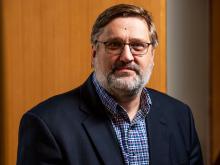
Karol Kowalski

Karol Kowalski

Laboratory Fellow, Chemical Physics Theory Group

Dr. Kowalski is an expert in advancing electronic structure methods and parallel algorithms for many-body methods, and applying these formalisms to tackle complex chemical processes. Over the last seven years he has been coordinating the development of NWChem computational chemistry software at PNNL.

Chenxu Liu

Chenxu Liu

Computer Scientist

Chenxu Liu is a physicist, currently working as a quantum scientist. Liu joined the High-Performance Computing (HPC) group at Pacific Northwest National Laboratory in 2023. His research focuses on quantum optics and its application in designing quantum computing devices and control protocols, quantum communication using photonic graph states, entanglement purification and concentration, quantum algorithms applied to near-term quantum hardware, as well as quantum computing architecture design.

Andrew Lumsdaine

Andrew Lumsdaine

Laboratory Fellow, Advanced Computing, Mathematics & Data Division

Andrew Lumsdaine is an internationally recognized expert in the area of high-performance computing who has made important contributions in many of the constitutive areas of HPC. In particular, he has contributed in the areas of HPC systems, programming languages, software libraries, and performance modeling.

Chris Oehmen

Chris Oehmen

Senior Research Scientist

Chris Oehmen received his B.A. in physics and mathematics from Saint Louis University in 1995. He earned M.S. and Ph.D. degrees in biomedical engineering from the University of Memphis/University of Tennessee, HSC Joint program in 1999 and 2003, respectively where he was a DOE Computational Science Graduate Fellow.

Bo Peng

Bo Peng

Computational Scientist

Bo Peng obtained his BS in chemistry from Nankai University in 2005, and his PhD in theoretical chemistry from the University of Washington in 2016. He then joined PNNL as a Linus Pauling fellow in 2016, working on the development of low-scaling coupled cluster approach and its related high-performance  computing library.

Michael Spradling is senior advisor for research business capture and the IDREAM operations director (20210

Michael Spradling

Principal Advisor

Michael Spradling has served as an advisor for research program development and operations at PNNL since 2014. He leverages program development, sponsor-relations, and leadership experience to elevate strategic efforts to sustain funding and deliver science and technology programs sponsors.

Photo of Samuel Stein

Sam Stein 

Quantum Computer Scientist

Sam Stein obtained his MS in Data Science from Fordham University in New York. His research focused on topics such as Quantum Deep Learning, a Quantum Machine Learning Framework, and Quantum Generative Adversarial Networks.

Photo of Brent VanDevender

Brent VanDevender

Physicist

Dr. VanDevender is an experimental nuclear physicist with research interests divided between basic science and applications that benefit from his nuclear physics and radiation detection background. 

PNNL

  • Get in Touch
    • Contact
    • Careers
    • Doing Business
    • Environmental Reports
    • Security & Privacy
    • Vulnerability Disclosure Policy
    • Notice to Applicants
  • Research
    • Scientific Discovery
    • Energy Resiliency
    • National Security
Subscribe to PNNL News
Department of Energy Logo Battelle Logo
Pacific Northwest National Laboratory (PNNL) is managed and operated by Battelle for the Department of Energy
  • YouTube
  • Facebook
  • X (formerly Twitter)
  • Instagram
  • LinkedIn