Pine Hill Preserve
Managing land and vegetation to reduce wildfire risk and conserve rare plants
Quick Facts

- Location: Rural area of western El Dorado County, California, between Folsom Lake and the Lake Tahoe region
- Primary Function: Land management
- Key Outcome: Conservation of rare plants and wildfire risk reduction
The Pine Hill Preserve project is an effort led by the Sacramento Municipal Utility District (SMUD) to reduce wildfire risk in a high-voltage transmission corridor while protecting one of California’s most unique ecosystems. Located in western El Dorado County, California, between Folsom Lake and the Lake Tahoe region, the Preserve spans 4,940 acres and includes the federally designated Pine Hill Area of Critical Environmental Concern. It is home to eight rare plant species—four found nowhere else—thriving in its distinctive gabbro soils. The Pine Hill Preserve project demonstrates how utilities, agencies, and conservation partners can work together to achieve multiple goals: wildfire prevention, ecological stewardship, and long-term habitat protection.
What Are the Benefits of Restoring Native Plant Communities?
The Pine Hill Preserve project improved ecosystem resilience by restoring native plant communities that are adapted to fire-prone landscapes, reducing the likelihood of catastrophic wildfires. Like much of California, the region where the Preserve is situated has a Mediterranean climate, with warm, dry summers and mild winters. With these conditions, especially during periods of prolonged drought, there’s a greater risk of wildfire. Electric utility infrastructure, particularly transmission lines, can pose a high risk of ignition if corridors are not effectively managed to mitigate fire risk. Through integrated vegetation management (IVM) practices, the project not only minimizes fire hazards but also restores native plant communities, while supporting pollinator habitats. These efforts have strengthened ecosystem resilience, improved biodiversity, and earned national recognition for sustainable land management.
Stebbins’ morning glory
Pine Hill ceanothus
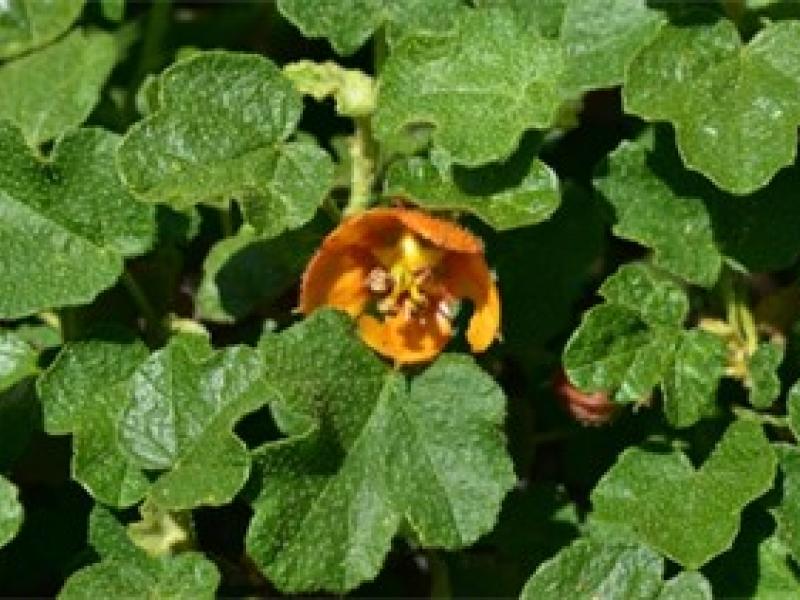
El Dorado bedstraw
Pine Hill flannelbush
The four federally endangered plant species endemic to the Pine Hill Preserve. From left to right, Stebbins’ morning glory, Pine Hill ceanothus, El Dorado bedstraw, and Pine Hill flannelbush. Photos are courtesy of U.S. Fish and Wildlife Service.
Who Was Involved?
Sacramento Municipal Utility District
SMUD led the project to manage vegetation in its transmission corridor through Pine Hill Preserve, implementing IVM practices to reduce wildfire risk. They coordinated site mastication, selective herbicide application, and ongoing monitoring of plants and wildlife. SMUD also partnered with research organizations to collect data and share best practices for pollinator conservation.
Bureau of Land Management
The Bureau of Land Management owns and manages much of the federal land within Pine Hill Preserve and provided guidance on acceptable vegetation management practices. They collaborated with SMUD to approve selective herbicide use, which required environmental assessments and compliance with National Environmental Policy Act regulations. The Bureau of Land Management also worked with other agencies to ensure rare and endangered species were protected during project activities.
Other Agencies and Organizations
The U.S. Fish and Wildlife Service and California Department of Fish and Wildlife also supported efforts related to SMUD’s plans for selective herbicide applications at Pine Hill Preserve. These agencies also helped to ensure compliance with state and federal regulations. SMUD partnered with the Electric Power Research Institute on monitoring efforts to track wildlife using the corridor. Two nonprofit conservation organizations, the American River Conservancy and California Native Plant Society, contributed expertise on habitat restoration and biodiversity. The utility also worked with different contractors, including those who specialize in different vegetation management approaches and those who can identify protected species and flag their location before any work is started.
Key Project Takeaways
- Integrated vegetation management in rights-of-way can meet multiple objectives, including wildfire mitigation. SMUD’s work in the Pine Hill Preserve demonstrates that vegetation management activities undertaken by utilities in transmission corridors can lead to multiple beneficial outcomes. Restoring native plants and selectively removing invasive plant species supports wildfire mitigation, since the native plants are more resilient to fire and less likely to act as fuel.
- Continuous investment in data and surveying facilitated better site outcomes, effective permitting, and partnerships. The utility’s approach has included regular data collection and surveying, which has supported research and analysis of the local ecosystem and has allowed the utility to use data to effectively iterate on their integrated vegetation management approaches.
- A team of utility specialists worked together across operational structures. Communication among all stakeholders involved or affected, including different agencies and neighboring landowners, has been crucial to effective long-term transmission corridor management.