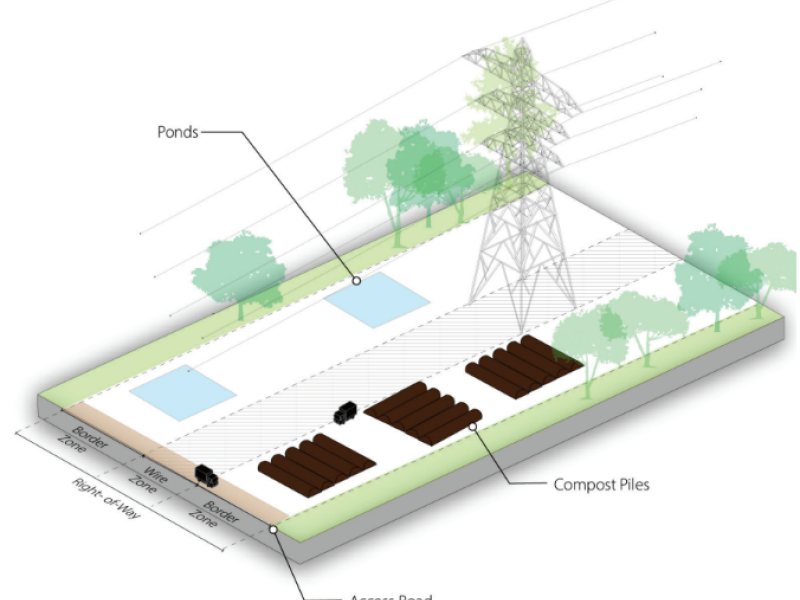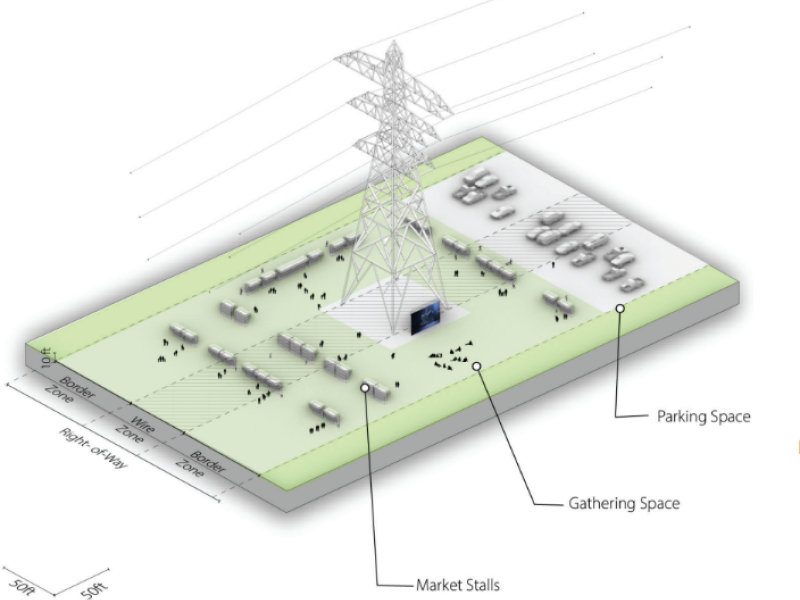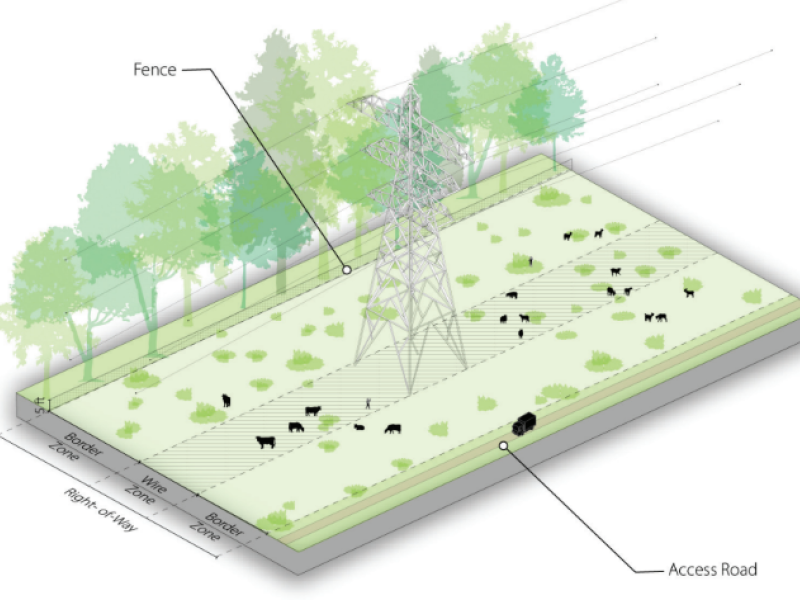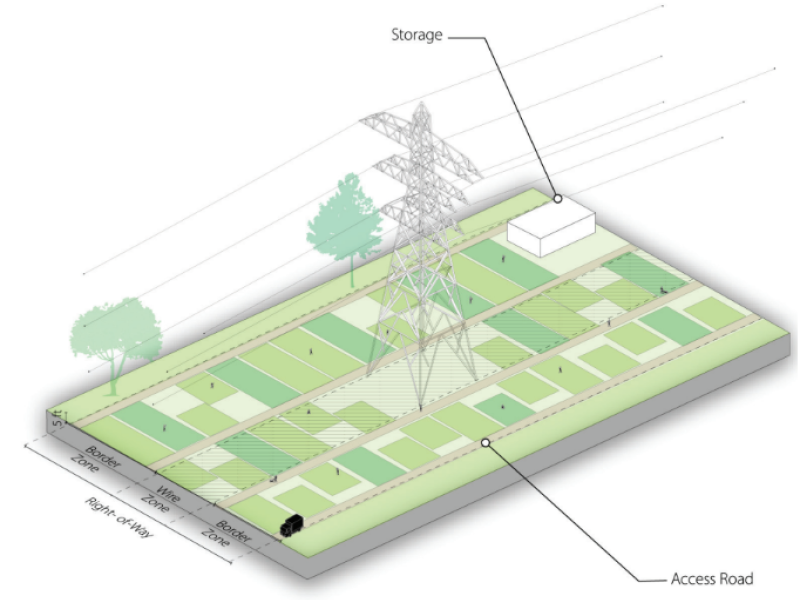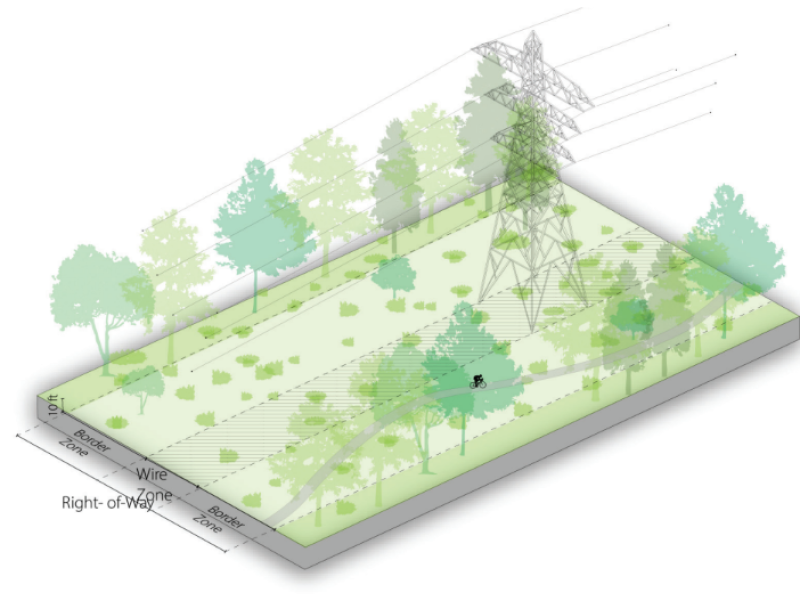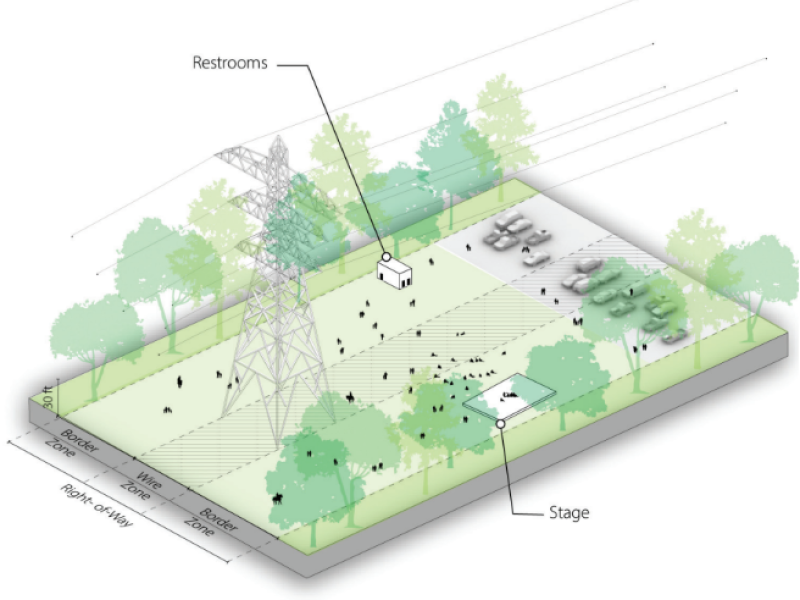
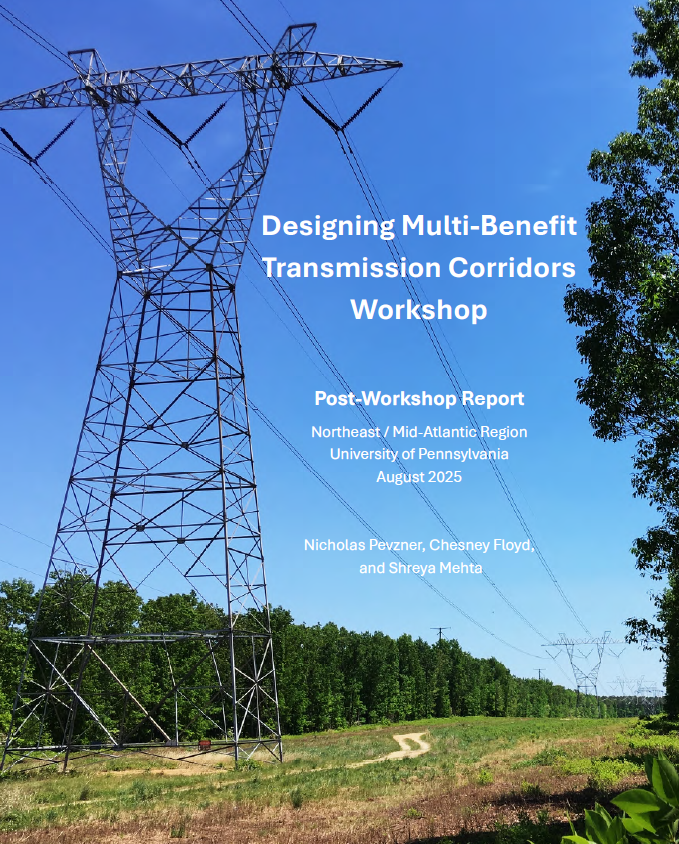
On August 15, Pacific Northwest National Laboratory sponsored a workshop held at the University of Pennsylvania to explore the potential of multi-benefit transmission corridors. The event brought together design experts and industry stakeholders to reimagine transmission infrastructure as spaces that offer ecological, social, and economic value. Participants examined innovative design strategies that integrate public experience and environmental benefits into the expansive landscapes of energy transmission. The workshop emphasized making layered infrastructure more understandable and engaging for communities through spatial design and curated experiences. The workshop was funded by the U.S. Department of Energy.
The workshop organized participants into teams consisting of designers, utility experts, trail advocates, and other specialists to explore innovative transmission corridor designs using illustrated module cards and site scenarios. Guided by four key landscape principles—Multifunctionality, Connectivity, Legibility, and Participation—participants evaluated 30 co-location concepts to envision corridors that support ecological, social, and infrastructural benefits.
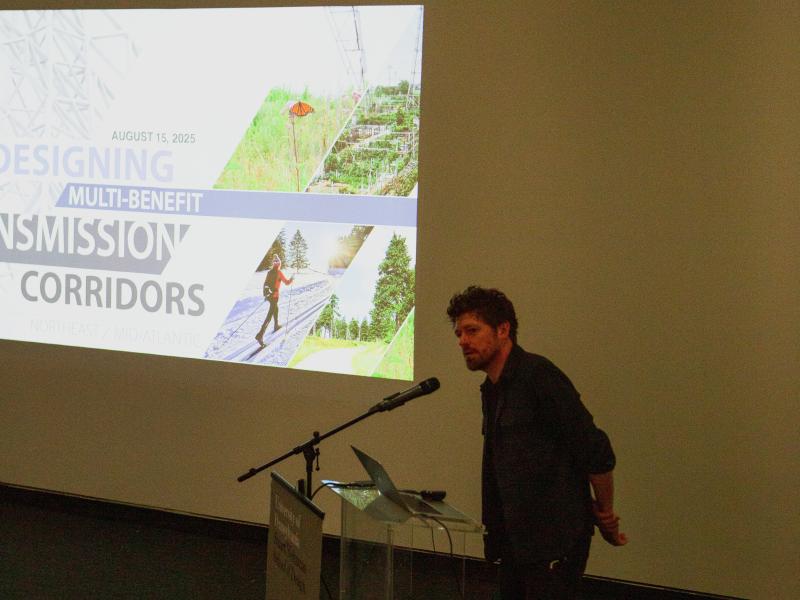
Nicholas Pevzner, Assistant Professor in the Department of Landscape Architecture and Regional Planning at UPenn’s Weitzman School of Design, presents during the workshop.
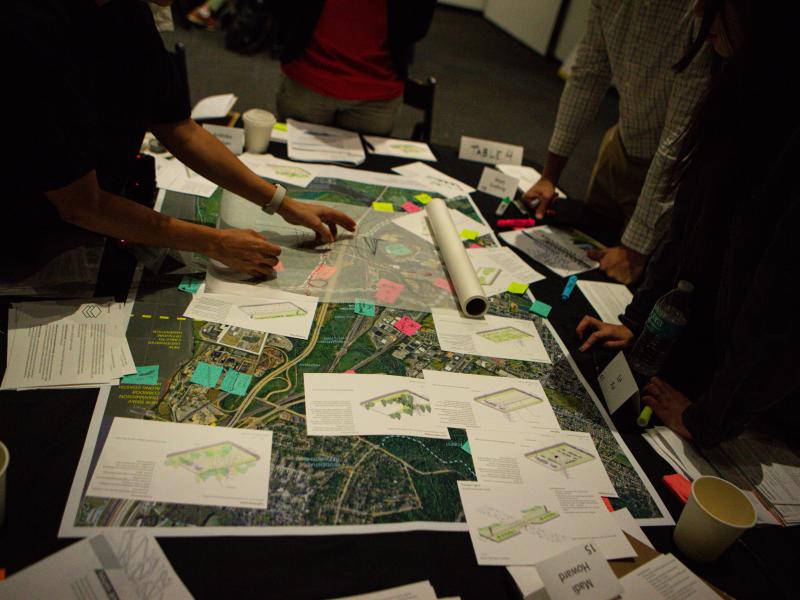
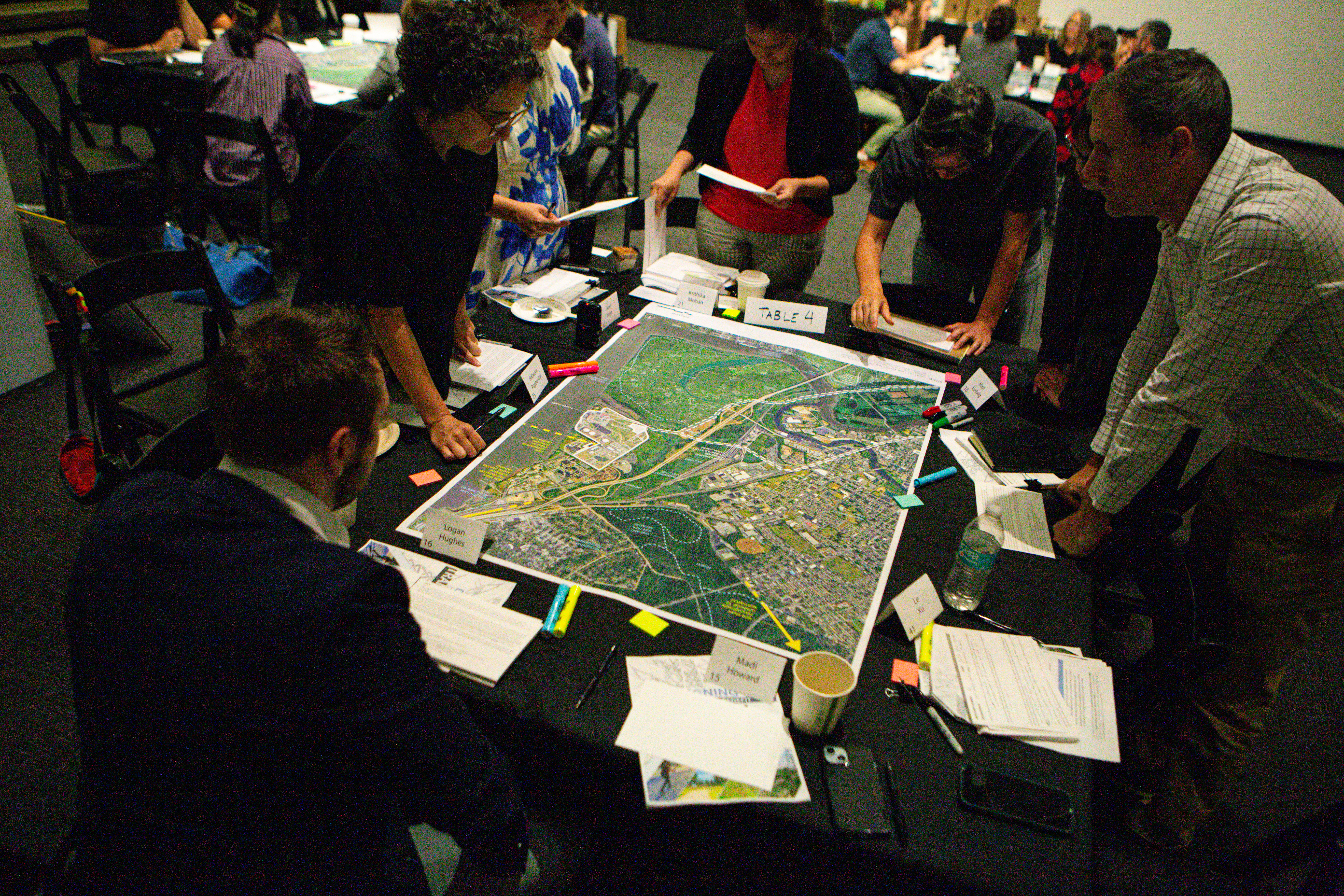
Participants brainstormed innovative transmission corridor designs using illustrated module cards and site scenarios.
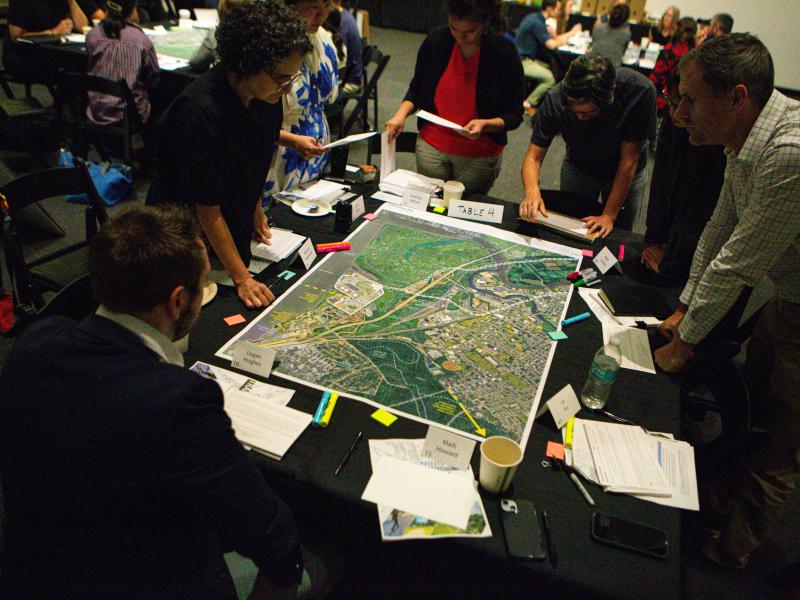
Participants brainstormed innovative transmission corridor designs using illustrated module cards and site scenarios.
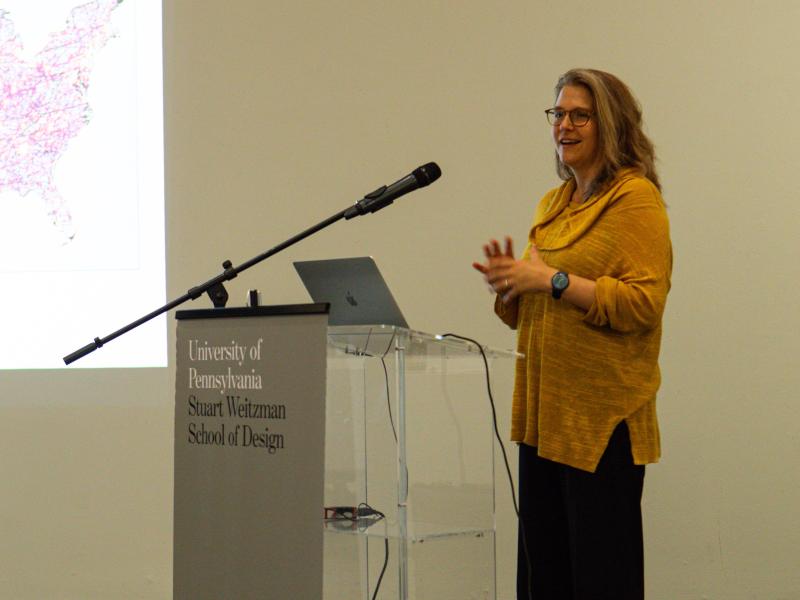
Rebecca O'Neil from PNNL presents during the event.
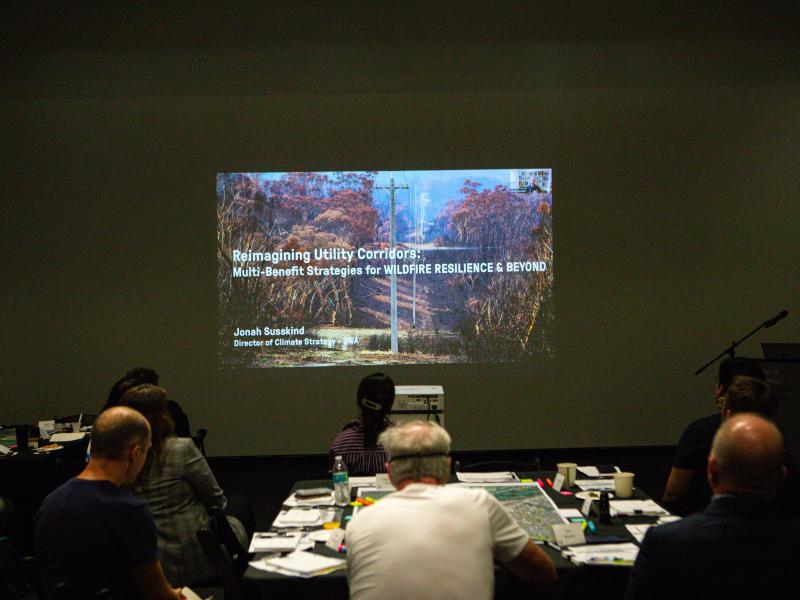
Attendees participanted in lively discussions and presentations on reimagining utility corridors.
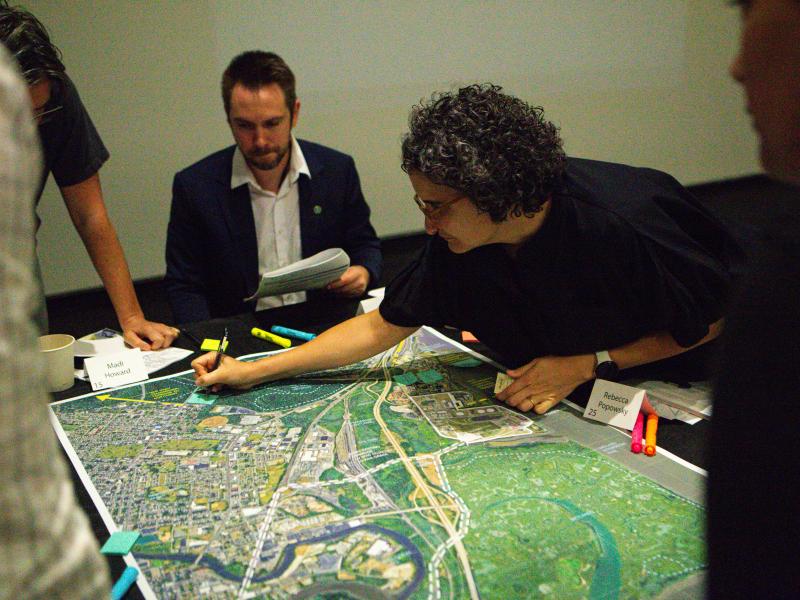
Participants brainstormed innovative transmission corridor designs using illustrated module cards and site scenarios.
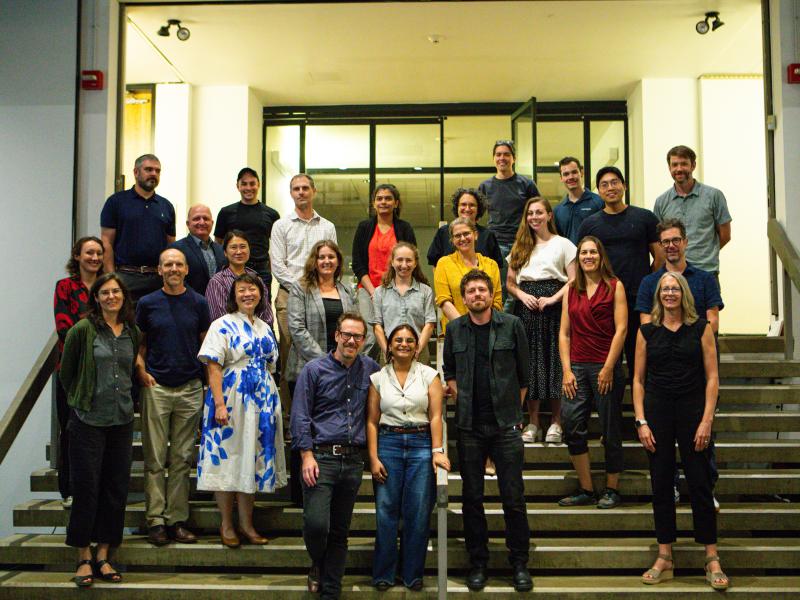
Participants pose for a group picture during the event.
Key Workshop Findings
- Design Constraints: Transmission corridor design must account for voltage-related spatial limits and maintenance access needs.
- Feasible Uses: Some co-location strategies—like trails, grazing, and vegetation management—can work within current utility agreements.
- Trail Design: Trails should offer shade, comfort, and varied experiences, and connect to broader destinations.
- Utility Collaboration: Utilities are open to secondary uses if they don’t increase costs or hinder operations.
- Multiscale Opportunities: Transmission corridors can support ecological connectivity, flood protection, and community access across site, landscape, and system scales.
- Promising Directions: Collaboration between designers and utilities is possible, especially with shared goals and evolving policies that support multi-benefit approaches.