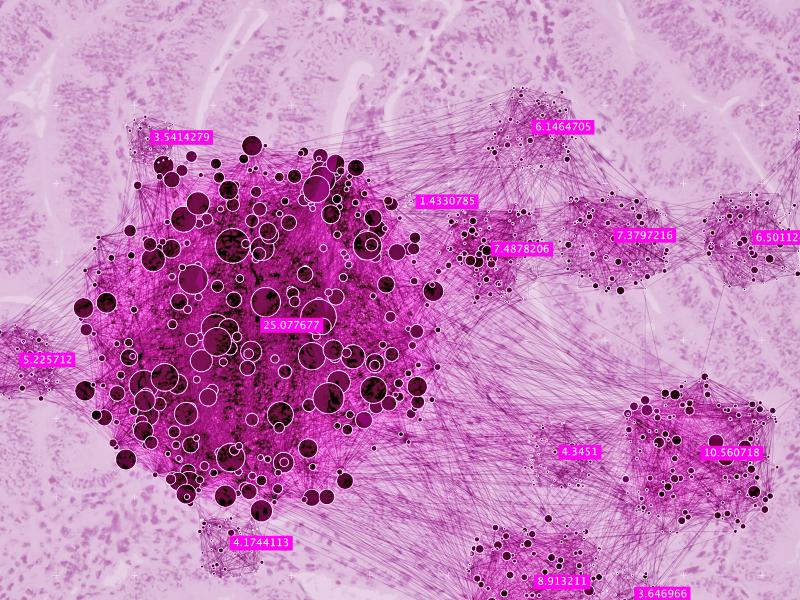
A 2011 earthquake and tsunami in Japan that knocked out a nuclear power plant helped inspire PNNL computational scientists looking for clues of future nuclear reactor mishaps by tracking radioactive iodine.
Researchers from PNNL have helped colleagues at OHSU identify lipid molecules required for Zika infection in human cells. The specific lipids involved could also be a clue to why the virus primarily infects brain tissue.
International editing team provided 15-year update, with Devanathan focused on intersection of nuclear science, materials science, and multiscale modeling.
A strong interdisciplinary team with a high-performance track record recently received their third Award of Excellence in five years from the National Nuclear Security Administration (NNSA).
Researchers from 25 institutions around the country, including PNNL, are working to find out how exercise changes the molecular makeup of our cells to generate health benefits.
A chemistry paper on the used nuclear fuel recycling process, led by PNNL lab fellow Gregg Lumetta, ranked 18th in Scientific Reports for downloads in 2019
After 50 years in science and on the eve of retirement, Laboratory Fellow Karin Rodland, a cancer cell biologist at PNNL, is working on experiments she has dreamed about for decades.
Accurate identification of metabolites, and other small chemicals, in biological and environmental samples has historically fallen short when using traditional methods.
A new study using proteogenomics to compare cancerous tissue with normal fallopian tube samples advances insights about the molecular machinery that underlies ovarian cancer.
David Senor, PNNL researcher and tritium expert, has been named to the Texas A&M University Nuclear Engineering Advisory Council. This appointment follows Senor’s eight consecutive years of mentoring Texas A&M’s nuclear engineering senior
Researchers found that certain oxide interface configurations remain stable in extreme environments, suggesting ways to build better performing, more reliable devices for fuel cells, space-based electronics, and nuclear energy.
Performing nuclear safeguards work safely and developing the next generation workforce are complementary goals of a longstanding program sponsored by the National Nuclear Security Administration’s Office of International Nuclear Safeguards.
A new study focusing on the proteins involved in endometrial cancer, commonly known as uterine cancer, offers insights about which patients will need aggressive treatment and which won’t.
The world’s largest scientific society honored Sue B. Clark, a PNNL and WSU chemist, for contributions toward resolving our legacy of radioactive waste, advancing nuclear safeguards, and developing landmark nuclear research capabilities.