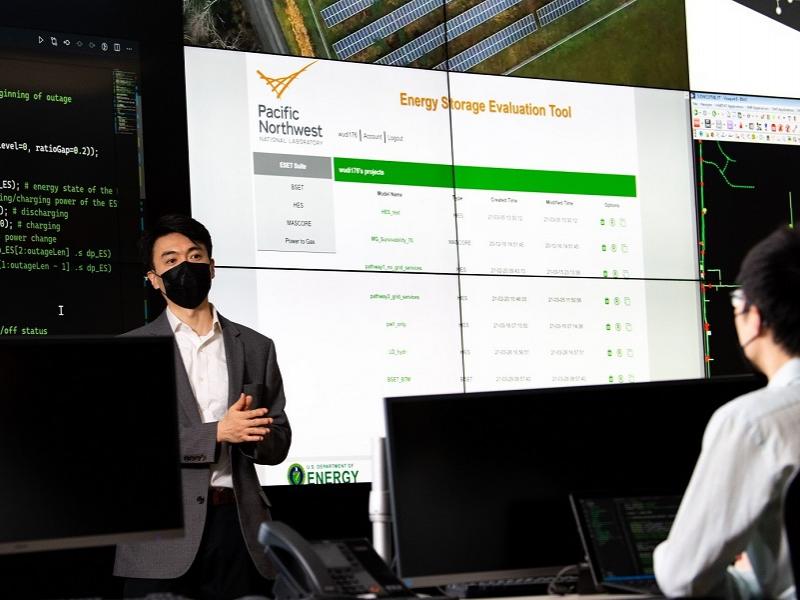
PNNL’s new Hydrogen Energy Storage Evaluation Tool allows users to examine multiple energy delivery pathways and grid applications to maximize benefits.
PNNL bioenergy expert Justin Billing has contributed expertise to a newer standard designed to ensure the safety, performance, and sustainability of prefabricated fecal sludge treatment units.
Sagadevan Mundree, director of the Queensland University of Technology Centre for Agriculture and the Bioeconomy, is joining PNNL as a joint appointee.
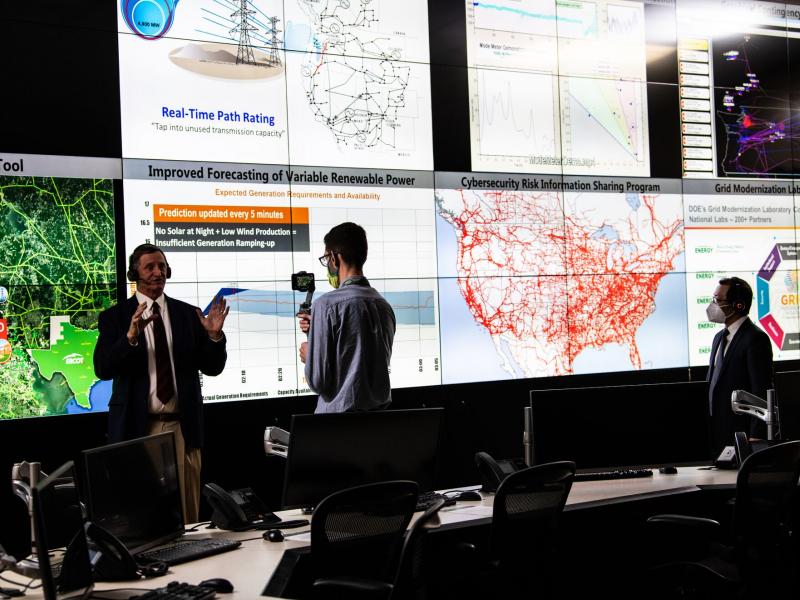
Grid Forward, an industry association dedicated to promoting and accelerating innovation in the regional electric system, honored PNNL's Carl Imhoff with the 2021 Grid Innovator Award.
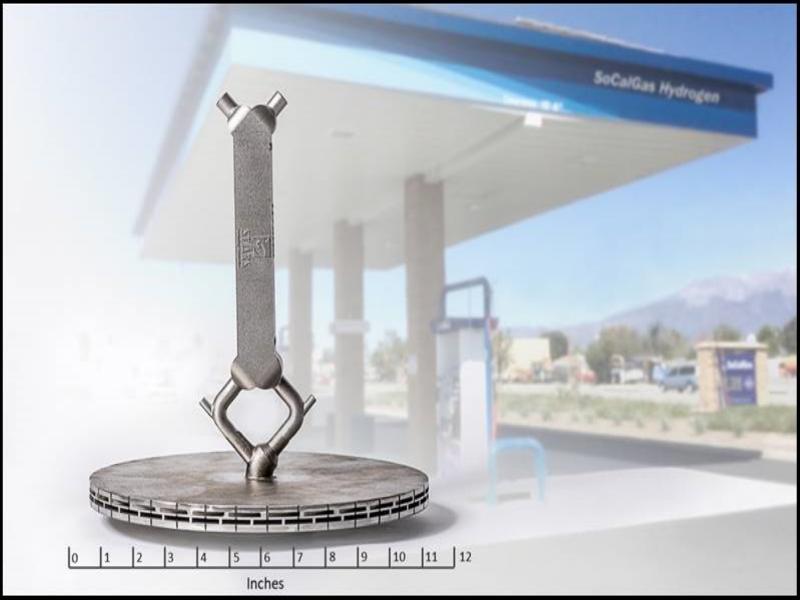
PNNL licensed two technologies to generate hydrogen. One, a reactor design, generates hydrogen from natural gas. The second innovation uses a 3D printing method to economically manufacture the generator.
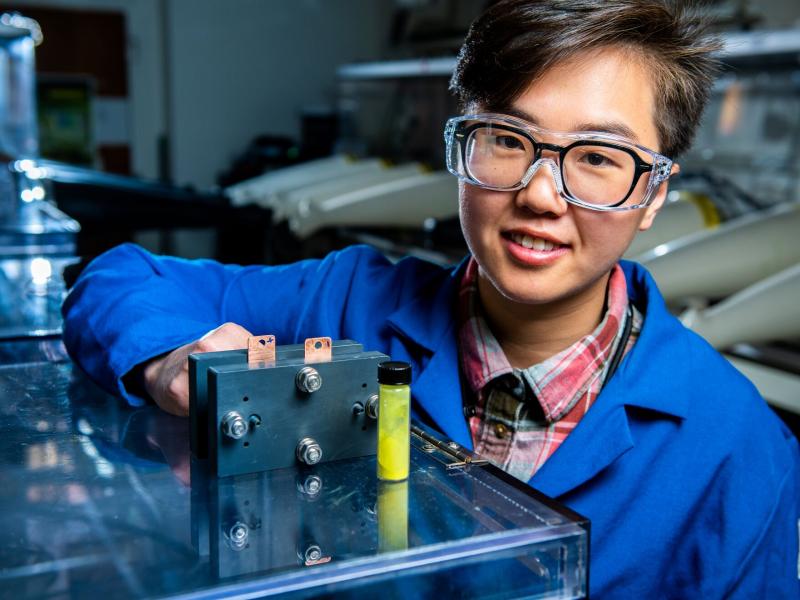
A compound used in candles offers promise for a modern energy challenge—storing massive amounts of energy to be fed into the electric grid as the need arises.
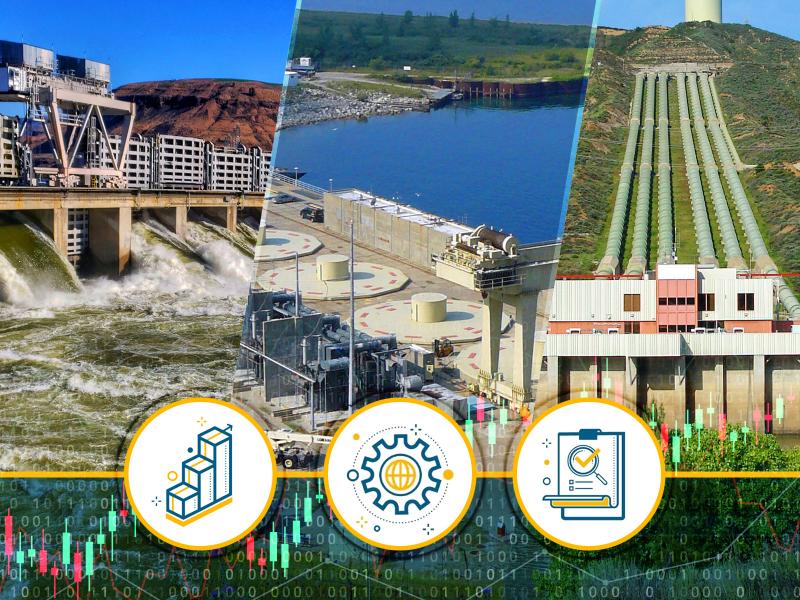
PNNL and four other national laboratories executed the Hydropower Value Study to examine hydropower operations in different regions of the United States.
Senior members of the National Academy of Inventors are recognized for their remarkable innovations that have brought, or aspire to bring, real impact on the welfare of society.
Wendy Shaw, director of the Physical Sciences Division at PNNL, was selected to guest edit a special issue on (photo)electrocatalysis featured in January 2021 edition of the scientific journal ChemComm.
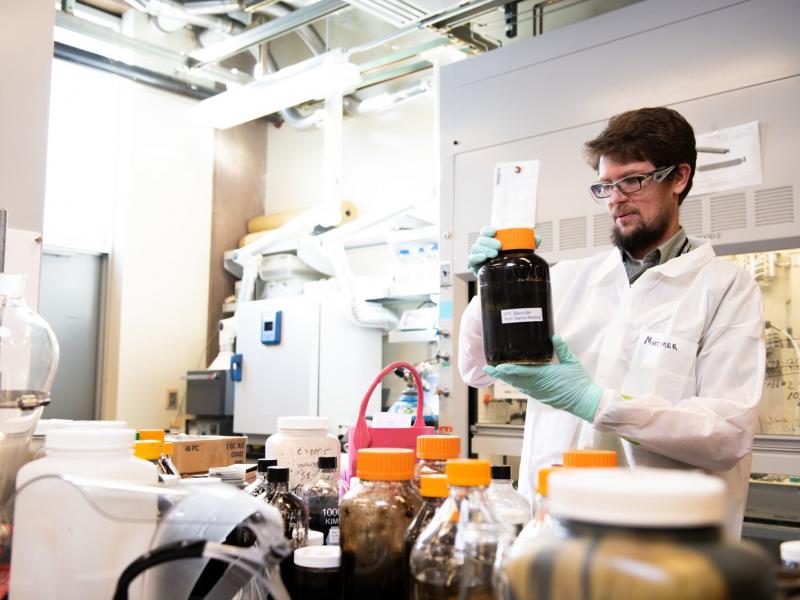
A demonstration converting biocrude to renewable diesel fuel has passed a significant test, operating for more than 2,000 hours continuously without losing effectiveness.
PNNL highlights four researchers whose joint appointments are creating new and diverse opportunities for expanding knowledge and scientific impact across institutions.
Tools being developed at PNNL are helping the nation plan for, respond to and recover from severe storms and wildfires that could threaten critical energy systems.