Top scientists and officials from government, academia, Alaskan Native communities, and industry are heading to Alaska to focus on driving energy technologies for a more sustainable Arctic region.
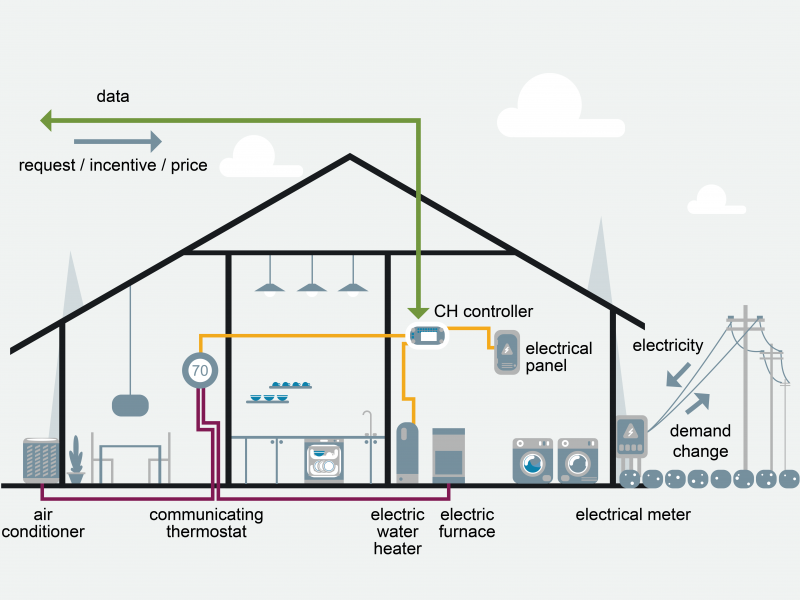
A new control system shows promise in making millions of homes contributors to improved power grid operations, reaping cost and environmental benefits.
To support federal energy agencies in meeting renewed environmental policies, PNNL is identifying the mechanisms and practices that could enhance agencies’ existing environmental justice programs, policies, and activities.
Recognizing how innovation and clean technologies at the very edge of the grid can work together to transition the electricity system, PNNL takes a multidisciplinary approach to advancing and integrating renewable energy solutions.
Four research staff from PNNL are part of an international team that earned top honors for a journal paper focused on a new algorithm-evaluation approach for buildings.
PNNL will provide technical resources and support to a national coalition of states and cities focused on implementing building performance standards to improve energy efficiency and reduce carbon emissions.
Two PNNL studies that describe the potential value of offshore wind off the Oregon Coast and distributed wind in Alaska were published in the journal Energies.
PNNL scientists partnered with colleagues at the University of Akron to create a new molecule that could substantially improve the electrochemical stability of redox flow batteries.
The Energy Storage for Social Equity Initiative will help up to 15 disadvantaged communities consider energy storage technologies to meet local energy goals.
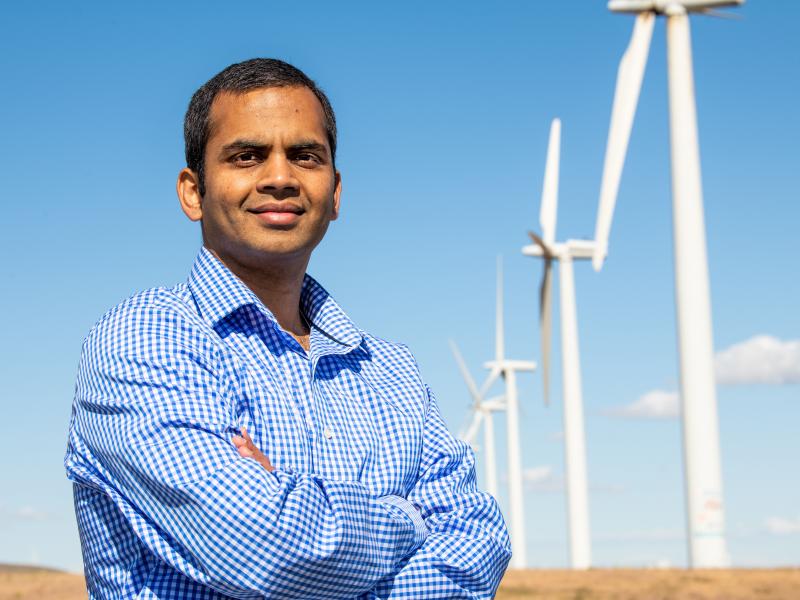
Electrical engineer Aditya Ashok and cybersecurity researcher Thomas Edgar win best paper award for their work to create a new high-fidelity dataset that will help advance cybersecurity solutions for critical infrastructure protection.