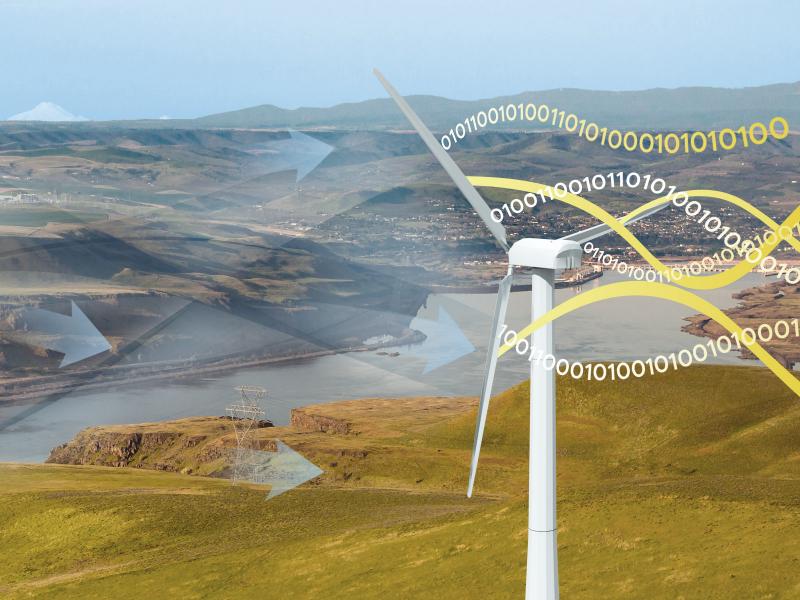
Two PNNL researchers are helping define the future of transparency and accountability for public and private use of autonomous and intelligent systems.
Verizon recently announced a partnership that will make Pacific Northwest National Laboratory the U.S. Department of Energy’s first national laboratory with Verizon 5G ultra wideband wireless technology.
The Federal Laboratory Consortium for Technology Transfer has honored three innovations at the U.S. Department of Energy’s Pacific Northwest National Laboratory.
PNNL offers a wide range of internships in science, technology, engineering, and mathematics (STEM). Interns work in offices and laboratories alongside experienced researchers to expand their knowledge and form mentoring relationships.
PNNL coastal ecologist Heida Diefenderfer was a featured speaker in February at the National Academies of Sciences, Engineering, and Medicine’s Government-University-Industry Research Roundtable on policy and global affairs.
David Manz, a PNNL cybersecurity scientist working to build more resilient architectures for the nation’s critical infrastructure, was inducted to the National Science Foundation’s CyberCorps: Scholarship for Service (SFS) Hall of Fame.
PNNL’s Juliet Homer was an invited panelist at a California Energy Commission workshop, which highlighted research on water treatment, delivery, and energy.
PNNL's Sensor Fish were deployed at Ice Harbor Dam to collect data from a new turbine. The data indicates the design changes are making travel through the dam less arduous for fish.
In a special edition of the Journal of Information Warfare, Pacific Northwest National Laboratory researchers explore the revolution of technologies defending the nation’s critical infrastructure.
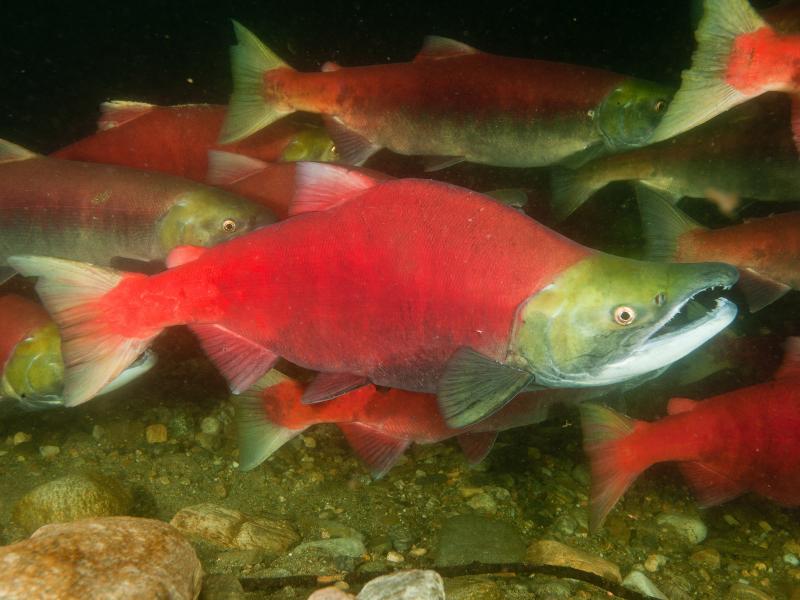
PNNL will provide technical support to finalists in the Incubate stage and to Grand Prize Winners following the Pitch contest stage of the Fish Protection Prize competition, which is now accepting submissions.
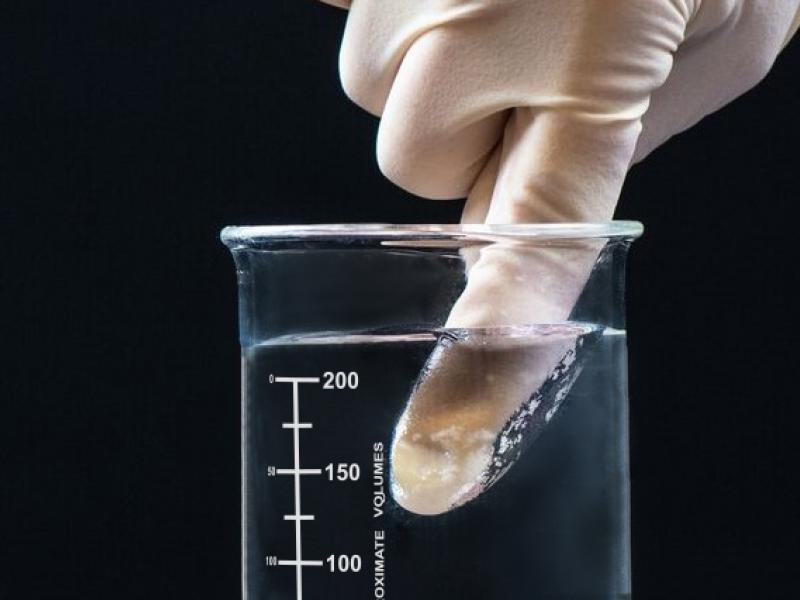
Researchers have identified two processes responsible for fracturing rock at lower pressures for geothermal energy production using PNNL’s fracturing fluid, StimuFrac™.
A student computing security research project guided by PCSD computer scientists Ang Li and Kevin Barker placed third among dozens of entries in the student research poster session at SC19, a premier annual conference for high-performance c
Seventeen teams from regional colleges and universities gathered at PNNL Nov. 16 to put their cyber skills to the test by protecting critical energy infrastructure against simulated cyberattacks as part of DOE's CyberForce Competition.
Pumped-storage hydropower offers the most cost-effective storage option for shifting large volumes of energy. A PNNL-led team wrote a report comparing cost and performance factors for 10 storage technologies.