PNNL

  • About
    • Awards
    • Our History
    • Contact Us
    • Lab Leadership
    • Sponsors
    • Visitors
    • Cultural Resources
    • Economic Impact
    • Tour PNNL Virtually
    • FAQ
  • News & Media
  • Careers
  • Events
  • Research
    • Scientific Discovery
      • Autonomous Science
      • Biology
        • Chemical Biology
        • Computational Biology
        • Ecosystem Science
        • Human Health
          • Cancer Biology
          • Exposure Science & Pathogen Biology
        • Integrative Omics
          • Advanced Metabolomics
          • Chemical Biology
          • Mass Spectrometry-Based Measurement Technologies
          • Spatial and Single-Cell Proteomics
          • Structural Biology
        • Microbiome Science
          • Biofuels & Bioproducts
          • Human Microbiome
          • Soil Microbiome
          • Synthetic Biology
        • Predictive Phenomics
      • Earth & Coastal Sciences
        • Global Change
        • Atmospheric Science
          • Atmospheric Aerosols
          • Human-Earth System Interactions
          • Modeling Earth Systems
        • Coastal Science
        • Ecosystem Science
        • Subsurface Science
        • Terrestrial Aquatics
      • Materials Sciences
        • Materials in Extreme Environments
        • Nondestructive Examination
        • Precision Materials by Design
        • Science of Interfaces
        • Smart Advanced Manufacturing
          • Cold Spray
          • Friction Stir Welding & Processing
          • ShAPE
      • Nuclear & Particle Physics
        • Dark Matter
        • Neutrino Physics
        • Fusion Energy Science
      • Quantum Information Sciences
      • Chemistry
        • Computational Chemistry
        • Chemical Separations
        • Chemical Physics
        • Catalysis
      • Fusion Energy Science
    • Energy Resiliency
      • Critical Minerals and Materials
      • Electric Grid Modernization
        • Emergency Response
        • Grid Analytics
          • AGM Program
          • Tools and Capabilities
        • Grid Architecture
          • Basic Terms & Principles
          • Resource Library
        • Grid Cybersecurity
        • Grid Energy Storage
        • Transmission
        • Distribution
      • Energy Efficiency
        • Appliance and Equipment Standards
        • Building Energy Codes
        • Building Technologies
          • Advanced Building Controls
          • Advanced Lighting
          • Building-Grid Integration
        • Commercial Buildings
        • Federal Buildings
          • Federal Performance Optimization
          • Resilience and Security
        • Residential Buildings
          • Building America Solution Center
          • Energy Efficient Technology Integration
          • Home Energy Score
        • Energy Efficient Technology Integration
      • Energy Storage
        • Electrochemical Energy Storage
        • Flexible Loads and Generation
        • Grid Integration, Controls, and Architecture
        • Regulation, Policy, and Valuation
        • Science Supporting Energy Storage
        • Chemical Energy Storage
      • Environmental Management
        • Waste Processing
        • Radiation Measurement
        • Environmental Remediation
      • Fossil Energy
        • Subsurface Energy Systems
        • Advanced Hydrocarbon Conversion
      • Nuclear Energy
        • Fuel Cycle Research
        • Advanced Reactors
        • Reactor Operations
        • Reactor Licensing
        • Nondestructive Examination
      • Renewable Energy
        • Solar Energy
        • Wind Energy
          • Wind Resource Characterization
          • Wildlife and Wind
          • Wind Systems Integration
          • Wind Data Management
          • Distributed Wind
        • Marine Energy
          • Environmental Monitoring for Marine Energy
          • Marine Biofouling and Corrosion
          • Marine Energy Innovation
          • Marine Energy Resource Characterization
          • Testing for Marine Energy
        • Hydropower
          • Environmental Performance of Hydropower
          • Hydropower Cybersecurity and Digitalization
          • Hydropower and the Electric Grid
          • Materials Science for Hydropower
          • Pumped Storage Hydropower
          • Water + Hydropower Planning
        • Grid Integration of Renewable Energy
        • Geothermal Energy
          • Geothermal Materials Research
      • Transportation
        • Bioenergy Technologies
          • Algal Biofuels
          • Aviation Biofuels
          • Waste-to-Energy and Products
        • Hydrogen & Fuel Cells
        • Vehicle Technologies
          • Emission Control
          • Energy-Efficient Mobility Systems
          • Lightweight Materials
          • Vehicle Electrification
          • Vehicle Grid Integration
    • National Security
      • Chemical & Biothreat Signatures
        • Contraband Detection
        • Pathogen Science & Detection
        • Explosives Detection
        • Threat-Agnostic Biodefense
      • Cybersecurity
        • Discovery and Insight
        • Proactive Defense
        • Trusted Systems
      • Nuclear Material Science
      • Nuclear Nonproliferation
        • Radiological & Nuclear Detection
        • Nuclear Forensics
        • Ultra-Sensitive Nuclear Measurements
        • Nuclear Explosion Monitoring
        • Global Nuclear & Radiological Security
      • Stakeholder Engagement
        • Disaster Recovery
        • Global Collaborations
        • Legislative and Regulatory Analysis
        • Technical Training
      • Systems Integration & Deployment
        • Additive Manufacturing
        • Deployed Technologies
        • Rapid Prototyping
        • Systems Engineering
      • Threat Analysis
        • Advanced Wireless Security
          • 5G Security
          • RF Signal Detection & Exploitation
        • Border Security
        • Internet of Things
        • Maritime Security
        • Millimeter Wave
        • Mission Risk and Resilience
    • Data Science & Computing
      • Artificial Intelligence
      • Graph and Data Analytics
      • Computational Mathematics & Statistics
      • Future Computing Technologies
        • Adaptive Autonomous Systems
    • Publications & Reports
    • Featured Research
  • People
    • Inventors
    • Lab Leadership
    • Lab Fellows
    • Staff Accomplishments
  • Partner with PNNL
    • Education
      • Undergraduate Students
      • Graduate Students
      • Post-graduate Students
      • University Faculty
      • University Partnerships
      • K-12 Educators and Students
      • STEM Education
        • STEM Workforce Development
        • STEM Outreach
      • Internships
    • Community
      • Philanthropy
      • Volunteering
    • Industry
      • Why Partner with PNNL
      • Explore Types of Engagement
      • How to Partner with Us
      • Available Technologies
      • Procurement
      • Technology Ombuds
  • Facilities & Centers
    • All Facilities
      • Atmospheric Radiation Measurement User Facility
      • Electricity Infrastructure Operations Center
      • Energy Sciences Center
      • Environmental Molecular Sciences Laboratory
      • Grid Storage Launchpad
      • Institute for Integrated Catalysis
      • Interdiction Technology and Integration Laboratory
      • PNNL Portland Research Center
      • PNNL-Seattle
      • PNNL-Sequim (Marine and Coastal Research)
      • Radiochemical Processing Laboratory
      • Shallow Underground Laboratory

Breadcrumb

  1. About
  2. FAQ

Frequently Asked Questions

  • About
    • Awards
    • Our History
    • Contact Us
    • Lab Leadership
    • Sponsors
    • Visitors
    • Cultural Resources
    • Economic Impact
    • Tour PNNL Virtually
    • FAQ
  • News & Media
  • Careers
  • Events

1. What is Pacific Northwest National Laboratory (PNNL)?

Pacific Northwest National Laboratory (PNNL) is a U.S. Department of Energy Office of Science laboratory that integrates fundamental science and applied research. With distinctive strengths in biology, chemistry, materials science, and computing, PNNL connects scientific discovery with pressing challenges related to energy reliability and national security.  

2. What kind of research does PNNL conduct?

PNNL conducts multidisciplinary research that draws upon its strengths in chemistry, biology, materials science, and computing to advance scientific discovery, enhance energy reliability, and strengthen national security. By bringing together fundamental science, applied research, engineering, and mission-focused capabilities, researchers move ideas from discovery to real-world impact.

3. What is PNNL’s annual budget?

In fiscal year 2025, PNNL scientists and engineers conducted $1.66 billion in research and development, addressing critical challenges and positively impacting Washington’s economic prosperity.

4. Where is PNNL located?

PNNL’s main campus is in Richland, Washington, but there are staff and facilities in Seattle and Sequim, Washington; Portland, Oregon; and the Washington, D.C./College Park area, in addition to employees working remotely throughout the United States.

Campus Flags

5. Who operates PNNL?

PNNL is managed and operated by Battelle for the Department of Energy (DOE).

6. What makes PNNL unique among research institutions?

PNNL brings together experts from a wide range of scientific and technical disciplines to address complex challenges that often require multidisciplinary solutions. As a DOE national laboratory, PNNL combines fundamental and applied research to advance scientific discovery, enhance energy reliability, and strengthen national security. PNNL is one of the most diverse national laboratories, supporting more than 50 federal agencies and collaborating with hundreds of academic and industry organizations to maximize the impact of government research investments.

7. Does PNNL conduct basic research?

Yes. As a DOE Office of Science national laboratory, fundamental research that helps improve understanding of systems and processes provides the foundation of PNNL’s work in grid reliability and national security, opening new lines of inquiry to address the nation’s most significant challenges. PNNL’s distinctive strengths in biology, chemistry, computing, and materials science are central to its scientific discovery mission. The integration of fundamental and applied research at PNNL, together with its computing capabilities and the power of AI and autonomy, is accelerating the science-to-impact timeline.
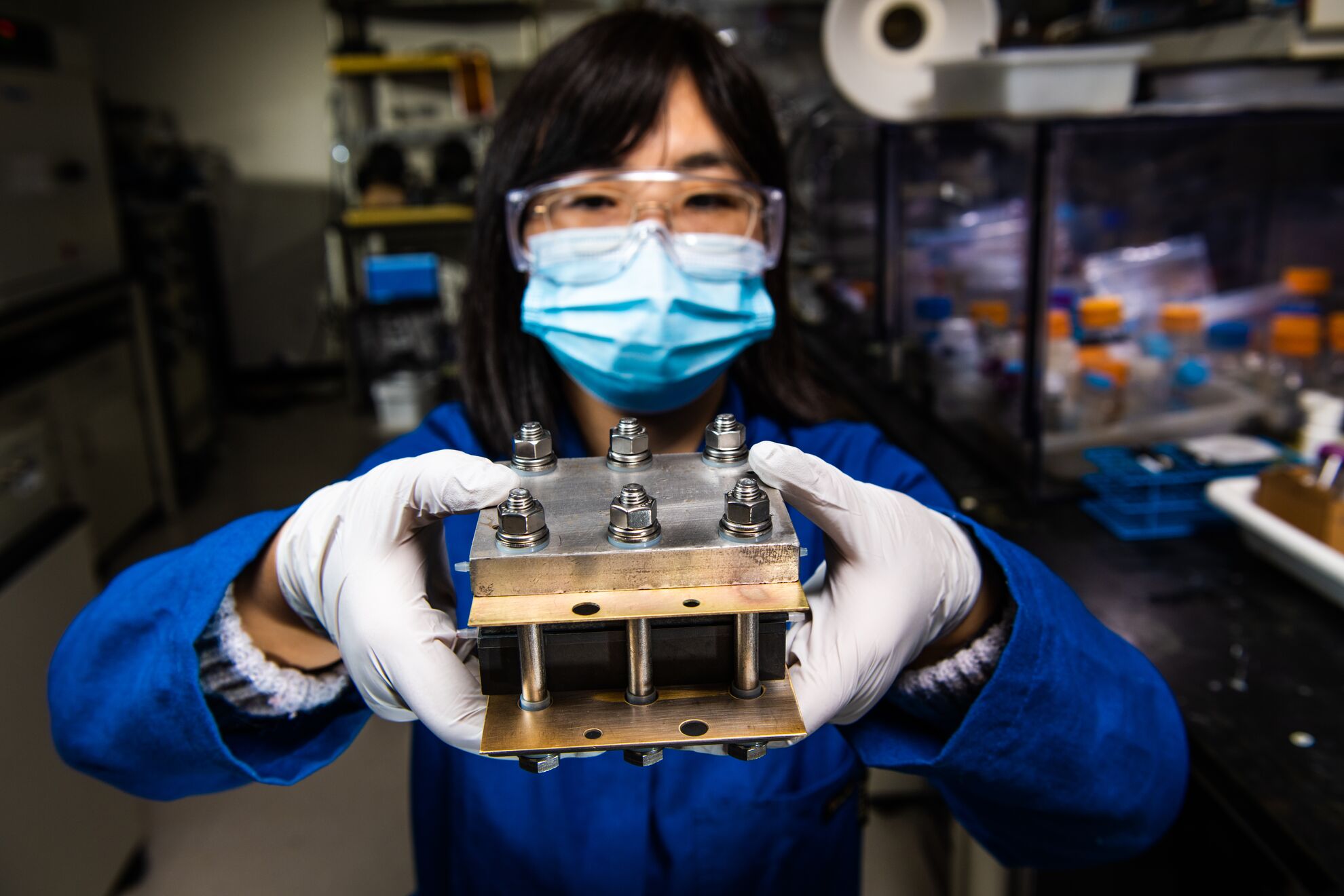
The photo shows a researcher holding a flow battery.

8. How does PNNL contribute to energy research?

PNNL conducts research aimed at strengthening grid reliability and transforming energy systems. Its work includes electric grid modernization, energy storage, nuclear energy, transportation, hydrogen and fuel cells, and related technologies.

9. What role does PNNL play in national security?

PNNL applies science and technology to national security challenges in areas such as nuclear nonproliferation, nuclear and radiological detection, cybersecurity, threat analysis, chemical and biological threat detection, and systems integration.

10. Does PNNL do AI research?  

Researchers at PNNL develop and apply advanced AI systems to accelerate scientific discovery and deliver mission-critical solutions that strengthen science, national security, and energy reliability. PNNL is contributing AI and data expertise to the DOE’s Genesis Mission, which is developing a powerful AI platform to accelerate scientific discovery, drive energy innovation, and strengthen national security.

GEM fellow Alysson Bermudez Garcia operating machinery inside the ARES lab

11. Does PNNL work with universities?

Yes. PNNL collaborates with universities through research partnerships, joint institutes and appointments, internships, and other programs. These collaborations give researchers and students opportunities to work with PNNL experts and access specialized scientific capabilities and instruments.

12. Can companies and other organizations partner with PNNL?

Yes. PNNL works with other national laboratories, industry, entrepreneurs, universities, nonprofit organizations, and government agencies to move scientific discoveries toward practical applications. Opportunities include research collaborations, technology commercialization, and other forms of engagement.

13. Does PNNL offer internships for students?

Yes. PNNL offers internships in STEM and business fields for high school, undergraduate, and graduate students. Opportunities may be available during the summer or academic year, and PNNL participates in several DOE student research programs.
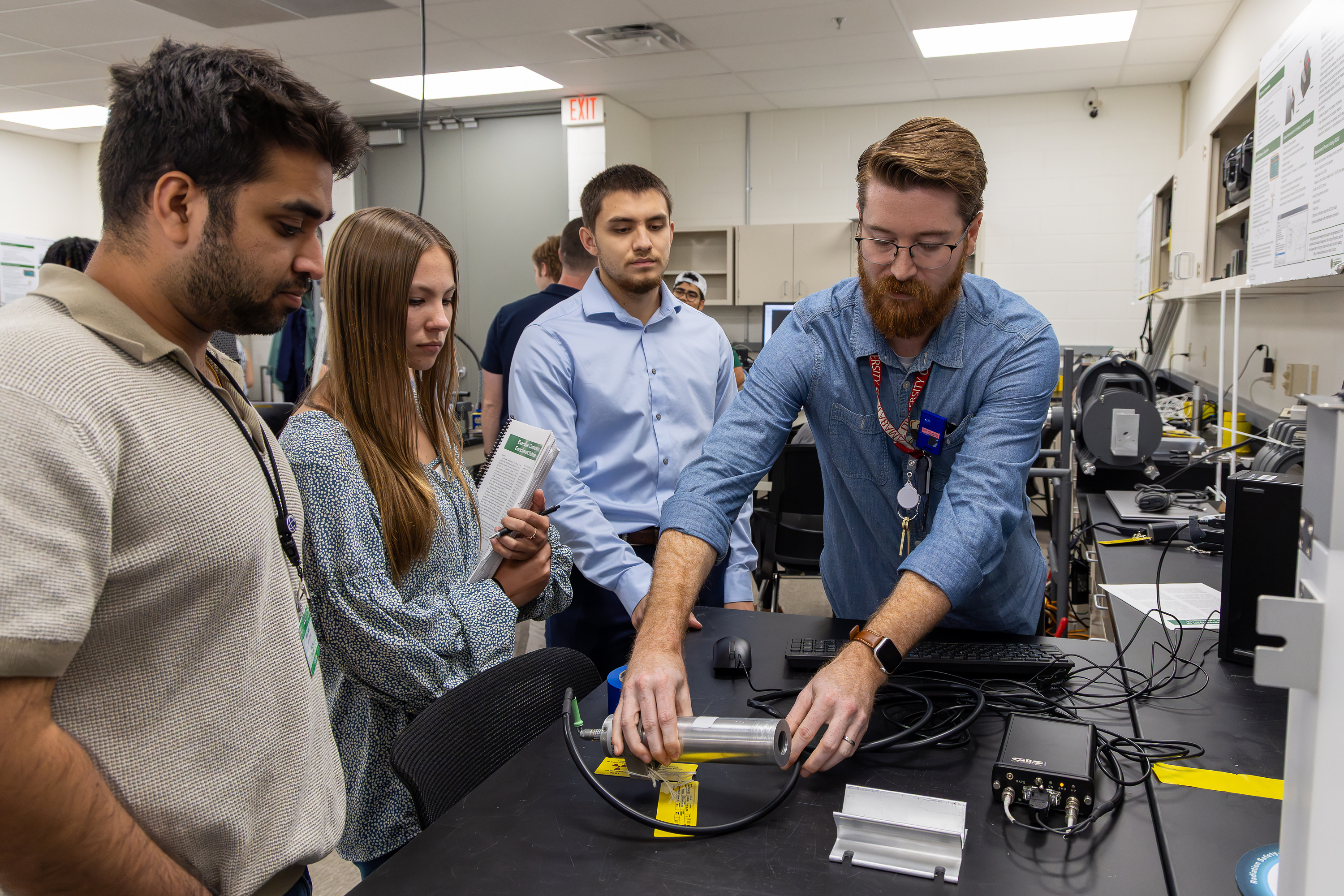
Photo of NNSA Material Control and Accountability Academy Interns in Lab

14. How can I find a job at PNNL?

Current opportunities are posted on the PNNL Careers website. Positions span scientific research, engineering, computing, business operations, and other professional areas. PNNL also offers internship and early career opportunities.

15. What major research facilities does PNNL have?

PNNL has a range of specialized research facilities. Examples include the Environmental Molecular Sciences Laboratory (EMSL) and the Atmospheric Radiation Measurement User Facility (ARM), which are both DOE Office of Science user facilities. Other examples include the Grid Storage Launchpad, Energy Sciences Center, Electricity Infrastructure Operations Center, Radiochemical Processing Laboratory, and marine and coastal research facilities at PNNL-Sequim.
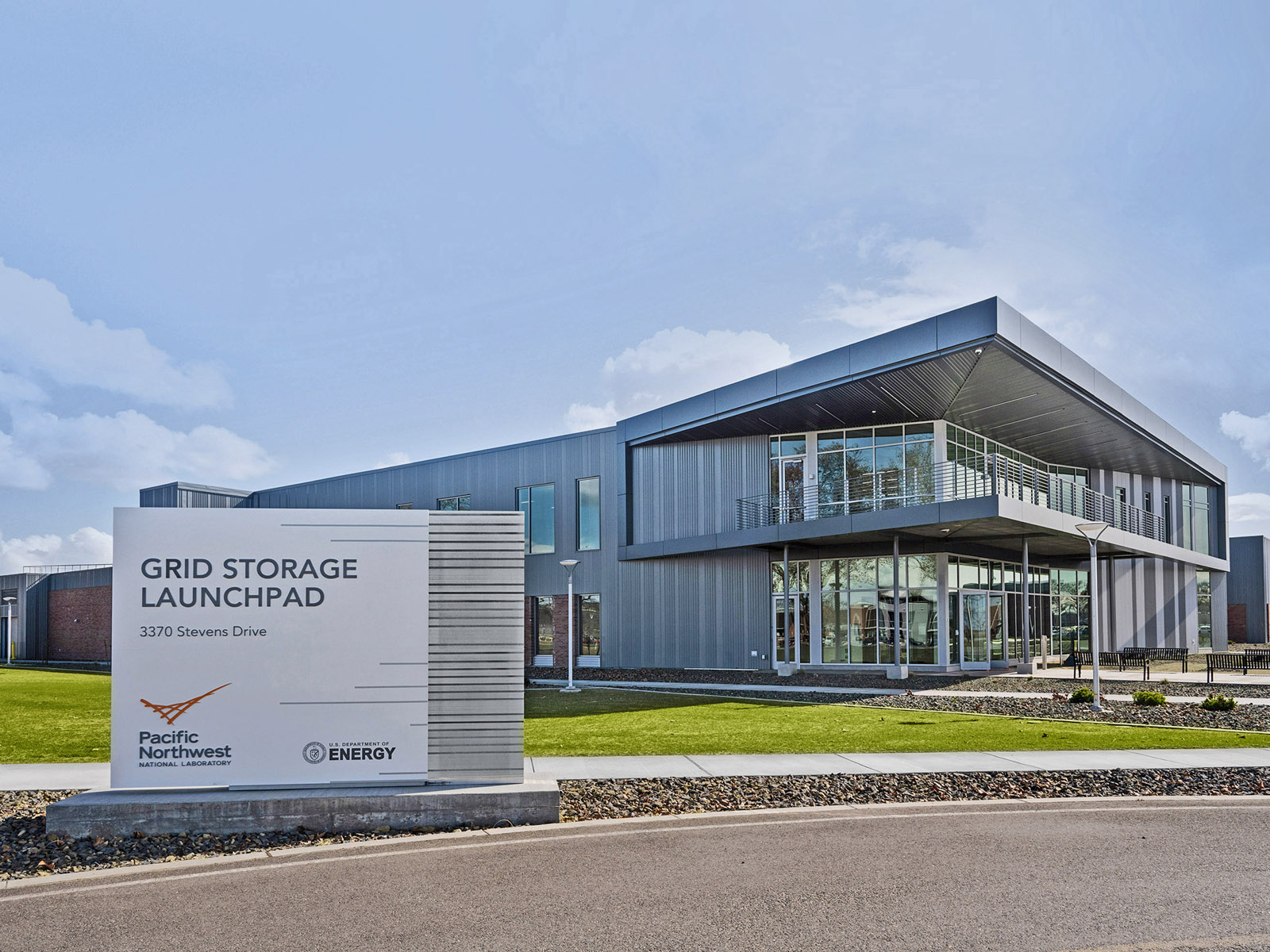
The exterior of the GSL building, with the building sign in the foreground

16. How does PNNL support the local community?

PNNL and Battelle, which proudly operates PNNL, engage with communities through STEM education, outreach, philanthropy, volunteering, and public science and technology programs. PNNL’s STEM efforts are designed to give students, educators, and community members opportunities to explore science and science-related careers.

17. Can the public visit or learn more about PNNL?

PNNL visitor information is available online. Please note that federal regulations require that visitors receive authorization before arrival at PNNL.


The initial draft of this document was created using ChatGPT. The language and content were subsequently edited by the author/an editor for grammar, clarity, and accuracy, and the final document was reviewed by the author.

More to Explore

an iconographic drawing of a lightbulb

Our History

For more than sixty years, Pacific Northwest National Laboratory (PNNL) has been quietly contributing to a better, safer world. 

( Explore our Timeline )
Web Tours Icon

Virtual Tours

Virtually explore PNNL's campus and research spaces and hear from PNNL researchers.

( Take a video tour )

PNNL

  • Get in Touch
    • Contact
    • Careers
    • Doing Business
    • Environmental Reports
    • Security & Privacy
    • Vulnerability Disclosure Policy
    • Notice to Applicants
  • Research
    • Scientific Discovery
    • Energy Resiliency
    • National Security
Subscribe to PNNL News
Department of Energy Logo Battelle Logo
Pacific Northwest National Laboratory (PNNL) is managed and operated by Battelle for the Department of Energy
  • YouTube
  • Facebook
  • X (formerly Twitter)
  • Instagram
  • LinkedIn