A list of terms and definitions for understanding the components of advanced metering infrastructure and interpreting the troubleshooting decision trees. All italicized terms on this page are defined in this glossary.
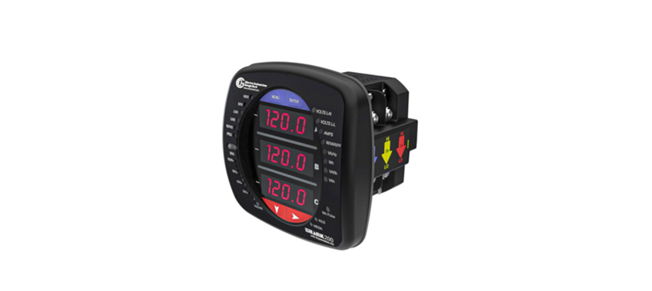
Advanced electricity meter: A device that records electricity consumption data hourly or more frequently and provides for daily or more frequent transmittal of measurements over a communication network to a central data collection point. An advanced electricity meter includes a communications module for transmitting and receiving data over a network using digital signals (e.g., KYZ pulse), fieldbus protocols (e.g., Modbus remote terminal unit [RTU]), or Transmission Control Protocol (TCP)/Internet Protocol (IP). Further discussion of advanced meters is provided in the Federal Metering Guidance.
Advanced metering infrastructure (AMI): An integrated network of advanced meters, communications networks, and data management systems.
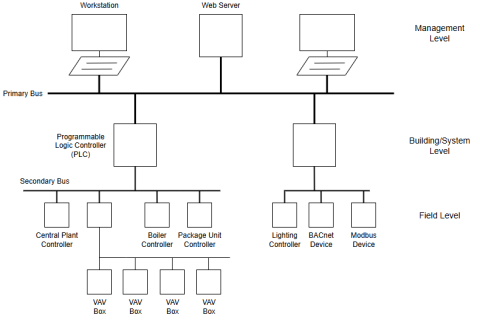
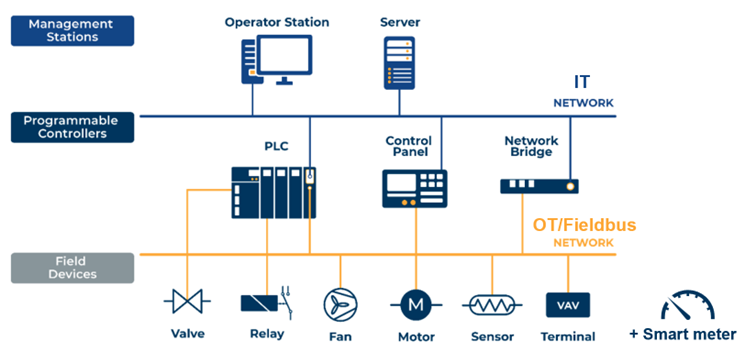
Building automation/control system (BAS/BCS): A computerized system that allows automated access, monitoring, and control of all connected building systems from a single interface. The typical control system network architecture consists of several levels: management-level, building- or system-level, and field-level controllers. Advanced electricity meters may or may not be integrated with the building control system. Advanced electricity meters are often connected to a building-level controller that interfaces with the building control system via the local IP network.
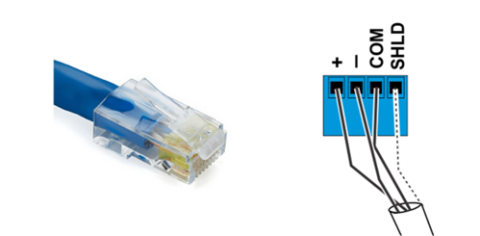
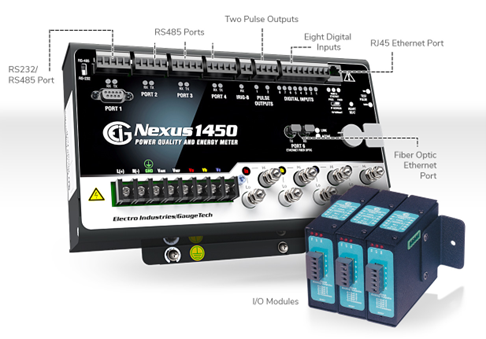
Cable: An insulated wire or wires having a protective casing and used for transmitting electricity or telecommunication signals. An advanced electricity meter has various ports for connecting cables that transmit power and telecommunication signals. Depending on the port, the cable may be terminated with a standard connector (e.g., an RJ45 connector for Cat6 Ethernet cabling) or a terminal block (e.g., RS485 screw terminal block).
Communication port: A physical or logical endpoint for the exchange of information between a computer and another device.
- Physical port: A physical interface on a piece of hardware. This includes physical connectors like a Universal Serial Bus (USB) port, an Ethernet (local area network [LAN]) port, or a RS-485 serial communication (COM) port. A physical port corresponds to the physical layer of the Open Systems Interconnection (OSI) model.
- Logical port: A logical, numbered endpoint within an operating system. In the context of TCP/IP networking, when data arrives at a computer’s IP address the port number tells the operating system which application to deliver the data to (e.g., HTTP to port 80, HTTPS to port 443).
Conduit: A protective tubing or channel used to route and safeguard electrical wiring within a building or structure.
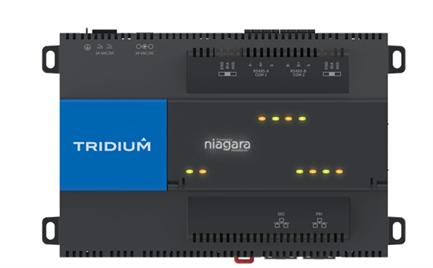
Controller: A small, purpose-built computing device with input and output ports that is capable of automatically controlling other devices within a building. Also see building control system.
Device address: The unique identifier assigned to a device on a network. Depending on the network configuration, the term “address” could refer to a device’s Media Access Control (MAC) address, Modbus address, IP address, etc. An IP-networked meter will have a unique IP address for sending and receiving data; non-IP meters may be networked using other communications protocols (e.g., Modbus RTU) and use a different addressing scheme.
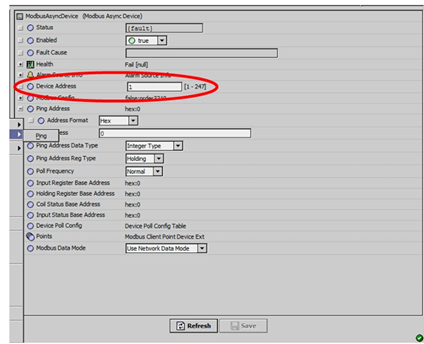
- IP address: A unique string of characters that identifies each computer using the IP to communicate over a network. There are two versions of IP addresses—IPv4 and IPv6. IPv4 addresses are 32-bit numbers, e.g., 127.0.0.1 (localhost); IPv6 addresses are 128-bit numbers.
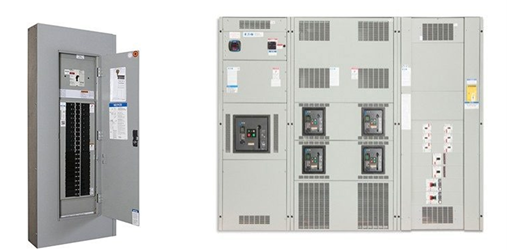
Electrical panel: In this guide, the term “electrical panel” refers to a component of an electrical distribution system that divides an electrical power feed into branch circuits and provides overcurrent protection to those circuits. Advanced electricity meters are often installed at the electrical panel to measure whole-building or circuit-level power consumption. More specific terms for these components are differentiated by their maximum incoming current rating:
- Panelboard: A panelboard is limited to a maximum of 1,200 A incoming current. Panelboards are designed to meet UL 67 and National Electrical Manufacturers Association (NEMA) Standard PB1 (for panelboards).
- Switchboard: Switchboards can accommodate up to 6,000 A bussing and overcurrent protective devices up to 5,000 A. Switchboards are designed to meet UL 891. They are uncommon in residential buildings.
Enclosure: A cabinet or box that protects electrical or electronic equipment and prevents electrical shock. Enclosures are usually made from rigid plastics or such metals as steel, stainless steel, or aluminum. Enclosures are rated to designate protection against hazardous, non-hazardous, and other specific environmental conditions. An electrical panel is a type of enclosure; advanced electricity meters are typically housed within the panel or in a separate enclosure.
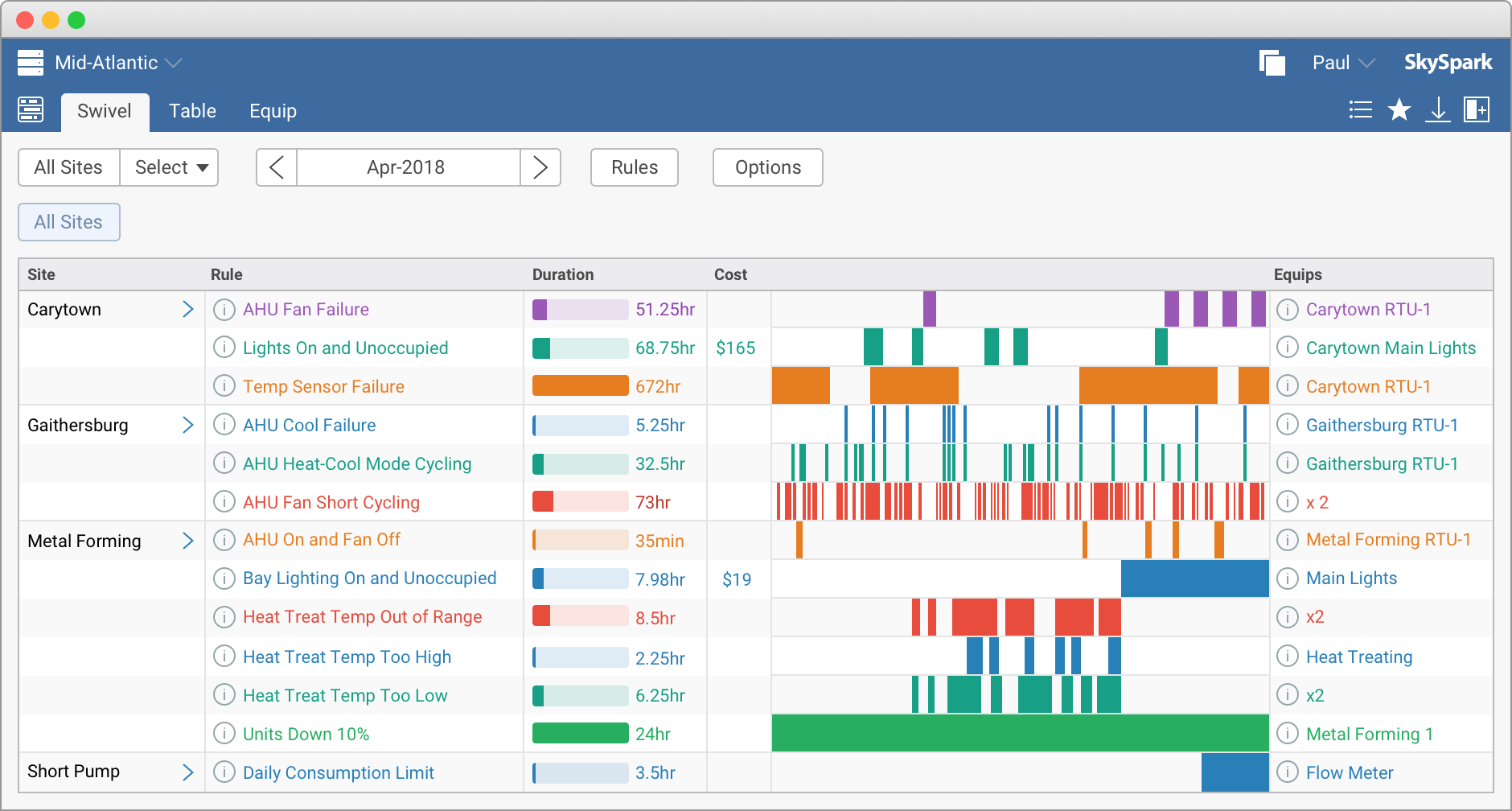
Energy management information system (EMIS): A broad family of tools and services used to manage commercial building energy use. These technologies include energy information systems, fault detection and diagnostic systems, benchmarking and utility bill tracking tools, automated system optimization tools, and building automation systems. In this guide, the term “EMIS” refers to any system to which an advanced electricity meter reports data.
Fieldbus: A digital communication network used for real-time distributed control. Fieldbus profiles are standardized by the International Electrotechnical Commission (IEC) as IEC 61784/61158. Common fieldbus protocols in building automation include Modbus, LonWorks, and BACnet. The terms “fieldbus” and “operational technology (OT)” are closely related concepts dealing with the control of physical systems, where fieldbus refers to the type of network over which OT devices traditionally communicate.
Information technology (IT): Systems or equipment that manage and process information. This emphasis on information distinguishes IT from operational technology (OT), which is technology that interacts with the physical environment. IT networks and the Internet run on the Internet Protocol Suite, commonly known as TCP/IP.
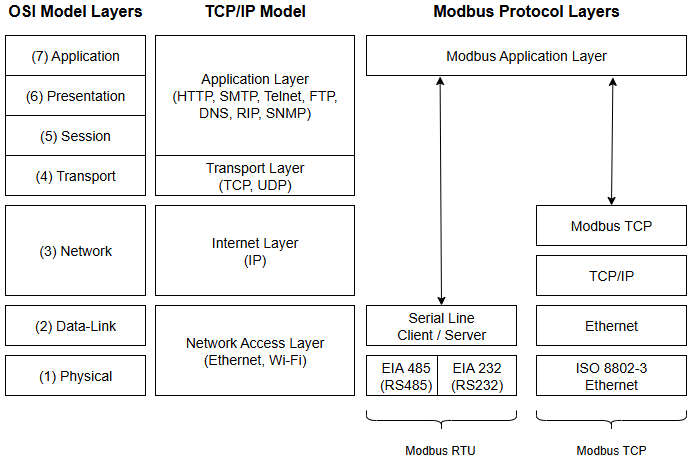
Internet Protocol Suite (TCP/IP): The Internet Protocol Suite, commonly known as TCP/IP, is a framework for organizing the communication protocols used in the Internet and IT networks according to functional criteria.
Light-emitting diode (LED): A semiconductor diode which glows when a voltage is applied. These status-indicating lights are commonly located on the outside of advanced electricity meters and indicate power and network connectivity status. They are important indicators of potential connectivity issues.
Local area network (LAN): A computer network that connects devices within a limited area, such as a home, office, or building. Ethernet and Wi-Fi are the two most common technologies used for connecting LANs, the latter of which enables wireless local area networking (wLAN). In building automation, fieldbus networks are common for networking automation devices and controllers. Sometimes devices may be physically distributed but logically connected via a virtual LAN, or virtual local area network (VLAN).
Mechanical room: A mechanical room is a dedicated space within a building that houses various mechanical and electrical equipment crucial for the building’s operation. This equipment typically includes systems for heating, ventilation, air conditioning (HVAC), electrical distribution, fire protection, and other essential building services. Advanced electricity meters are often collocated with the electrical distribution equipment inside of a mechanical room.
Media Access Control (MAC) Address: A unique identifier assigned to a network interface controller (NIC) for communication on a network. A device’s MAC address makes the device accessible using a specific physical layer and data-link layer protocol such as Ethernet or Wi-Fi.
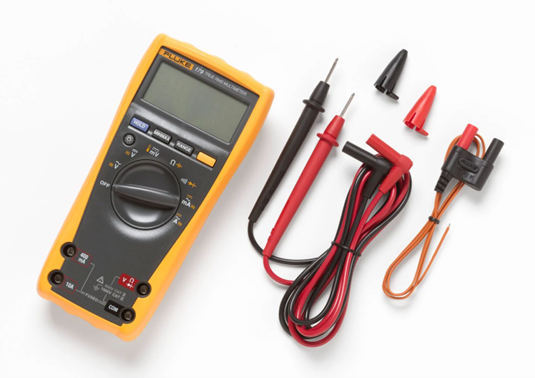
Multimeter: A measuring instrument that can measure multiple electrical properties. A typical multimeter can measure voltage, resistance, and current. They are used in diagnostic operations to test the proper function of an electrical circuit.
Network Interface Controller (NIC): A computer hardware component that connects a computer to a computer network using a specific physical layer and data-link layer protocol such as Ethernet or Wi-Fi. An advanced electricity meter with an IP address will include a NIC as part of its communications module.
Open Systems Interconnection (OSI) Model: A conceptual framework that standardizes how different computer systems communicate over a network. It divides the communication process into seven layers, each with specific functions, to ensure interoperability between various devices and technologies. The layers, from lowest to highest, are physical, data-link, network, transport, session, presentation, and application.
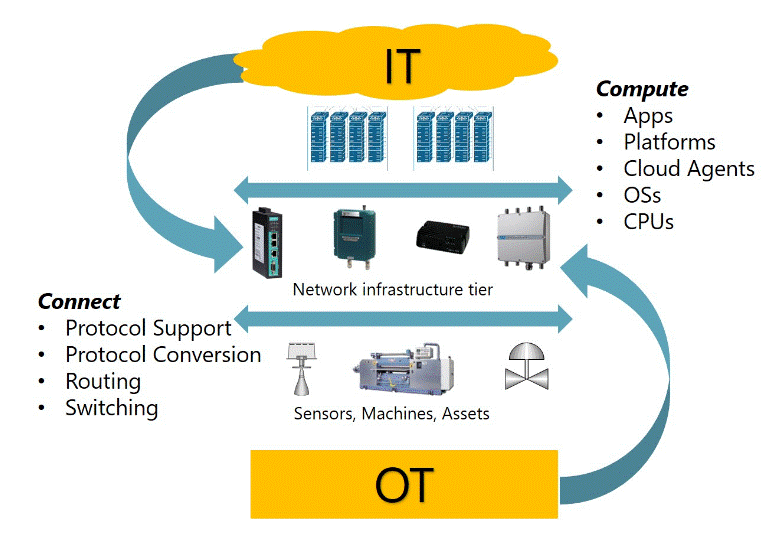
Operational technology (OT): Programmable systems or devices that interact with the physical environment or manage devices that interact with the physical environment. These systems/devices detect or cause a direct change through the monitoring and/or control of devices, processes, and events. Examples include building control systems, fire control systems, and physical access control mechanisms. Historically, OT protocols were often proprietary and developed separately from the TCP/IP Suite, the framework for modern IT networks and the internet. Recently, however, OT and IT networks are becoming more integrated, which has expanded the accessibility and interoperability of OT devices but has created new cybersecurity challenges as well.
Power-cycling: A troubleshooting method that involves turning a device off, disconnecting it from its power source, waiting, and then turning it back on.
Power over Ethernet (PoE): A technique for delivering direct current (DC) power to devices over copper Ethernet cabling, eliminating the need for separate power supplies and outlets.
Protocol: A standardized set of rules that determine how devices communicate on a network. Examples of protocols include the internet protocol (part of TCP/IP) and hypertext transfer protocol (HTTP).
Protocol gateway: A device that enables communication between systems using different network protocols. For example, a controller that acts as a protocol gateway could allow OT devices on a Modbus RTU network to communicate with computers on a TCP/IP network. A protocol gateway is also referred to as a protocol translator or protocol converter.
Serial communication: A method of data transfer where bits are sent one at a time over a single wire or channel. Networked devices typically communicate using serial communication protocols. In discussions about building automation, it is common to hear certain terms for serial communication protocols such as “RS485”, “Modbus”, or “TCP/IP”; however, it is important to understand that these terms refer to layers within a “protocol stack” (see OSI model definition), which collectively define how devices talk to each other.
- Note: Sometimes the terms “serial network” or “serial comms” are used to distinguish fieldbus-based OT networks from TCP/IP-based IT networks, despite the fact the latter protocol stack also implements a form of serial communication.
Standard operating procedure (SOP): A set of step-by-step instructions compiled by an organization to help workers carry out routine operations.
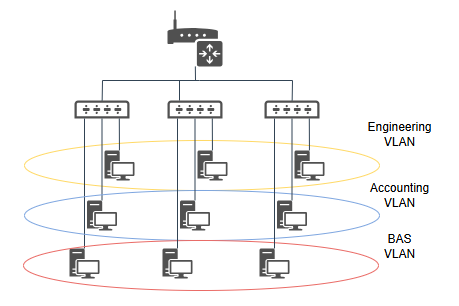
Subnet: A logical subdivision of an IP network. Subnets are defined at OSI level 3 (network layer) to group devices using IP addresses. They are distinct but often mapped one-to-one with VLAN groupings, which are made at OSI level 2 (data-link layer).
TCP/IP: see Internet Protocol Suite.
Virtual local area network (VLAN): A logical subdivision of a local area network. A VLAN allows network administrators to segment a larger, physically-connected network into multiple smaller networks on logically separated broadcast domains. VLANs are defined at OSI level 2 (data-link layer) to group devices using MAC addresses. They are distinct but often mapped one-to-one with subnet groupings, which are made at OSI level 3 (network layer).