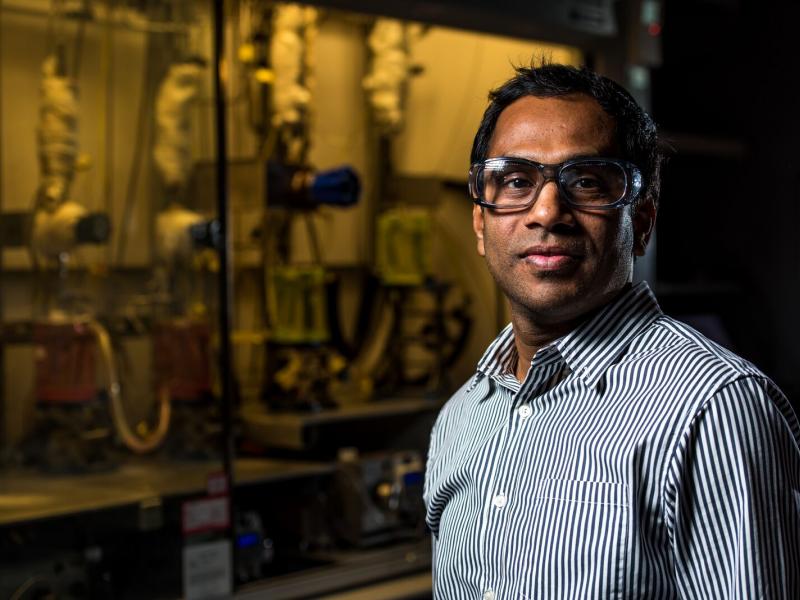
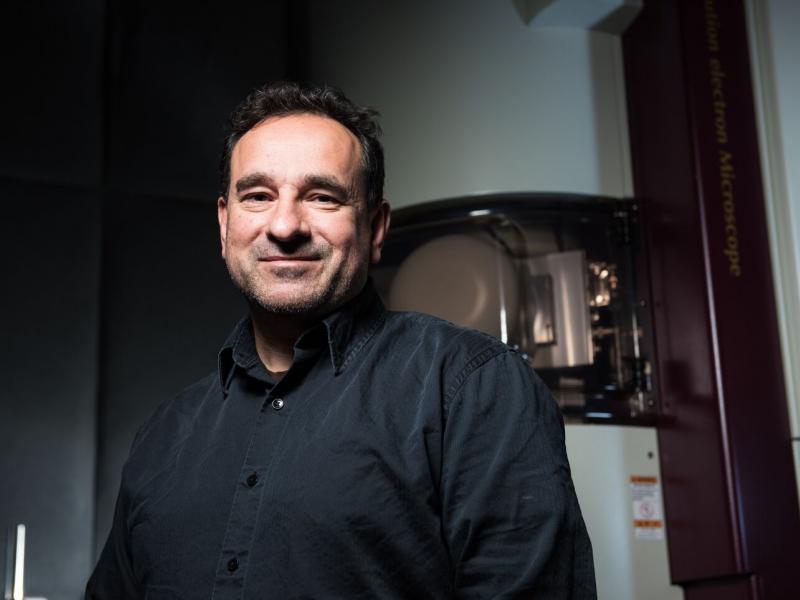
Johannes Lercher, Battelle Fellow and director of the PNNL Institute for Integrated Catalysis, envisions energy storage solutions at the new Energy Sciences Center.
A PNNL study has shown the nation’s wastewater resource recovery facilities could generate revenue by converting sludge into biofuel—while significantly reducing disposal costs—using an in-house-developed technology.
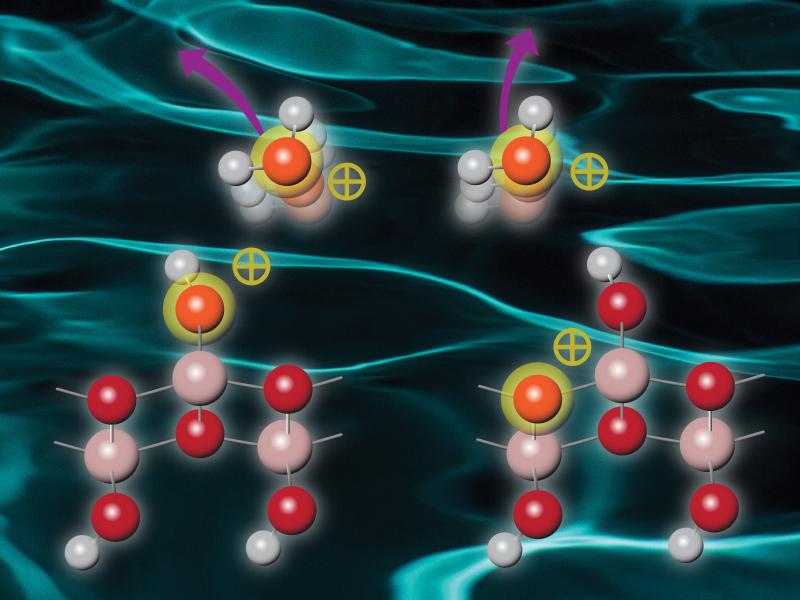
Theoretical work shows that an important natural iron source can be described as a nanoscale composite of different, but experimentally indistinguishable, structures.
PNNL has published a workshop report that outlines recommended actions to bring sustainable aviation fuel to the airline industry, using a PNNL-developed technology.
Molecular self-assembly expert Chun-Long Chen describes the challenges and opportunities in bio-inspired nanomaterials in a special issue of Chemical Reviews.
A research team is exploring the safety and feasibility of clean hydrogen to replace some fossil fuel in medium- and heavy-duty vehicles and maritime uses at the Port of Seattle.
Developed at PNNL, Shear Assisted Processing and Extrusion, or ShAPE™, uses significantly less energy and can deliver components like wire, tubes and bars 10 times faster than conventional extrusion, with no sacrifice in quality.
PNNL has received 119 R&D 100 Awards since 1969, when the laboratory began submitting entries in the contest that recognizes top 100 inventions each year.
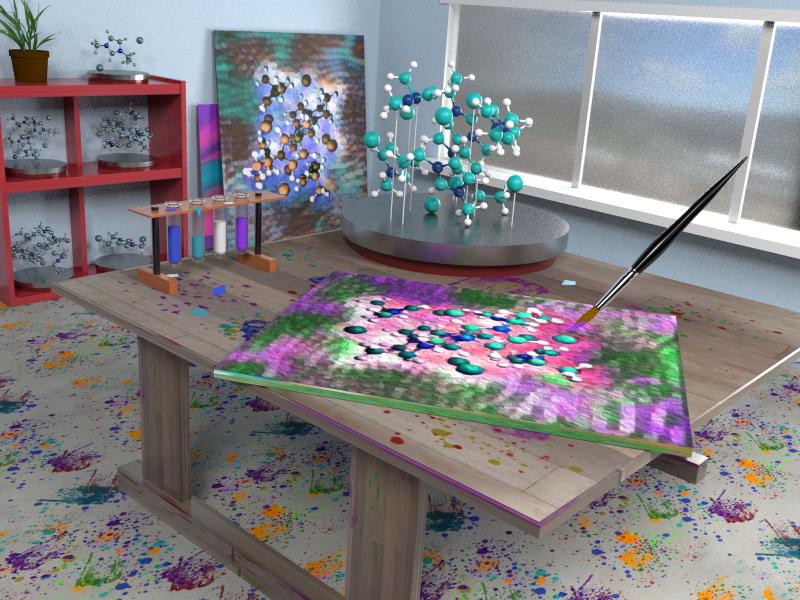
IDREAM wins Department of Energy art contest with entry that illuminates how IDREAM scientists pivoted during pandemic to accomplish critical nuclear research.
Scott Chambers creates layered structures of thin metal oxide films and studies their properties, creating materials not found in nature. He will soon move his instrumentation and research to the new Energy Sciences Center.