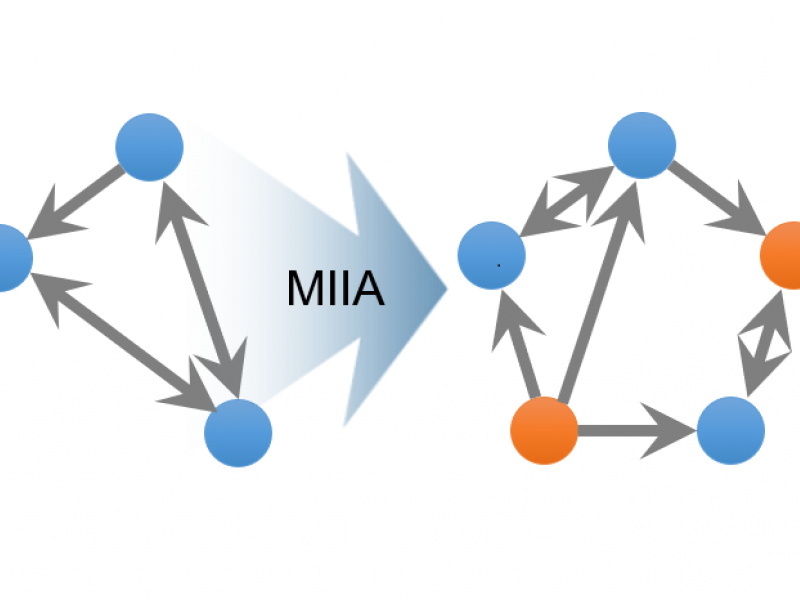
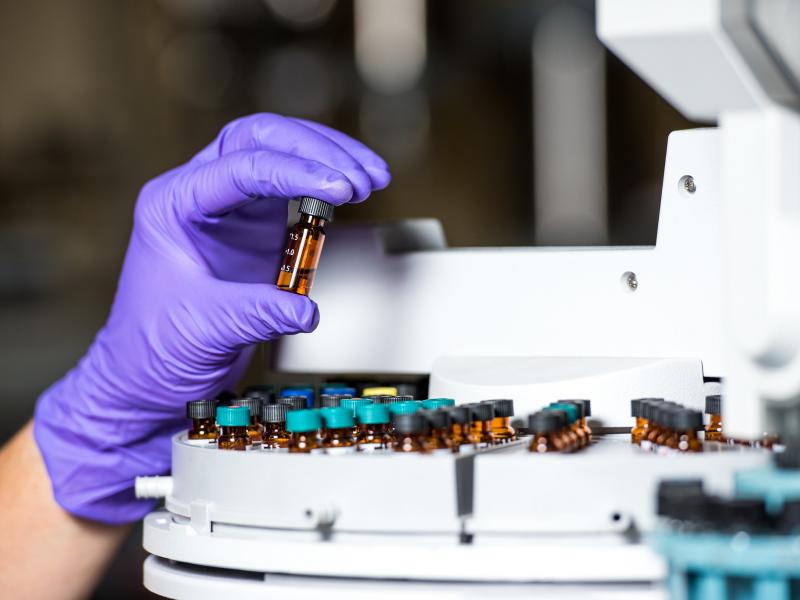
Soil microbial communities are made of networks of interacting species that dynamically reorganize in a changing environment. Understanding how such microbiomes are organized in nature is important for designing or controlling them in the f
Soil microbiomes are among the most diverse microbial communities on Earth. They also play an immense role in cycling soil carbon, nitrogen, and other nutrients that underpin the terrestrial food web.
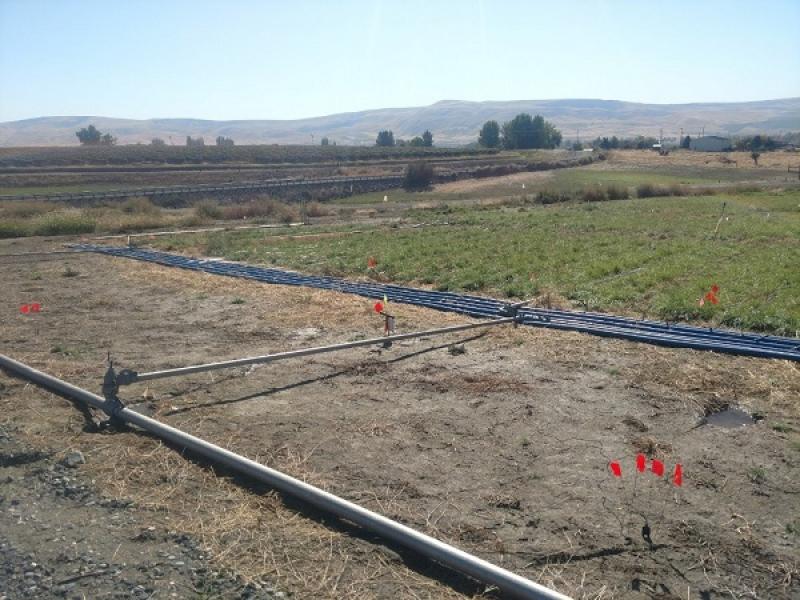
Researchers at the U.S. Department of Energy’s Pacific Northwest National Laboratory and Kansas State University found that soil drying significantly affected the structure and function of soil microbial communities.
The first phase, which started in 2014, generated foundational data from developing mouse and human lungs, created a web portal for public data sharing, and established a repository of human lung tissues.
Eric Hoppe, senior scientist, was selected a 2019 American Chemical Society (ACS) fellow. Eric is being recognized for his contributions to analytical chemistry measurements and three decades of volunteer service to the ACS community.
Researchers at PNNL have developed a model that predicts outcomes from the algae hydrothermal liquefaction process in a way that mirrors commercial reality much more closely than previous analyses.
When two powerful earthquakes rocked southern California earlier this month, officials’ attention focused, understandably, on safety. How many people were injured? Were buildings up to code? How good are we at predicting earthquakes?
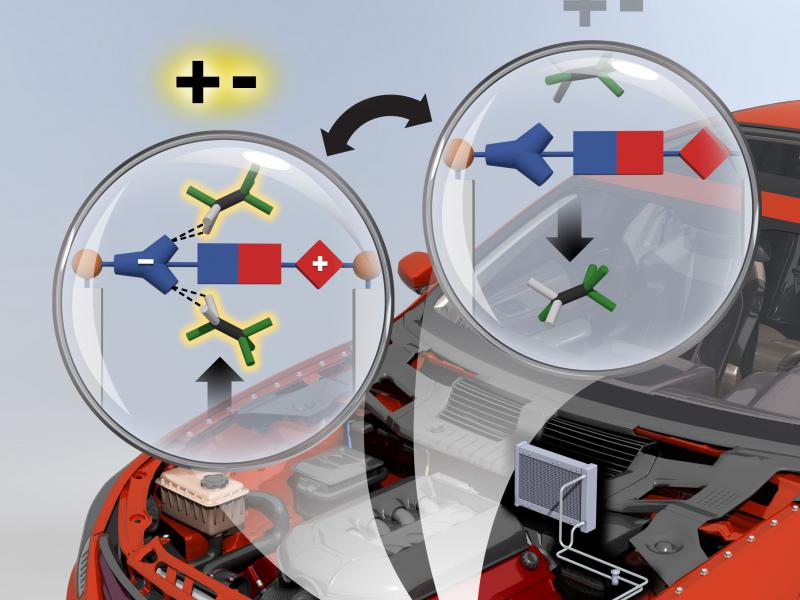
Researchers at PNNL have introduced an alternative method using a molecular-based pump that could potentially use a quarter less energy than the age-old mechanical pump.
His research is dedicated to the development of experimental tools and expertise critical for controlled synthesis and characterization of complex oxides, and gaining deep understanding of structure-composition-function relationships.
PNNL’s Janet Jansson is part of an international team of scientists warning scientists of the urgency to pay more attention to the role of microorganisms in our climate.
Yong Wang, a PNNL laboratory fellow, has received the 2019 Catalysis and Reaction Engineering Practice Award from the American Institute of Chemical Engineers.
PNNL scientist Wei-Jun Qian and colleagues have contributed to a study that offers clues for delaying or even preventing the autoimmune attack that’s at the core of type-1 diabetes.
PNNL researchers today published a pair of papers, in Cell and in Nature, exploring the effects of the gut microbiome on our health, including autism, brain function, and inflammatory bowel disease.
Editors of the journal Emission Control Science and Technology deemed “Coating Distribution in a Commercial SCR Filter” Best Paper in 2018. The authors include PNNL's Mark Stewart, Carl Justin Kamp, Feng Gao, Yilin Wang, and Mark Engelhard.