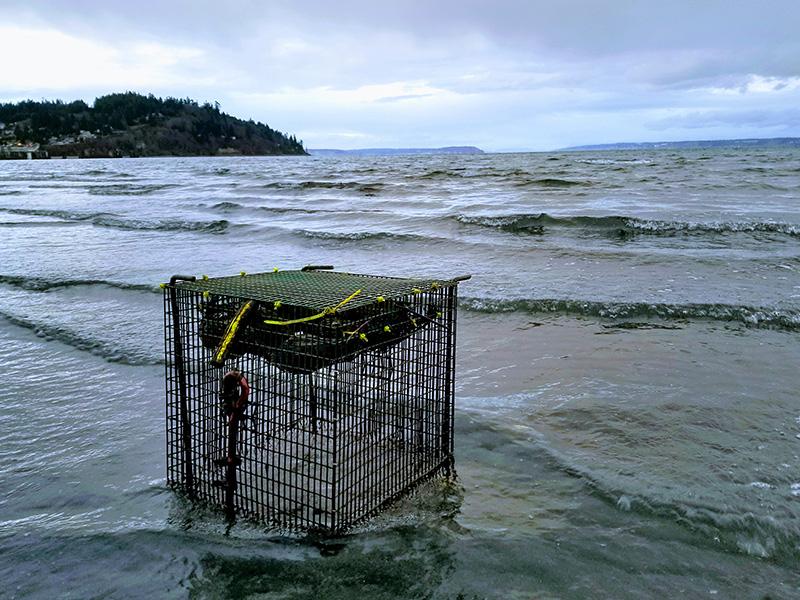
Their consistency and predictability makes tidal energy attractive, not only as a source of electricity but, potentially, as a mechanism to provide reliability and resilience to regional or local power grids.
Researchers at PNNL have developed a software tool that helps universities, small business, and corporate developers to design better batteries with new materials that hold more energy.
PNNL and WSU researchers have improved the performance and life cycle of sodium-ion battery technology to narrow the gap with some lithium-ion batteries.
Environmental engineer Mike Truex presented an Environmental Protection Agency webinar about how conceptual site models must change as new data is acquired for remedy optimization.
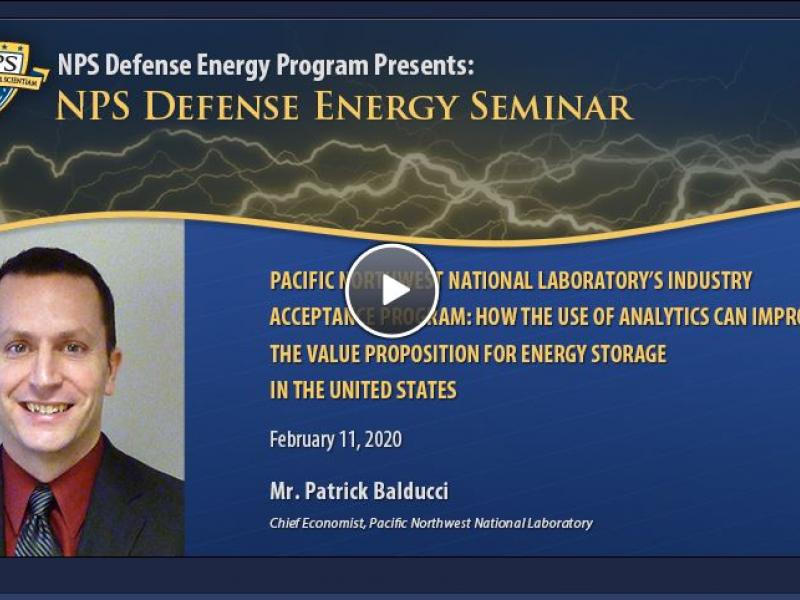
PNNL’s Patrick Balducci delivered an information-packed tutorial on grid energy storage valuation at the Naval Postgraduate School in Monterey, California.
Researchers at PNNL have come up with a novel way to use silicon as an energy storage ingredient, replacing the graphite in electrodes. Silicon can hold 10 times the electrical charge per gram, but it comes with problems of its own.
At PNNL, subsurface science inhabits two separate but interlocking worlds. One looks at basic science, the other at applied science and engineering. Both are funded by the U.S. Department of Energy (DOE).
Existing techniques to detect pertechnetate in the environment have drawbacks. PNNL’s redox sensor technology uses a gold probe to accurately and efficiently measure low levels of pertechnetate—and possibly other contaminants—in groundwater
With the help of a diagnostic tool called the Salish Sea Model, researchers found that toxic contaminant hotspots in the Puget Sound are tied to localized lack of water circulation and cumulative effects from multiple sources.
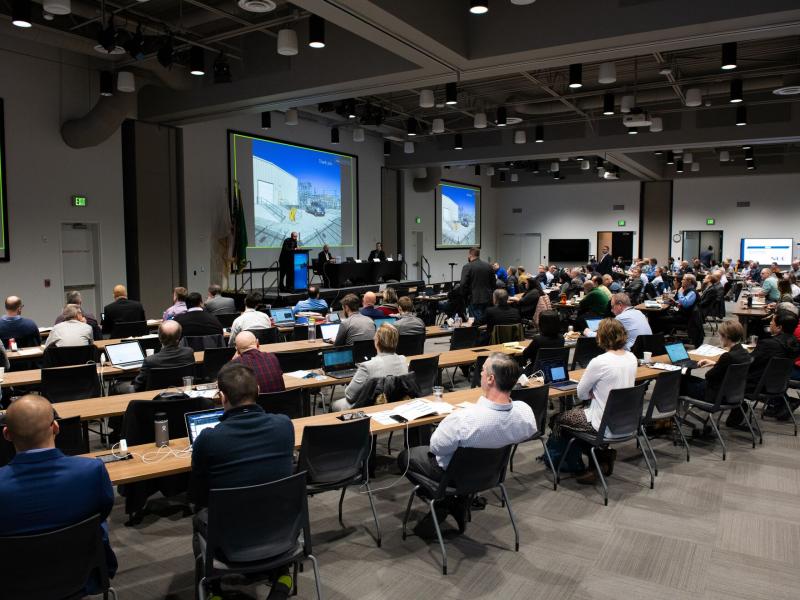
The Energy Storage System Safety and Reliability Forum at PNNL brought together more than 120 energy storage experts from the U.S. Department of Energy, the national laboratories, utilities, industry and academia.
Pumped-storage hydropower offers the most cost-effective storage option for shifting large volumes of energy. A PNNL-led team wrote a report comparing cost and performance factors for 10 storage technologies.
PNNL’s Jie Xiao was recently recognized for her outstanding contribution to basic and applied research on lithium-ion batteries and beyond by the International Automotive Lithium Battery Association.
Scientists have uncovered a root cause of the growth of needle-like structures—known as dendrites and whiskers—that plague lithium batteries, sometimes causing a short circuit, failure, or even a fire.
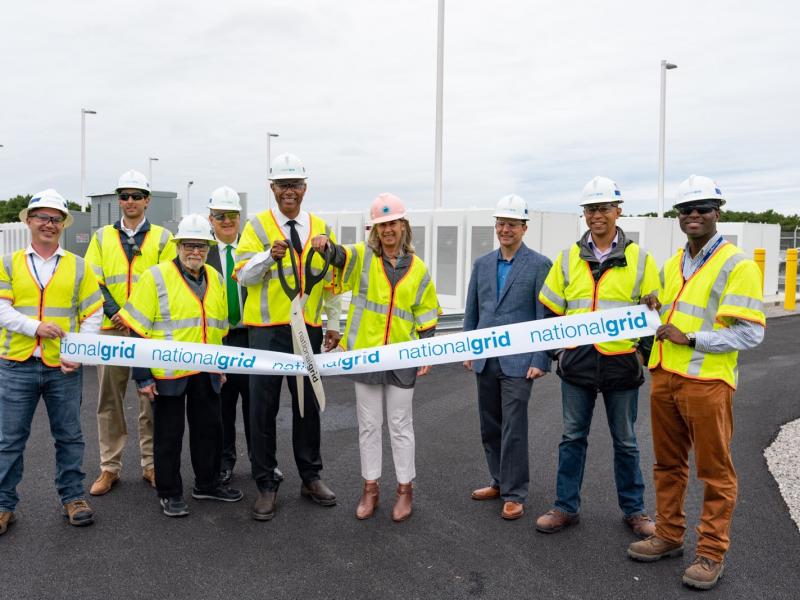
With support from DOE’s Office of Electricity and National Grid, PNNL led a groundbreaking study to accurately assess the full value of grid energy storage investments across a wide variety of use cases.