Scientists at Pacific Northwest National Laboratory have recently formed a new partnership with Washington State University Health Sciences Spokane to study how gut microbes influence circadian rhythms.
Verizon recently announced a partnership that will make Pacific Northwest National Laboratory the U.S. Department of Energy’s first national laboratory with Verizon 5G ultra wideband wireless technology.
DOE researchers investigated the role of microbial genetic diversity in two major subsurface biogeochemical processes: nitrification and denitrification.
Combining its strength in biological sciences and data analytics, researchers at the Department of Energy's PNNL are working to enable a quick response to a biological incident — whether intentional, accidental or natural.
PNNL researchers and professional staff led discussions ranging from biothreats and climate change to science careers at the 2020 annual meeting of the American Association for the Advancement of Science, held this year in Seattle.
First-of-its-kind network analysis on a supercomputer can speed real-time applications for cybersecurity, transportation, and infectious disease tracking
In a special edition of the Journal of Information Warfare, Pacific Northwest National Laboratory researchers explore the revolution of technologies defending the nation’s critical infrastructure.
At a conference featuring the most advanced computing hardware and software, ML in its various guises was on full display and highlighted by Nathan Baker’s featured invited presentation.
Scientists at PNNL are bringing artificial intelligence into the quest to see whether computers can help humans sift through a sea of experimental data.
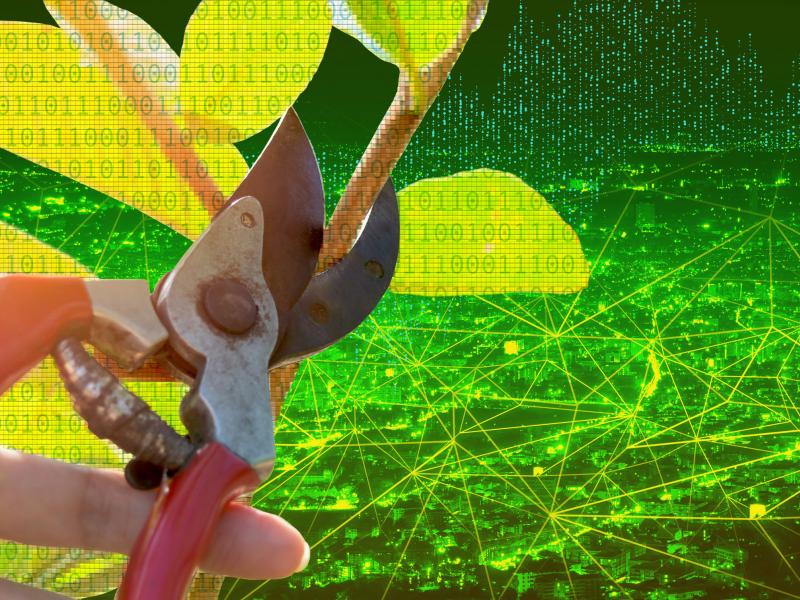
In today’s digital age, the rabbit hole of connected information can be not only a time sink, but downright overwhelming. Even for high-performance computers.
Researchers from Pacific Northwest National Laboratory reviewed the current state of knowledge about the impacts of climate change on soil microorganisms in different climate-sensitive soil ecosystems.
Twenty-four analysts from U.S. intelligence organizations met in August for a machine learning activity with PNNL researchers Nicole Nichols, Jeremiah Rounds, Lawrence Phillips, and Brian Kritzstein.