Chris Oehmen
Interim Division Director
Chris Oehmen is the current interim division director for the Computing Division. He joined Pacific Northwest National Laboratory as a research scientist in 2003 focusing on computational biology, bio-inspired cybersecurity, high performance computing (HPC), ML, and now laboratory automation to support the Genesis mission. Chris has over 22 years of experience developing, leading, and executing research programs for a variety of sponsors. Among other activities, Oehmen led the Asymmetric Resilient Cybersecurity Initiative, ExaSGD--a DOE exascale computing project application in nonlinear optimization for power grid optimization, and OPAL FAMOUS--a multi lab effort to develop and orchestrate agentic workflows to drive autonomous bio experimentation.
He received his B.A. in physics and mathematics from Saint Louis University in 1995. He earned M.S. and Ph.D. degrees in biomedical engineering from the University of Memphis/University of Tennessee, HSC Joint program in 1999 and 2003, respectively where he was a DOE Computational Science Graduate Fellow.

Angela Norbeck
Group Lead - Software and Data Systems Engineering Group
Angela Norbeck draws from her years of experience in biological data analysis and data sciences to explore solutions in biosecurity, cybersecurity, and computing. Specific areas of focus in computing include data integration, big data management, using high-performance computing(HPC) for performance optimization, and user interfaces with intelligent controls and monitoring.
Panos Stinis
Group Lead - Computational Mathematics Group
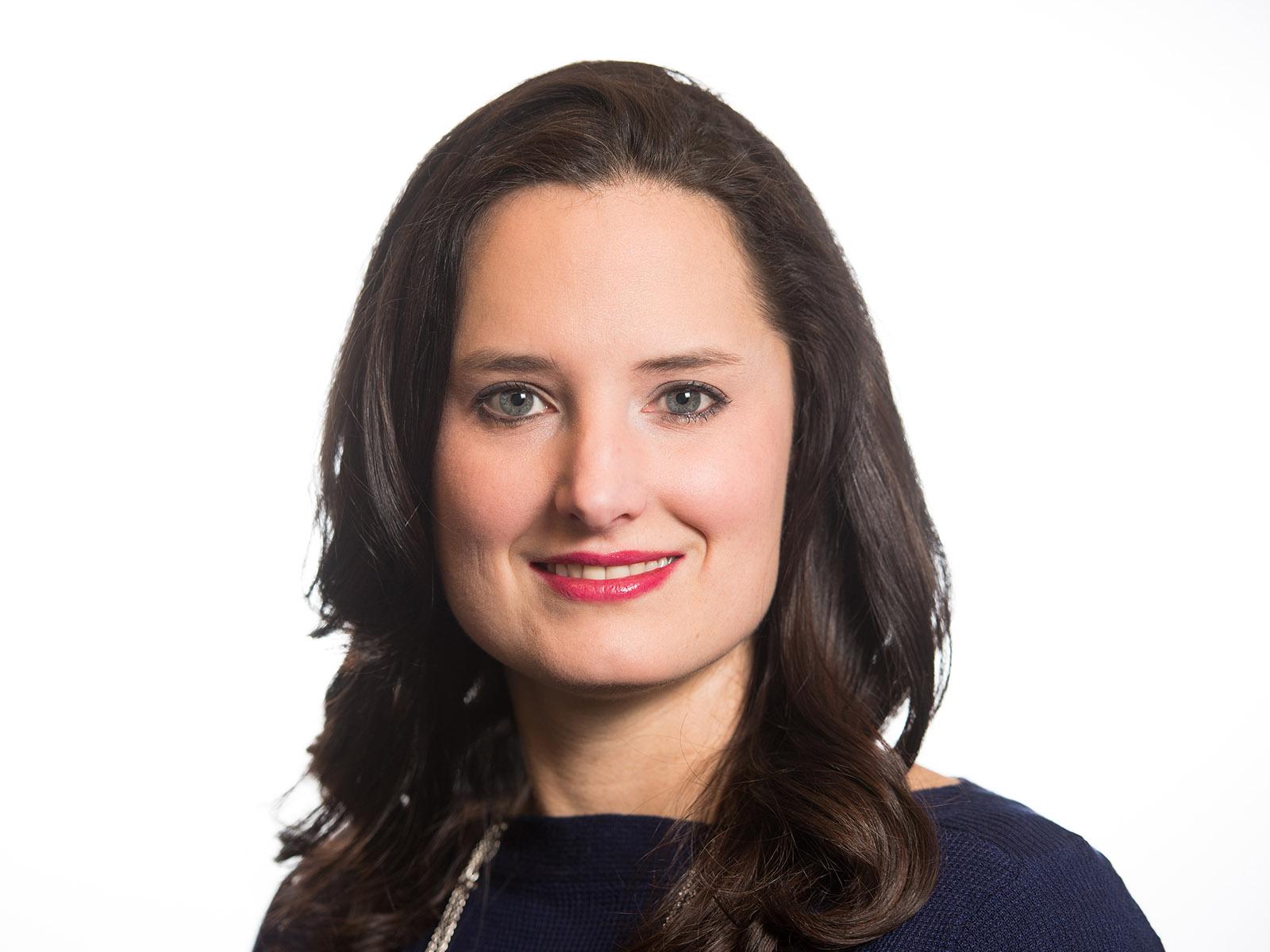
Panos Stinis specializes in scientific computing with current application interests in model reduction of complex systems, singularity detection and tracking, particle filtering, mesh refinement, and ML.

Mahantesh Halappanavar
Group Lead - Data Science Group
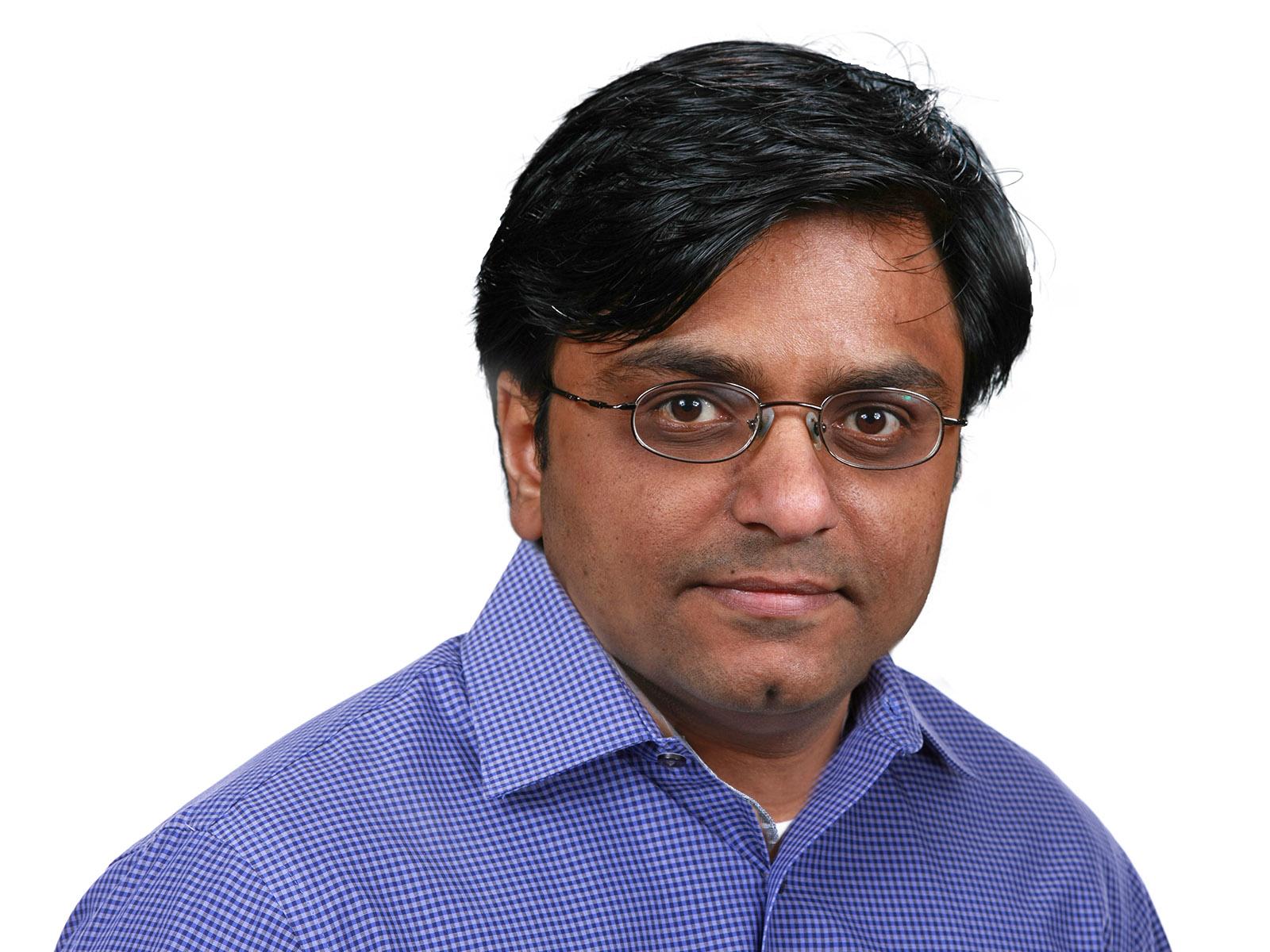
Mahantesh Halappanavar conducts research and development in the broad areas of high-performance scientific computing and data sciences. His research has spanned multiple technical foci and includes combinatorial scientific computing; design and implementation of parallel graph algorithms; ML; and application of graph theory and game theory to solve problems in applied domains, such as scientific computing, electric power grids, cybersecurity, and life sciences.
Andres Marquez
Group Lead - Future Computing Technologies Group
Andres Marquez is a senior computer scientist at Pacific Northwest National Laboratory (PNNL). He is the principal investigator for the Department of Energy’s Advanced Memory to Support AI for Science (AMAIS) project. He is also the PI and/or a performer on several projects related to memory performance analysis or cybersecurity and has worked in the past as a compiler and computer architect on several academic high-performance execution model projects. Andres Marquez joined PNNL in 2005. His expertise spans hardware design, compiler design, runtime systems, energy-efficient computing, and cybersecurity. Prior to joining PNNL, he served as memory architect for the German supercomputers SUPRENUM and MANNA at GMD FIRST/Fraunhofer. He also worked under Prof. Gao, collaborating with IBM on Denneau’s Blue Gene Cyclops project, as well as on the U.S. petascale superconductive HTMT study led by Tom Sterling. At PNNL, he was the Principal Investigator (PI) for the Energy Smart Datacenter project, co-PI on two X-Stack runtime projects, and led several cybersecurity efforts. He is currently the PI for the Advanced Memory to Support AI for Science (AMAIS) project. Marquez has authored more than 90 peer-reviewed publications and is currently one of the organizers of the Secure-HPC workshop, held in conjunction with the Supercomputing conference. He holds an M.S. in Electrical Engineering from the Technical University of Berlin and a Ph.D. in Electrical and Computer Engineering from the University of Delaware.

Satish Karra
Group Lead - Computer Analytics and Modeling
Satish Karra has 15 years of experience developing scientific software products (high-performance computing, machine learning) for various DOE and private sponsors. Karra’s research is at the interface of engineering, geoscience, applied mathematics, and computing, to solve real-world problems in energy and environmental sciences. He is an expert in building coupled multi-physics and multi-scale models for subsurface applications. Satish Karra has 15+ years experience in computational science at Los Alamos National Laboratory and Pacific Northwest National Laboratory. Karra has built high-performance and GPU-accelerated scientific software for energy, environmental, bioeconomy, and national security applications. He is a core developer of the massively parallel subsurface simulator PFLOTRAN, and he led the parallelization of the R&D 100 Award–winning dfnWorks suite. His research combines these simulation tools with physics-informed machine learning, neural operators, and surrogate models to accelerate scientific discovery and decision-making. Karra has authored more than 100 peer-reviewed journal articles and has mentored more than 25 students and postdocs. He holds a PhD in mechanical engineering from Texas A&M University.
