RemPlex Summit Technical Sessions

Environmental Sensors
Nov. 10, 2021, 10:45 am - 12:15 pm
Organizer(s): Radha Kishan Motkuri, Daniel Deng, and Joshua Torgeson, Pacific Northwest National Laboratory (PNNL), Richland, Washington
Advances in sensing technologies to improve the quality and quantity of data collected are crucial to improve computational models, particularly in locales with high spatial and/or temporal biogeochemical variability. Arrays of sensors deployed over an area of interest may provide high spatiotemporal resolution; however, large quantities of data are produced from these distributed sensor networks, which can become difficult to manage and interpret. Advances in data management, machine learning, and other software technologies are essential to ensure the data produced from these networks can be interpreted accurately and effectively.
Nov. 10 Technical Session Recording Now Available |
|
|
Speaker #1
Sagnik Basuray
New Jersey Institute of Technology, Newark, New Jersey
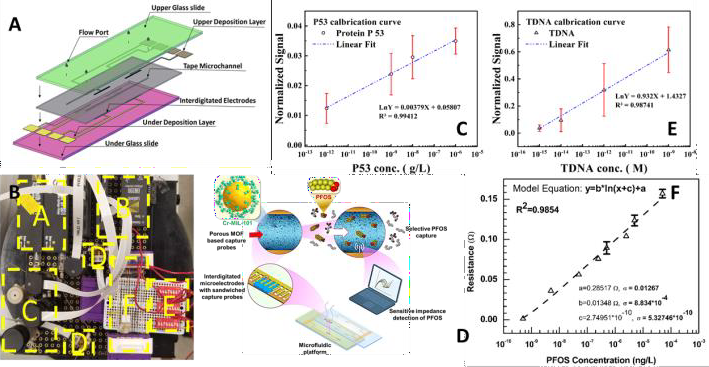
Ultrasensitive Determination of Emerging Contaminants and Biothreats Using a Novel Modular Electrochemical POC/POU Platform Called ESSENCE
Co-authors: Zhenglong Li, Yu-Hsuan Cheng, Charmi Chande, Saud Alssaidy, and Tzu-Han Tan, New Jersey Institute of Technology; Joshua M Torgeson, Habilou Ouro-Koura, and Radha Kishan Motkurib, Pacific Northwest National Laboratory; Craig Divine, Jeffrey McDonough, and Erika Houtz, Arcadis
Abstract
Sensors for point-of-care (POC) devices for biomedical diagnostics or point- of-use (POU) devices for environmental screening suffer from insufficient sensitivity and selectivity. It isn’t easy to adapt an existing POC/POU sensor to emerging pathogens or contaminations. We show here a modular, adaptable, nonplanar interdigitated porous flow-through microelectrode-based electrochemical POC platform called ESSENCE. ESSENCE meets the WHO “ASSURED” criteria for POC devices and all requirements for a POU device for screening emerging contaminants. The ESSENCE platform consists of a replaceable microfluidic chip and a fully automatic fluidic and sensing system. The microfluidic chip with nonplanar interdigitated microelectrodes surrounds a microfluidic channel cut from double-sided tape packed with functionalized nanomaterial transducers. The chip has different electrode configurations to measure various transducers from dielectric metal-organic- framework (MOF) to conducting carbon nanotube (CNT). The porous micro-electrode leads to increased selectivity from enhanced shear forces as it can unbind most signals generated by non-specific binding, such as physical adsorption or biofouling. The nonplanar design provides higher electric field penetration to the entire sensing
region, leading to enhanced sensitivity. This porous electrode structure also results in high convective fluxes that disrupt the parasitic Debye double-layer on the electrode surface, minimizing the diffusion process and shifting the electrical measurements to high frequency (1 k to 10 MHz). This minimizes the ambient noise leading to high signal-to-noise. Furthermore, the simple fabrication-less protocol of manufacturing ESSENCE seamlessly switches the packing material to target different molecules. ESSENCE platform has high selectivity and sensitivity for biomolecules like DNA (fM, can distinguish against a mismatched DNA), proteins (breast cancer biomarker p53, fM sensitivity, can distinguish it against another breast cancer biomarker HER2). This device can detect Perfluorooctanesulfonate (PFOS) using PNNL MOFs.
Speaker #2
Akanksha Upadhyay
Aarhus University, Aarhus, Denmark
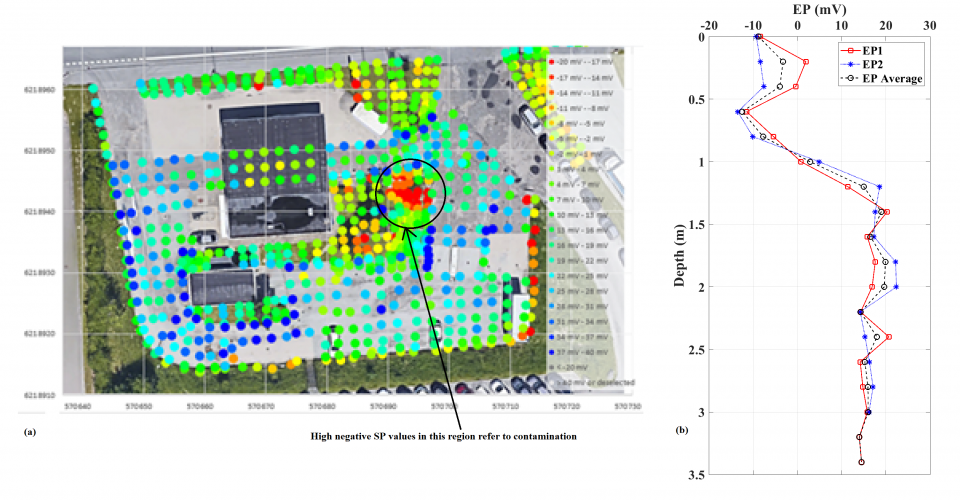
Non-intrusive Investigation Using SP Measurements Associated with Cable Bacteria in Contaminated Zones
Co-authors: Lis Allaart, AV Christiansen, LM Madsen, and LR Damgaard, Aarhus University
Abstract
Groundwater contamination associated with biodegradation of organic compounds may result in negative electric Self-Potential (SP) anomalies at the ground surface. This negative SP anomaly is associated with a gradient in the redox potential caused by degradation of organic matter by cable bacteria. Cable bacteria transport electrons along their filaments as a function of their metabolism at the oxic/anoxic (water and oil/hydrocarbon) interface. The cable bacteria filaments can be several centimeters long and generate a considerable current density that can be measured on the surface. To delineate polluted zones, a SP survey was planned near an old gas station in Aarhus, Denmark. Since most of the area was covered with asphalt, it was not practical to dig holes in the ground and take measurements, thus, a new approach was established for measuring surface SP data. In this approach, small holes (1.5 cm diameter) were made in the asphalt surface using an electrical dill and wooden pegs soaked in saline water were inserted in these holes. Measurements were made by placing measuring and reference electrodes in small buckets filled with wet sand covered by saline-water drenched cloth making electrical contact with the wooden pegs in the ground. Using this approach, more than 400 surface SP data points referenced with differential GPS were measured. The results indicate a large negative anomaly over a region with known contamination (Figure 1a). At the same location, three borehole SP measurements revealed the depth to the interface of probable contamination, which is no more than 1 m below the surface. SP signals measured in the study area were also affected due to the presence of different conductivity structures in the area (asphalt, grass, buried metallic tanks). To support the SP measurements, four ERT measurements were also done in the same area showing depth of the interface lying between 1-2 m additionally showing effects of different conductivity structures in the measured profile. Results of the study propose that SP method could be a fast and non-intrusive technique to delineate contaminated interfaces associated with microbial activities in a polluted area.
Speaker #3
Ajay Karakoti
The University of Newcastle, New Castle, New South Wales, Australia
Nanozymes for Colorimetric Sensing
Abstract
Several metal and metal oxide nanoparticles show unique abilities to mimic the function of enzymes. Most of these nanoparticles mimic the activity of oxido-reductase enzymes and can oxidize or reduce the biomolecules, dyes or other analytes making them perfect candidates for sensing various molecules of interest. Among several materials, cerium oxide nanoparticles are considered as versatile nanozymes that display pH dependent redox activity and can mimic the function of four different enzymes – oxidase, peroxidase, superoxide dismutase and catalase. These enzyme like activities have been used develop simple colorimetric sensor for the detection of various biological and environmentally relevant molecules. This talk will focus on the properties of cerium oxide nanoparticles that give rise to its multiple enzyme like activities and how these properties can be used for the detection two environmentally relevant molecules - hydrogen peroxide and fluoride. Hydrogen peroxide is an omnipresent environmental contaminant of high ecological significance that is associated with direct interaction with environmental microbiota and can indirectly impact the global carbon cycle by interacting with carbon sequestering minerals. Similarly, excess of fluoride is associated with fluoride related deformities with an estimated 70 million people affected by the chronic exposure to high levels of fluoride ions. Fluoride ions are mixed in the drinking water by many countries (including the US and Australia) and are also present in various fertilizers resulting on its accumulation in soil and groundwater. Thus, it is important to monitor the concentration of hydrogen peroxide and fluoride in various water sources. At first, this talk will present the size and oxidation state dependent catalase mimetic activity of cerium oxide nanoparticles during its interaction with hydrogen peroxide. This interaction proceeds with the formation of a transient cerium oxo-peroxo complex that can be fabricated into a simple spectrophotometric sensor based on self-assembled monolayers of nanoceria. It will then discuss the use of oxidase enzyme like activity of nanoceria to develop a colorimetric sensor for the highly selective detection of fluoride ions in water. The role of oxidation state of cerium will be highlighted in modulating the oxidase like activity that is boosted in presence of 1- 10 ppm of fluoride ions. The high selectivity of the sensor to fluoride ions suggests that it has the potential to be transformed into a quick dip stick based sensor for convenient domestic, industrial and farming use.
Speaker #4
Larry Cheng
Penn State University, State College, Pennsylvania
Deformable Multimodal Electronics for Biomedicine and Environmental Sensing
Abstract
Recent advances in electronics enable powerful biomedical devices that have greatly reduced therapeutic risks by monitoring vital signals and providing means of treatment. Conventional electronics today form on the planar surfaces of brittle wafer substrates and are not compatible with complex body tissues. Soft and implantable devices can help us better understand the behavior and effects of various diseases. This talk presents the challenges, design strategies, and novel fabrication processes behind a potential medical device that (a) integrates with human physiology, and (b) dissolves completely after its effective operation. The integration of the deformable multimodal sensing platform with stretchable antennas, micro-supercapacitor arrays, and energy harvesting modules further yields a self-powered stretchable wireless sensing system for next-generation bio-integrated electronics and environmental sensing.
Speaker #5
Lei Zuo
Virginia Polytechnic Institute and State University, Blacksburg, Virginia
Self-powered Through-wall Communication for Nuclear Spent Fuel Canister Monitoring
Co-authors: Haifeng Zhang, University of North Texas; Kyle F. Reed and M. Nance Ericson, Oak Ridge National Laboratory
Abstract
Many nuclear facilities, such as spent fuel storage dry casks and nuclear reactor pressure vessels, are entirely sealed by metal layers to prevent harmful radiation. For safety and security operations, the temperature, pressure, radiation, and humidity inside the vessel needs to be closely monitored. However, no practical technology is currently available to realize the through-wall data communication and monitoring for these vessels due to the inside harsh environment of high temperature and nuclear radiation. In this presentation, an innovative self-powered wireless through-wall data communication system for nuclear environment was presented, designed, and prototyped, which demonstrated a successful solution to such challenges. The proposed system is composed of four modules, i.e., energy harvester with power management circuits, ultrasound wireless communication using high-temperature piezoelectric transducers, electronic circuits for sensing and data transmission, and radiation shielding for electronics. Constitutive functions of each module were firstly designed and followed by the system integration. Experiments were conducted subsequently to validate the designed functions and evaluate the performance of the integrated system. Results showed that the average power of over 40 mW were harvested from the thermal flow inside the nuclear spent fuel canisters (after 50 years of service) which could provide enough energy to operate the sensing and data communication systems. The gamma radiation test results showed that the thermoelectric energy harvester and ultrasound transceivers can withstand radiation dosing over 100 Mrad. Furthermore, temperature shock tests demonstrated that the entire system including the shielded electronics can survive and maintain their functionalities at temperature as high as 195 ℃. Under the in-lab mocked-up high temperature conditions and radiation shielding, the proposed system is foreseen to survive and operate stably for fifty years inside a nuclear spent fuel canister, and send the frequency modulated data out of the canister for 3 seconds in every 10 minutes.