PNNL

  • About
  • News & Media
  • Careers
  • Events
  • Research
    • Scientific Discovery
      • Autonomous Science
      • Biology
        • Chemical Biology
        • Computational Biology
        • Ecosystem Science
        • Human Health
          • Cancer Biology
          • Exposure Science & Pathogen Biology
        • Integrative Omics
          • Advanced Metabolomics
          • Chemical Biology
          • Mass Spectrometry-Based Measurement Technologies
          • Spatial and Single-Cell Proteomics
          • Structural Biology
        • Microbiome Science
          • Biofuels & Bioproducts
          • Human Microbiome
          • Soil Microbiome
          • Synthetic Biology
        • Predictive Phenomics
        • Toward a Standard Model of Biology
      • Earth & Coastal Sciences
        • Global Change
        • Atmospheric Science
          • Atmospheric Aerosols
          • Human-Earth System Interactions
          • Modeling Earth Systems
        • Coastal Science
        • Ecosystem Science
        • Subsurface Science
        • Terrestrial Aquatics
      • Materials Sciences
        • Materials in Extreme Environments
        • Nondestructive Examination
        • Precision Materials by Design
        • Science of Interfaces
        • Smart Advanced Manufacturing
          • Cold Spray
          • Friction Stir Welding & Processing
          • ShAPE
      • Nuclear & Particle Physics
        • Dark Matter
        • Neutrino Physics
        • Fusion Energy Science
      • Quantum Information Sciences
      • Chemistry
        • Computational Chemistry
        • Chemical Separations
        • Chemical Physics
        • Catalysis
      • Fusion Energy Science
    • Energy Resiliency
      • Critical Minerals and Materials
        • Replacement
        • Separations and Recovery
        • Supply Chain Modeling
      • Electric Grid Modernization
        • Emergency Response
        • Grid Analytics
          • AGM Program
          • Tools and Capabilities
        • Grid Architecture
          • Basic Terms & Principles
          • Resource Library
        • Grid Cybersecurity
        • Grid Energy Storage
        • Transmission
        • Distribution
      • Energy Efficiency
        • Appliance and Equipment Standards
        • Building Energy Codes
        • Building Technologies
          • Advanced Building Controls
          • Advanced Lighting
          • Building-Grid Integration
        • Commercial Buildings
        • Federal Buildings
          • Federal Performance Optimization
          • Resilience and Security
        • Residential Buildings
          • Building America Solution Center
          • Energy Efficient Technology Integration
          • Home Energy Score
        • Energy Efficient Technology Integration
      • Energy Storage
        • Electrochemical Energy Storage
        • Flexible Loads and Generation
        • Grid Integration, Controls, and Architecture
        • Regulation, Policy, and Valuation
        • Science Supporting Energy Storage
        • Chemical Energy Storage
      • Environmental Management
        • Waste Processing
        • Radiation Measurement
        • Environmental Remediation
      • Fossil Energy
        • Subsurface Energy Systems
        • Advanced Hydrocarbon Conversion
      • Nuclear Energy
        • Fuel Cycle Research
        • Advanced Reactors
        • Reactor Operations
        • Reactor Licensing
        • Nondestructive Examination
      • Renewable Energy
        • Solar Energy
        • Wind Energy
          • Wind Resource Characterization
          • Wildlife and Wind
          • Wind Systems Integration
          • Wind Data Management
          • Distributed Wind
        • Marine Energy
          • Environmental Monitoring for Marine Energy
          • Marine Biofouling and Corrosion
          • Marine Energy Innovation
          • Marine Energy Resource Characterization
          • Testing for Marine Energy
        • Hydropower
          • Environmental Performance of Hydropower
          • Hydropower Cybersecurity and Digitalization
          • Hydropower and the Electric Grid
          • Materials Science for Hydropower
          • Pumped Storage Hydropower
          • Water + Hydropower Planning
        • Grid Integration of Renewable Energy
        • Geothermal Energy
          • Geothermal Materials Research
      • Transportation
        • Bioenergy Technologies
          • Algal Biofuels
          • Aviation Biofuels
          • Waste-to-Energy and Products
        • Hydrogen & Fuel Cells
        • Vehicle Technologies
          • Emission Control
          • Energy-Efficient Mobility Systems
          • Lightweight Materials
          • Vehicle Electrification
          • Vehicle Grid Integration
    • National Security
      • Chemical & Biothreat Signatures
        • Contraband Detection
        • Pathogen Science & Detection
        • Explosives Detection
        • Threat-Agnostic Biodefense
      • Cybersecurity
        • Discovery and Insight
        • Proactive Defense
        • Trusted Systems
      • Nuclear Material Science
      • Nuclear Nonproliferation
        • Radiological & Nuclear Detection
        • Nuclear Forensics
        • Ultra-Sensitive Nuclear Measurements
        • Nuclear Explosion Monitoring
        • Global Nuclear & Radiological Security
      • Stakeholder Engagement
        • Disaster Recovery
        • Global Collaborations
        • Legislative and Regulatory Analysis
        • Technical Training
      • Systems Integration & Deployment
        • Additive Manufacturing
        • Deployed Technologies
        • Rapid Prototyping
        • Systems Engineering
      • Threat Analysis
        • Advanced Wireless Security
          • 5G Security
          • RF Signal Detection & Exploitation
        • Border Security
        • Internet of Things
        • Maritime Security
        • Millimeter Wave
        • Mission Risk and Resilience
    • Data Science & Computing
      • Artificial Intelligence
      • Graph and Data Analytics
      • Computational Mathematics & Statistics
      • Future Computing Technologies
        • Adaptive Autonomous Systems
    • Science & Technology Strategy
    • Publications & Reports
    • Featured Research
  • People
    • Inventors
    • Lab Leadership
    • Lab Fellows
    • Staff Accomplishments
  • Partner with PNNL
    • Education
      • Undergraduate Students
      • Graduate Students
      • Post-graduate Students
      • University Faculty
      • University Partnerships
      • K-12 Educators and Students
      • STEM Education
        • STEM Workforce Development
        • STEM Outreach
      • Internships
    • Community
      • Philanthropy
      • Volunteering
    • Industry
      • Why Partner with PNNL
      • Explore Types of Engagement
      • How to Partner with Us
      • Available Technologies
      • Procurement
      • Technology Ombuds
  • Facilities & Centers
    • All Facilities
      • Atmospheric Radiation Measurement User Facility
      • Electricity Infrastructure Operations Center
      • Energy Sciences Center
      • Environmental Molecular Sciences Laboratory
      • Grid Storage Launchpad
      • Institute for Integrated Catalysis
      • Interdiction Technology and Integration Laboratory
      • PNNL Portland Research Center
      • PNNL-Seattle
      • PNNL-Sequim (Marine and Coastal Research)
      • Radiochemical Processing Laboratory
      • Shallow Underground Laboratory

Connecting Transmission Corridors (ConCord) Initiative

  • Transmission Atlas
  • Events
  • Design Workshop
  • Resources
  • Case Studies

Breadcrumb

  1. Home
  2. Projects
  3. Connecting Transmission Corridors (ConCord) Initiative
  4. Case Studies

Maryland Powerline Trail

Seizing opportunities to chart new policy objectives in support of multi-benefit transmission corridors. 

Quick Facts

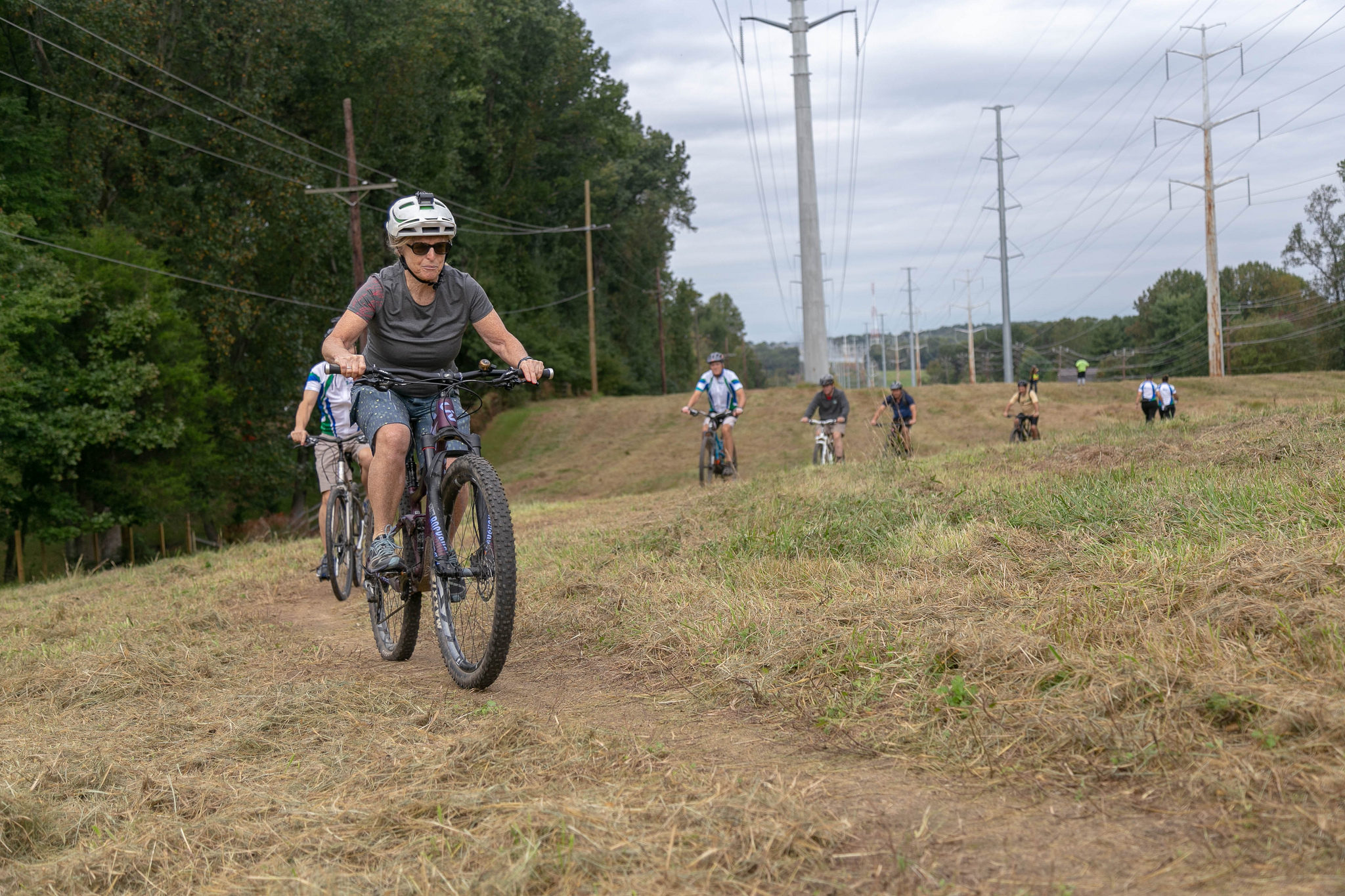
Cyclists on the Powerline Trail
Cyclists on the Powerline Trail. (Photo courtesy of Montgomery Parks, M-NCPPC)
  • Location: Montgomery County, Maryland
  • Primary Function: Recreation
  • Key Outcome: This 6-mile trail provides access to hiking, biking, and horseback riding through the rolling terrain of Pepco’s rights-of-way (ROWs) connecting South Germantown Recreational Park with the Muddy Branch Stream Valley Park in North Potomac

This project is the first to demonstrate the co-benefits of transmission ROWs for recreational use in Montgomery County. The idea originated during the approval process for the merger between Pepco and Exelon, suggested by a bike advocate hoping to encourage policy approval for local trails colocated within Pepco’s ROWs. After gaining support for the idea, Bob Turnbull, the national surface trail construction manager for Montgomery Parks, was brought in to collaborate. As a condition of the merger’s approval by Montgomery County, this pilot project was created and Pepco agreed to fund the trail design and make the land available for recreational use. The trail design is intended to support various recreational activities, from walking, running, and hiking to horseback riding, mountain biking, and bird watching. 

What Are the Benefits of Recreation Services?
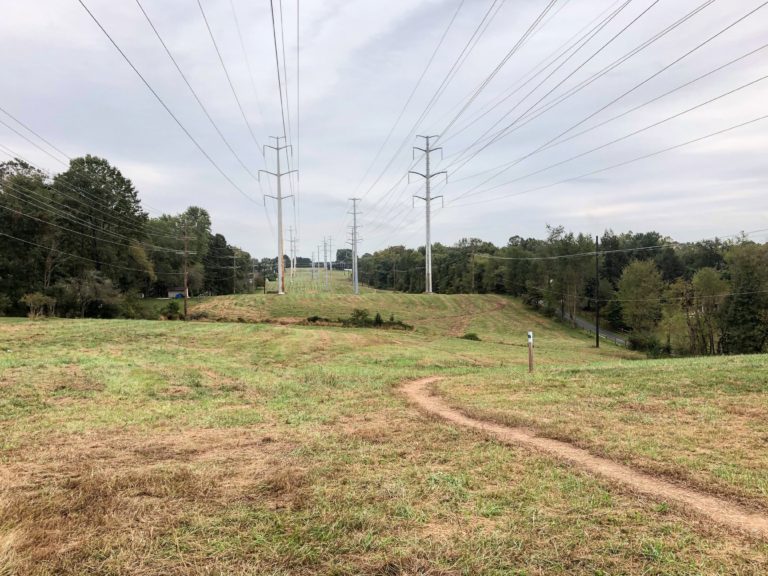
The Powerline Trail in October
The Powerline Trail in October. (Photo by Charlie Ban)

This pilot project provides connections between Hoyles Mill and Muddy Branch local trails across 6 miles of natural surface trail through areas of Montgomery County not previously accessible for the public to enjoy. Hikers, bikers, runners, and equestrians alike can enjoy this scenic route, which connects Seneca Creek State Park and Seneca Ridge trail, and some day even Bethesda, when the trail expands to meet its 13-mile goal.  

Who Was Involved?

Montgomery Parks

Montgomery Parks funded the construction of the interim natural surface trail and, with assistance from the Montgomery County Department of Transportation, funded the road crossings. It also resolved disputes with local property owners adjacent to the trail path.   

Exelon Corp and Pepco 

Exelon Corp and Pepco funded the conceptual design of the proposed paved trail and the interim natural surface trail. 

Mid-Atlantic Off-Road Enthusiasts

The Mid-Atlantic Off-Road Enthusiasts (MORE) is a nonprofit organization that advocates for mountain bikers in Maryland, Virginia, and Washington, DC. MORE has accepted responsibility for trail maintenance activities like frequent mowing. 

Montgomery County Department of Transportation 

The department worked to ensure safety across all road crossings by using signage, road striping and other more involved measures to ensure both trail users and those on the roads remain safe at all crossings. 

Key Project Takeaways

  • Safe crossings are priority. The most time-consuming and expensive aspects of this pilot project were ensuring safe crossings and appropriate signage at every trail intersection with roadway. Strong partnerships with the Department of Transportation and state highways were crucial to the project’s success.
  • Intentional design helps increase trail connectivity. This 6-mile trail project spanned across Montgomery County, connecting both existing state parks and other local trails to create a larger network of connected communities and recreational shared spaces.  

PNNL

  • Get in Touch
    • Contact
    • Careers
    • Doing Business
    • Environmental Reports
    • Security & Privacy
    • Vulnerability Disclosure Policy
    • Notice to Applicants
  • Research
    • Scientific Discovery
    • Energy Resiliency
    • National Security
Subscribe to PNNL News
Department of Energy Logo Battelle Logo
Pacific Northwest National Laboratory (PNNL) is managed and operated by Battelle for the Department of Energy
  • YouTube
  • Facebook
  • X (formerly Twitter)
  • Instagram
  • LinkedIn