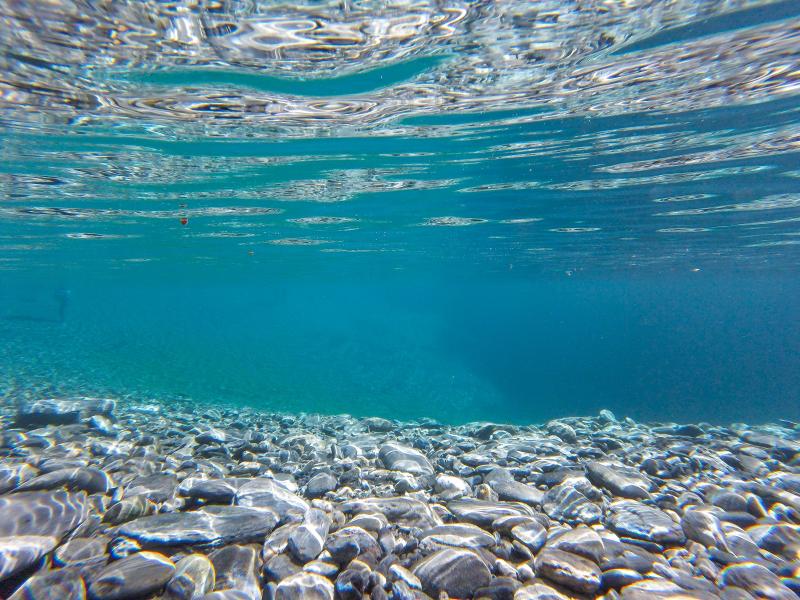
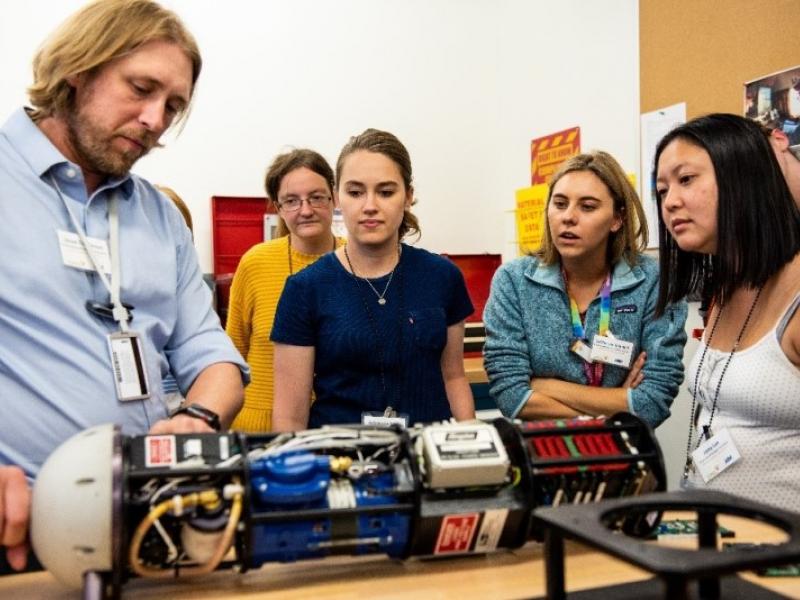
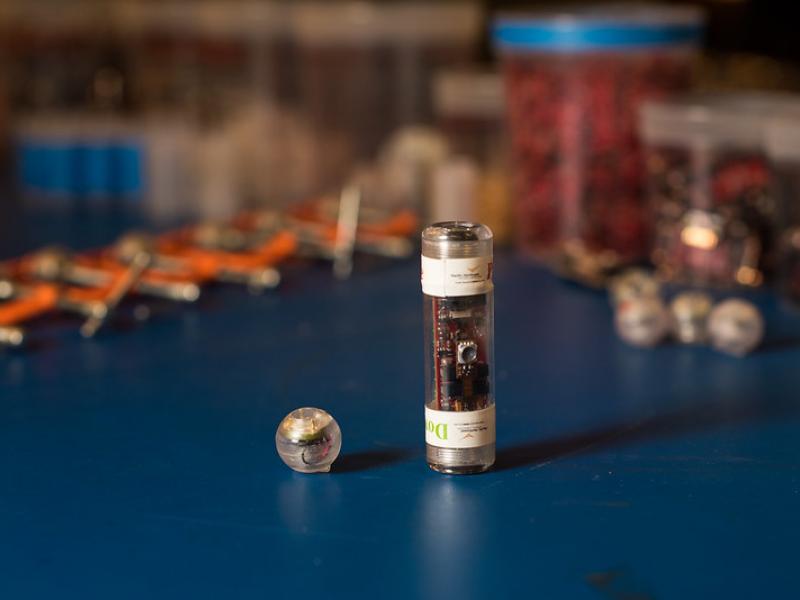
PNNL’s autonomous fish body double, Sensor Fish, and the miniature version, Sensor Fish Mini, were used to evaluate a special screen. Researchers found the screen provides safe downstream passage for fish at irrigation structures.
PNNL researchers demonstrate how the excitation of oxygen atoms that contributes to better performance of a lithium-ion battery also triggers a process that leads to damage, explaining a phenomenon that has been a mystery to scientists.
Researchers at PNNL have developed a model that predicts outcomes from the algae hydrothermal liquefaction process in a way that mirrors commercial reality much more closely than previous analyses.
When two powerful earthquakes rocked southern California earlier this month, officials’ attention focused, understandably, on safety. How many people were injured? Were buildings up to code? How good are we at predicting earthquakes?
Scientists have taken a common component of digital devices and endowed it with a previously unobserved capability, opening the door to a new generation of silicon-based electronic devices.
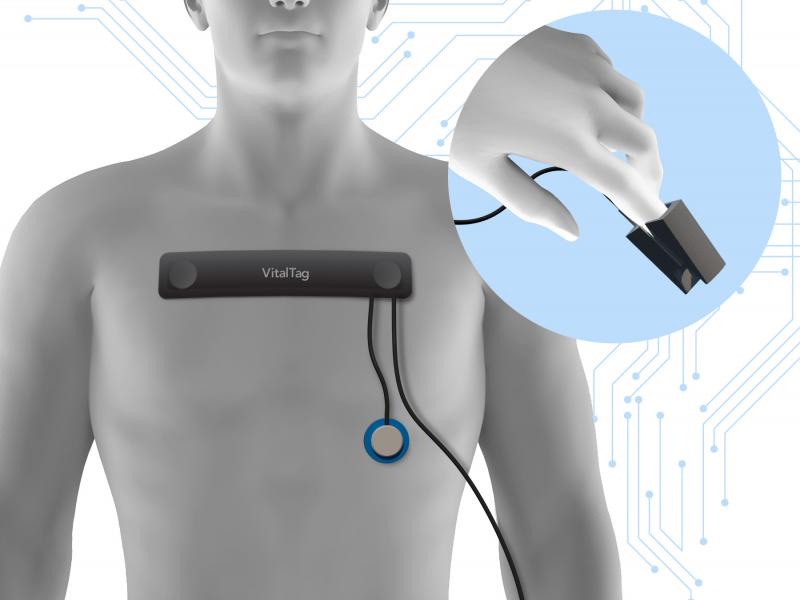
A new PNNL tool makes it easy to see the differences across the country when it comes to the cost and affordability of electricity. Users can sort and compare nearly 100 metrics or variables and get individual county information.
PNNL Laboratory Director Steve Ashby attended an event marking the 20th anniversary of the Department of Energy’s National Nuclear Security Administration Nuclear Smuggling Detection and Deterrence program.
Researchers at PNNL have introduced an alternative method using a molecular-based pump that could potentially use a quarter less energy than the age-old mechanical pump.
Network Collapse, a virtual reality science, technology, engineering, and mathematics (STEM) app developed by PNNL researchers, has won a Gold Award from the 2019 International Serious Play Award.
Barely visible material that looks like tiny grains of sand may hold the key to removing an invisible health threat that has contaminated water supplies across the country.
Researchers apply numerical simulations to understand more about a sturdy material and how its basic structure responds to and resists radiation. The outcomes could help guide development of the resilient materials of the future.
A PNNL study that evaluated the use of friction stir technology on stainless steel has shown that the steel resists erosion more than three times that of its unprocessed counterpart.
PNNL’s Janet Jansson is part of an international team of scientists warning scientists of the urgency to pay more attention to the role of microorganisms in our climate.