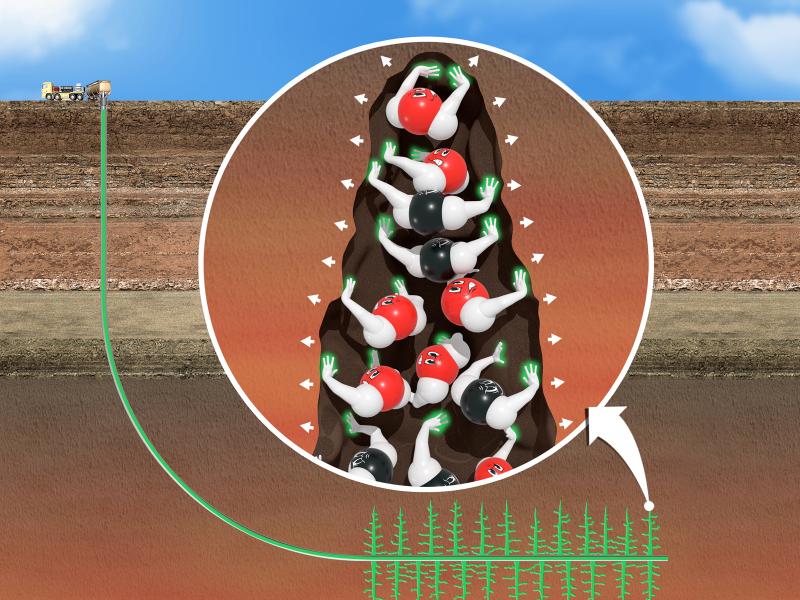
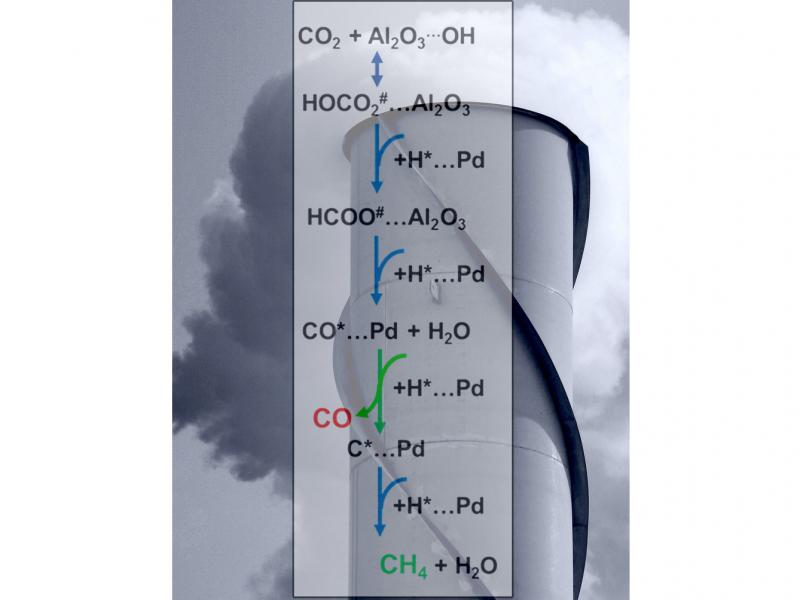
A new perspective article discusses how integrating carbon dioxide capture and conversion in solvents can lead to cheaper and more efficient carbon management systems.
PNNL will demonstrate how new technologies, innovative approaches and partnering with others can lead to net-zero emissions and decarbonization of operations.
This PNNL-developed separation system quickly and successfully separates larger particles from smaller ones at various scales, in different solid-liquid mixtures and at different flow rates.
Johannes Lercher, Battelle Fellow and director of the PNNL Institute for Integrated Catalysis, envisions energy storage solutions at the new Energy Sciences Center.
PNNL has developed seaweed-based inks and materials for 2-D and 3-D printing that can be used for a multitude of applications in the art, medical, STEM, and other fields.
PNNL’s Mike Hochella receives Geochemical Society’s Patterson Award and ACS Geochemistry medal for discovery of toxic particles produced during coal combustion.
PNNL computational scientist Diana Bacon’s role as carbon storage associate editor uses her expertise in subsurface modeling and quantitative risk assessment.
Machine learning techniques are accelerating the development of stronger alloys for power plants, which will yield efficiency, cost, and decarbonization benefits.
A shoe scanner may allow people passing through security screening to keep their shoes on. PNNL built the scanner based on the same technology it used to develop airport scanners. It's licensed to Liberty Defense.
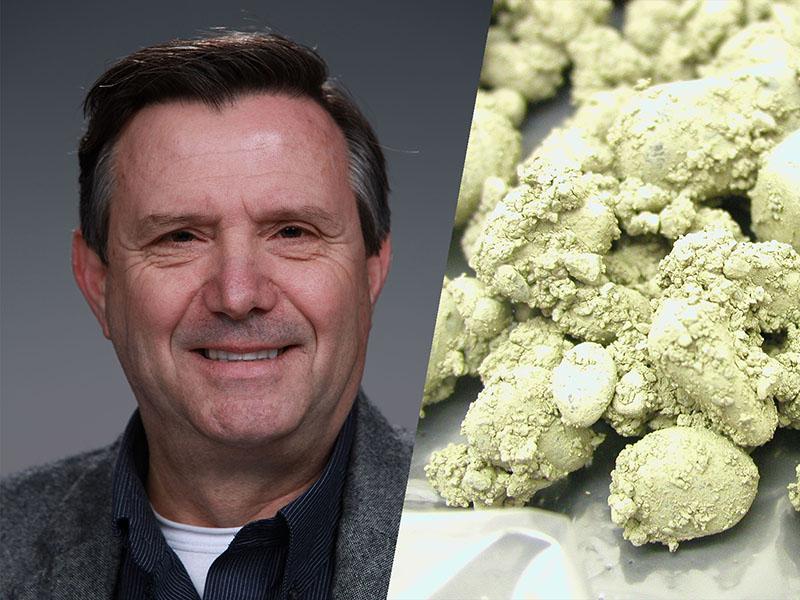
PNNL teamed with academia and industry to develop a novel zero-emission methane pyrolysis process that produces both hydrogen and high-value carbon solids suitable for an array of manufacturing applications.