The Energy and Environmental Building Alliance recently invited PNNL's Theresa Gilbride to a three-year term on its advisory board and join the board’s technical committee.
The Federal Laboratory Consortium for Technology Transfer has honored three innovations at the U.S. Department of Energy’s Pacific Northwest National Laboratory.
Sonja Glavaski and Kevin Schneider, both electrical engineers at PNNL, have been named as IEEE fellows. IEEE is the world's largest technical professional organization dedicated to advancing technology for the benefit of humanity.
Researchers at PNNL are contributing artificial intelligence, machine learning, and app development expertise to a U of W project that will ease challenges with urban freight delivery. The project will provide delivery drivers with a tool
PNNL’s Srinivas Katipamula and Nora Wang have received a Northwest Energy Efficiency Alliance award for contributing to the success of Seattle’s Building Tune-Up Accelerator Program.
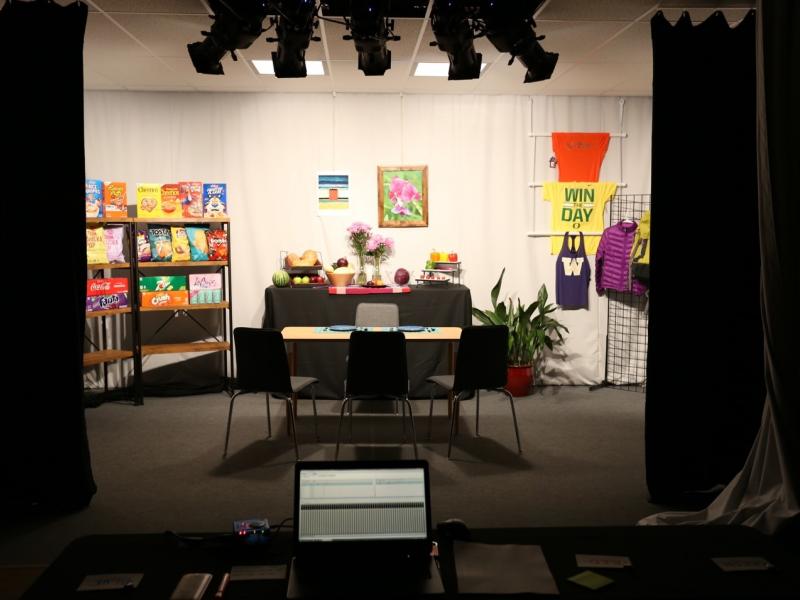
Advancements such as LEDs have changed consumers’ experience with lighting. Whereas there was once a simple choice of how much light a consumer desired, there’s now a variety of choices to be made about the appearance of light.
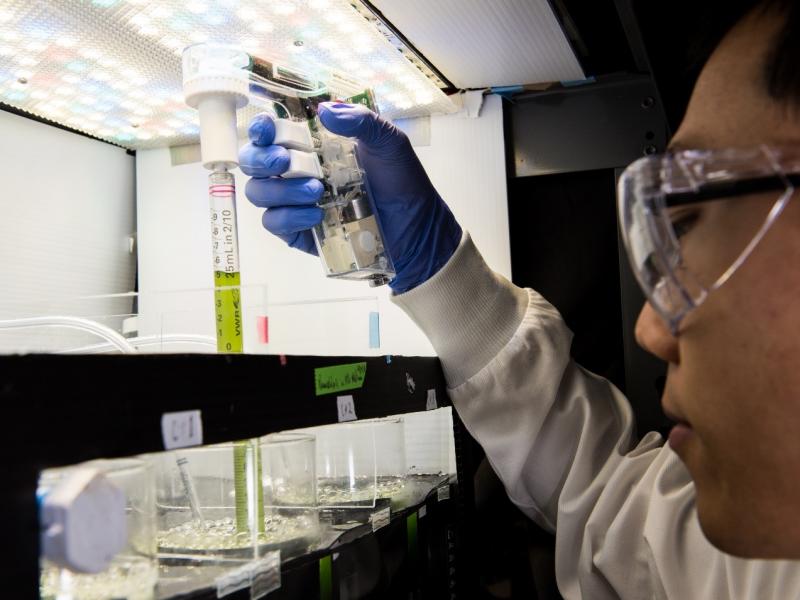
In the third year of the DISCOVR Consortium project, the consortium team has identified an algal strain that progressed successfully through multiple evaluation phases.
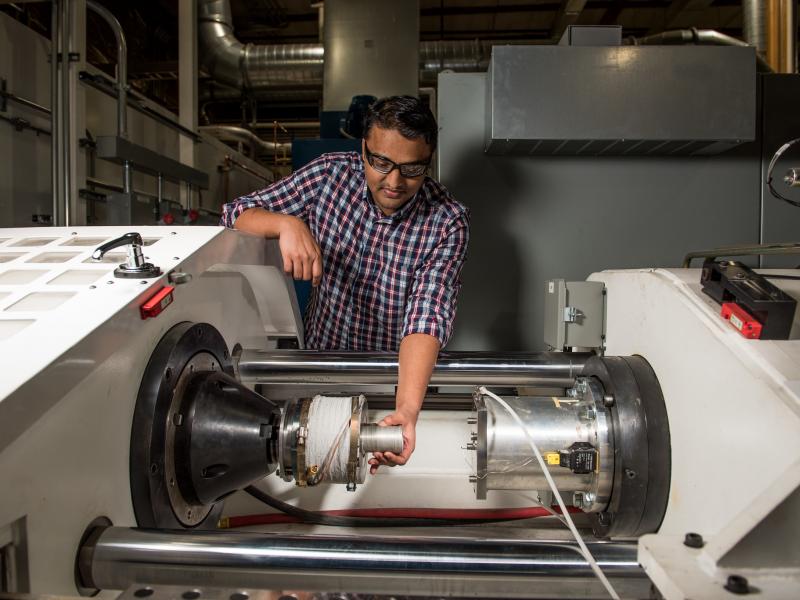
Two forms of magnesium material were processed into tubing using PNNL’s Shear Assisted Processing and Extrusion™ technology. Both materials were found to have quite similar and improved properties—even though they began vastly different.
A multi-institute research team is exploring ways to improve residential walls across America, making homes warmer and drier and delivering significant energy savings.
PNNL’s Jie Xiao was recently recognized for her outstanding contribution to basic and applied research on lithium-ion batteries and beyond by the International Automotive Lithium Battery Association.
Scientists have uncovered a root cause of the growth of needle-like structures—known as dendrites and whiskers—that plague lithium batteries, sometimes causing a short circuit, failure, or even a fire.
A new Co-Optima report describes an assessment of 400 biofuel-derived samples and identifies the top ten candidates for blending with petroleum fuel to improve boosted spark ignition engine efficiency.
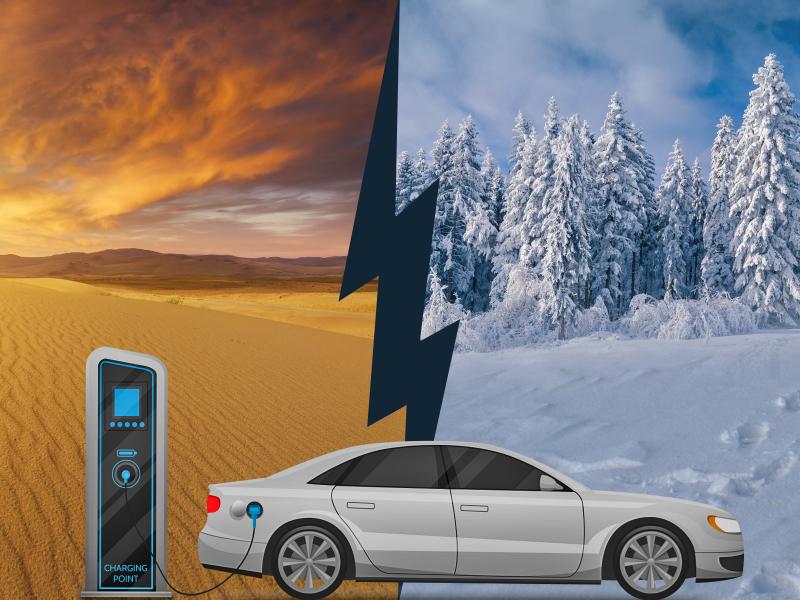
PNNL researchers have created a chemical cocktail that could help electric cars power their way through extreme temperatures where current lithium-ion batteries don’t operate as efficiently as needed.
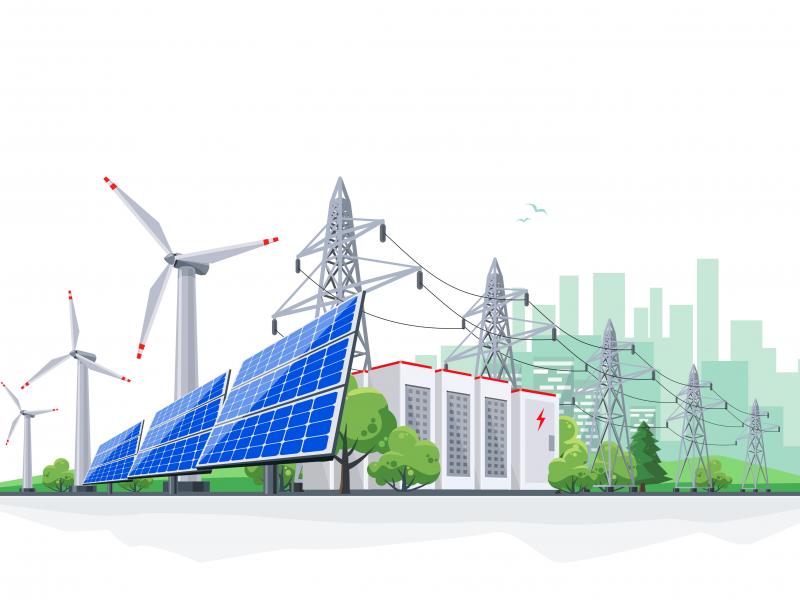
A PNNL technology enables automated Economic Dispatch, which coordinates the use of energy in a manner that enhances distributed generation, efficiency, renewables, and grid reliability.
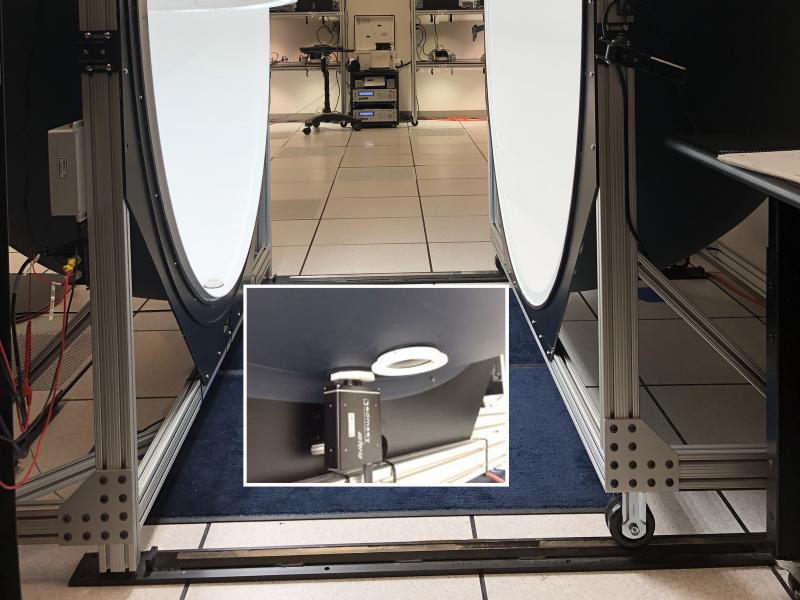
A staple in horror movies, flickering lights can also summon potential human health and productivity concerns. PNNL studied hand-held meters that measure flicker, and the results could improve future measurement and lighting strategies.