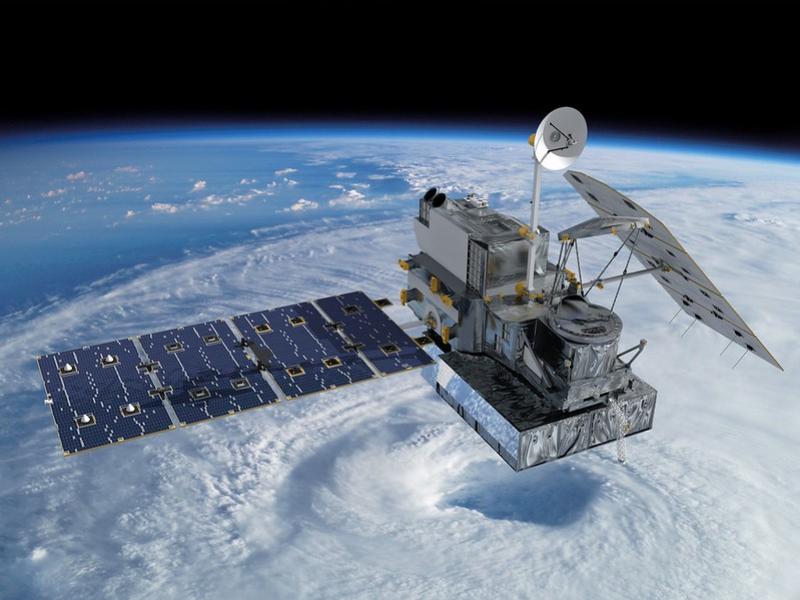
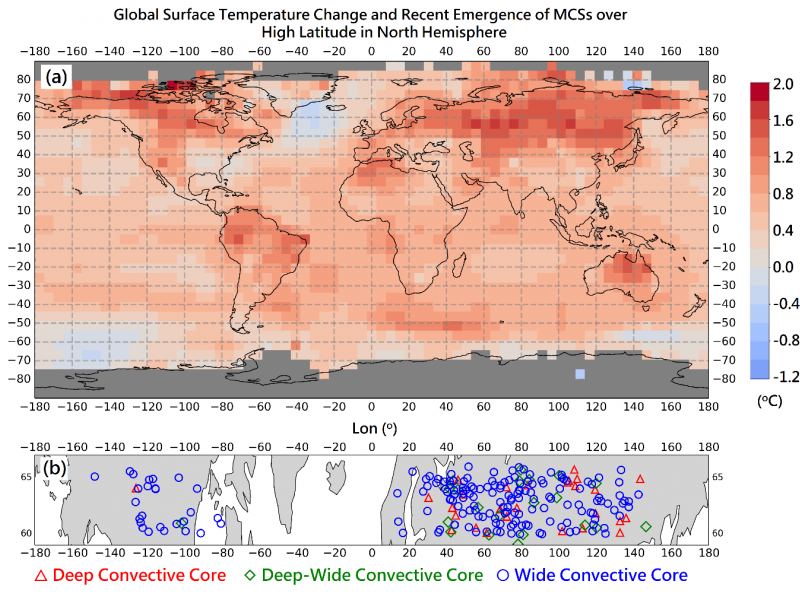
Cloud and precipitation characteristics observed by the Global Precipitation Measurement spaceborne radar allowed researchers to establish, for the first time, a global map of mesoscale convective systems in mid- and high-latitude regions.
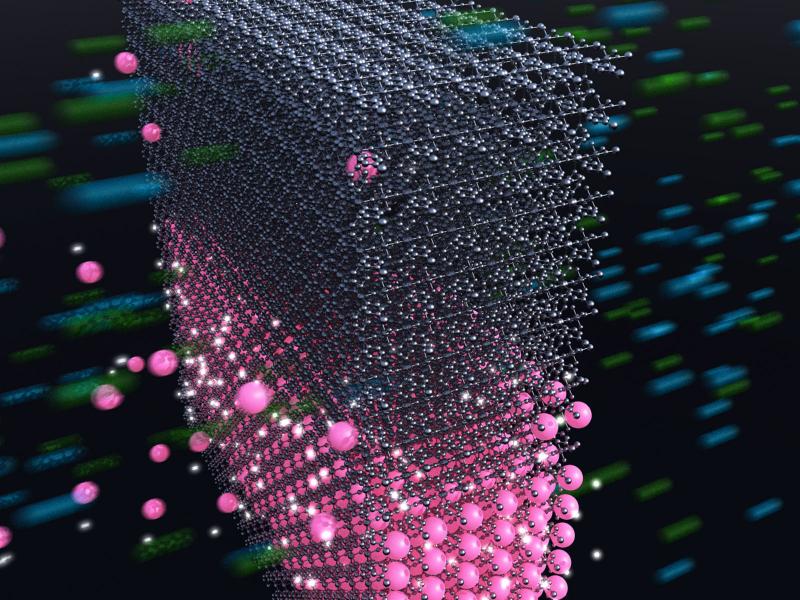
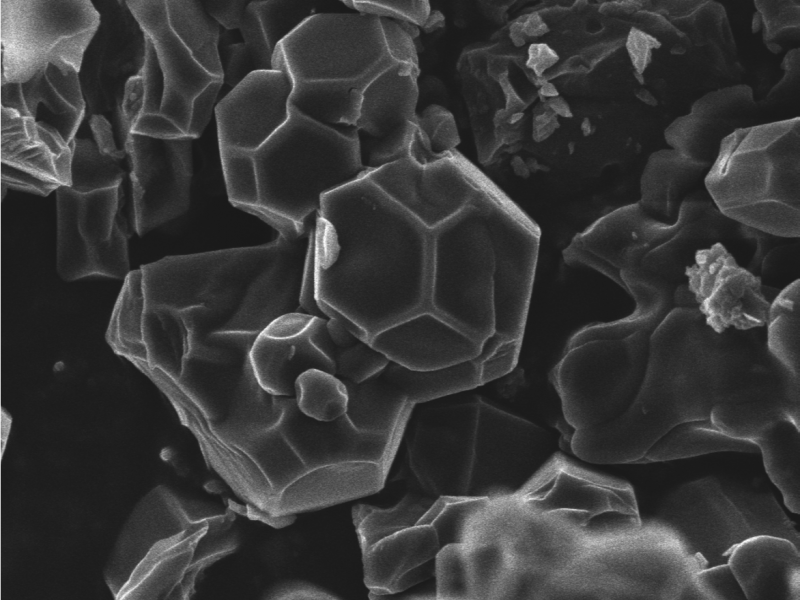
A new radiation-resistant material for the efficient capture of noble gases xenon and krypton makes it safer and cheaper to recycle spent nuclear fuel.
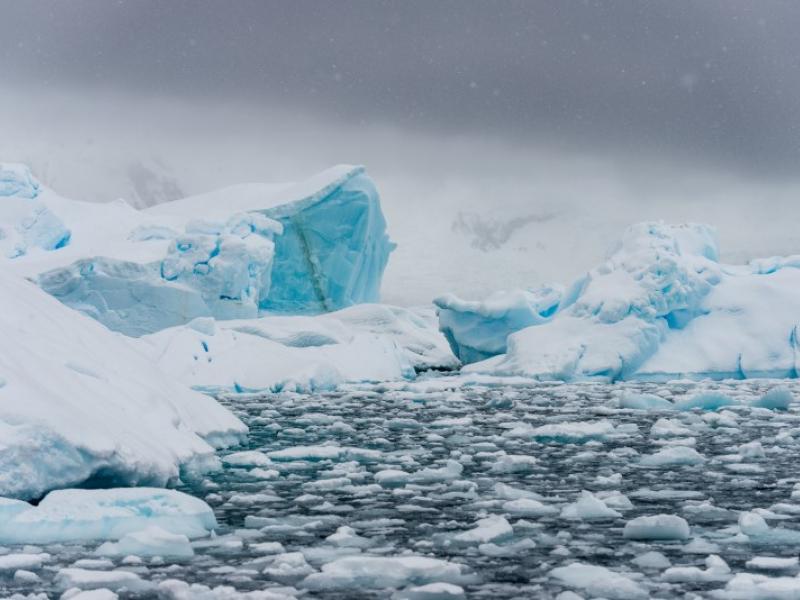
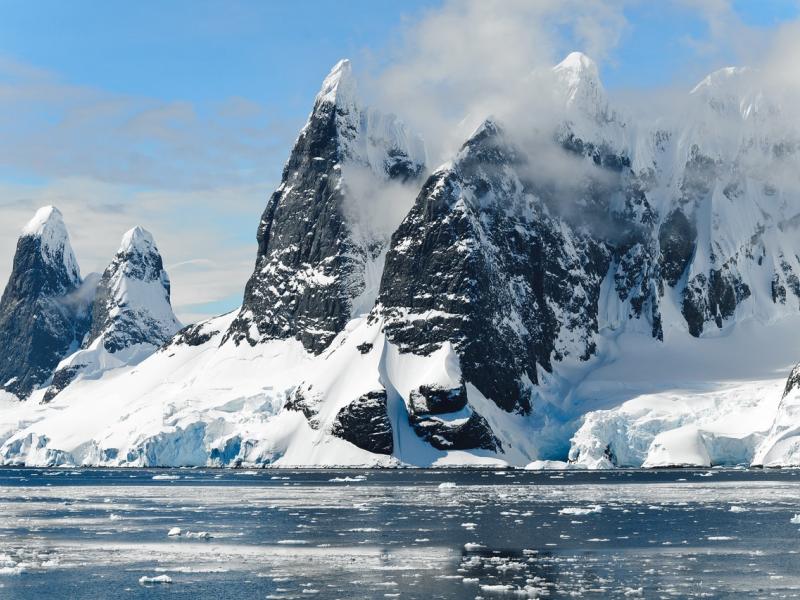
As the planet has warmed during recent history, summer sea ice extent has been decreasing in the Arctic but expanding in the Antarctic at modest but significant rates. This study helps explain why the hemispheres are behaving differently.
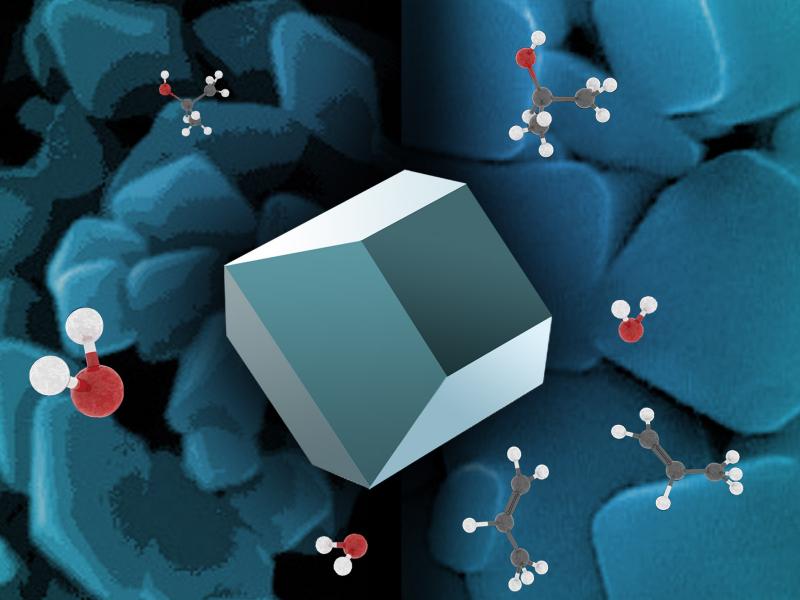
PNNL atomic-scale research shows how certain metal oxide catalysts behave during alkanol dehydration, an important class of oxygen-removal reactions for biomass conversion.
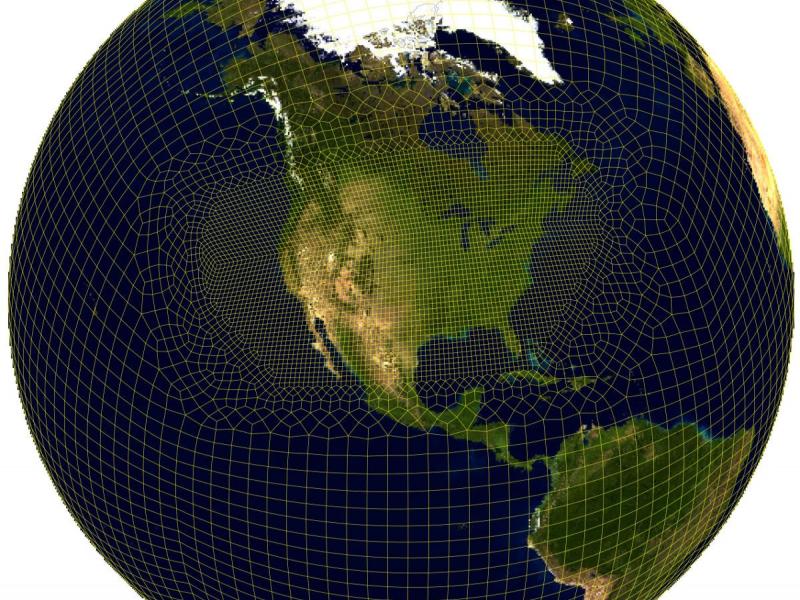
A new version of the E3SM Atmosphere Model (EAM) has been released to the community. This study provides an overview of the model and the science behind it, describing advances made to address E3SM science challenges.
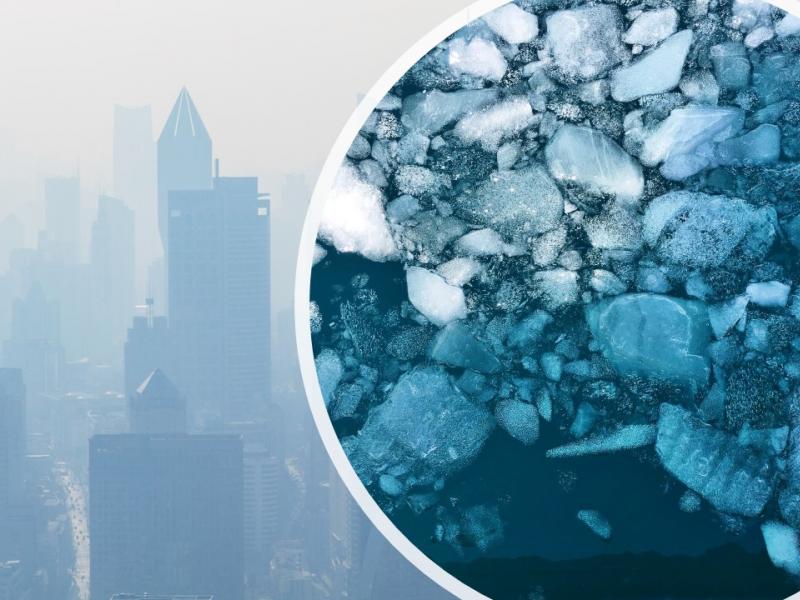
A study led by researchers at PNNL reveals physical mechanisms that link declining Arctic sea ice to increasing winter air stagnation and pollution extremes in China based on Earth system modeling results.
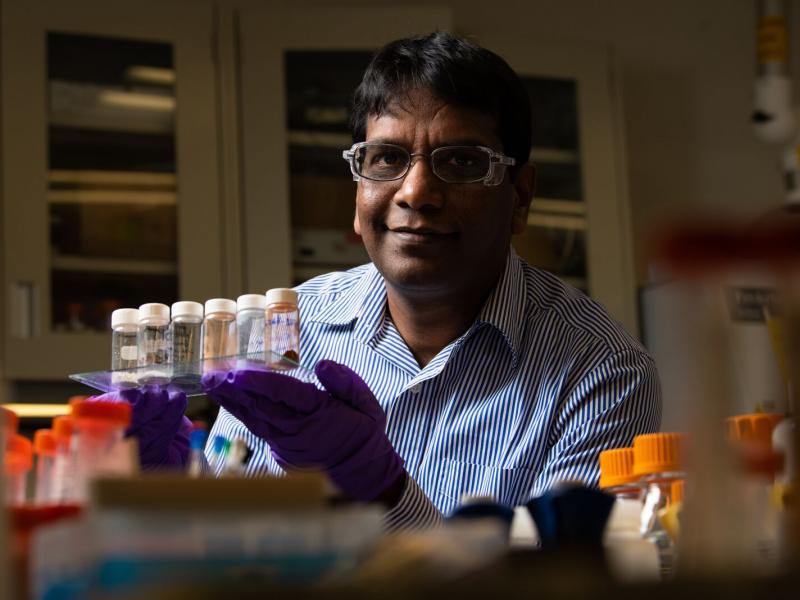
International editing team provided 15-year update, with Devanathan focused on intersection of nuclear science, materials science, and multiscale modeling.
PNNL scientists have created an improved metal-organic framework (MOF) for adsorption cooling, that performs at least 40 percent better than its predecessors.
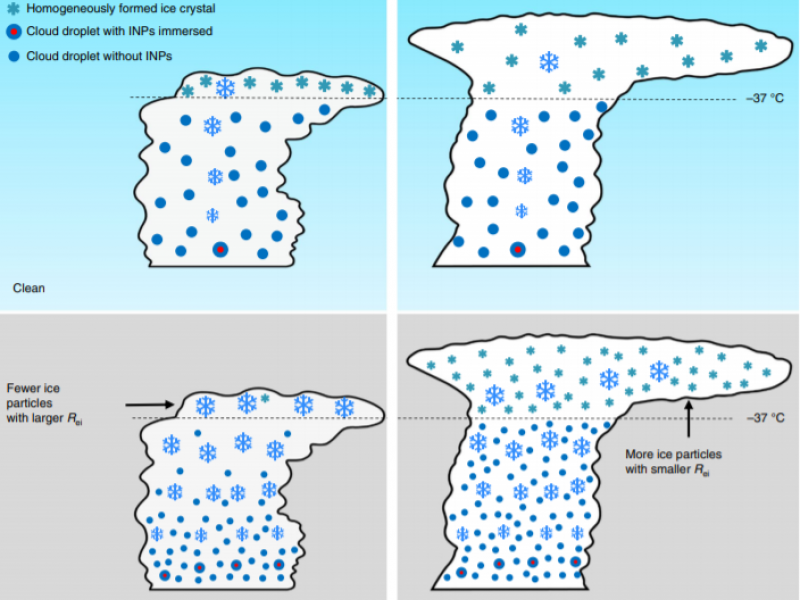
In this study, researchers probed the ice nucleation ability of different aerosol types by combining 11-year observations from multiple satellites and cloud-resolving model simulations.
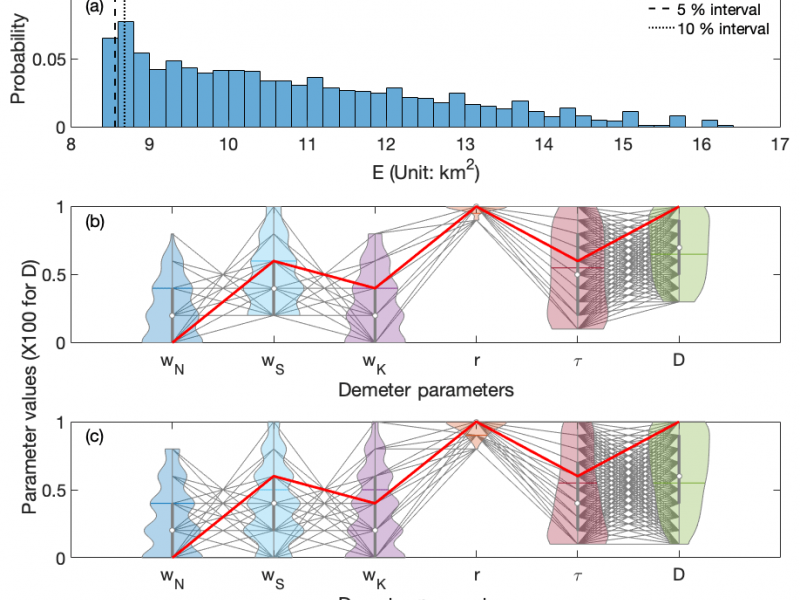
New study provides a key reference for Demeter users and is expected to help reduce uncertainties in downstream hydrologic and Earth system simulations.
Researchers at PNNL and the University of Washington examined storms seen by the GPM satellite and found that deep convective storms have been occurring surprisingly frequently at high latitudes during the warm seasons of recent years.
Researchers quantified temperature and gas-cycle responses over time of five simple climate models to impulses of carbon dioxide, methane, and black carbon.
PNNL and Oklahoma State University join forces to understand the chemistry of sodium-ion and potassium-ion batteries thanks to an award from the U.S. Department of Energy's Established Program to Stimulate Competitive Research (EPSCoR).
Researchers analyzed the relationship between Earth’s climate sensitivity and historical/future sea level projections, with a particular focus on the high‐impact upper tail.
Corresponding PNNL authors assembled a team of experts to show that supercritical carbon dioxide is a promising media for the construction of metal-organic frameworks (MOFs).
A team of researchers discovered more about how sea ice in the Southern Ocean might regulate changes in the amount and location of Antarctic precipitation.
Twelve energy-related technologies developed at PNNL have been selected for additional technology maturation funding to help move them from the laboratory and field tests to the marketplace.