A cadre of physical scientists, engineers and computing experts at Pacific Northwest National Laboratory is poised to participate in the launch of three new DOE Office of Science-sponsored quantum information science research centers.
Contributions from researchers across Pacific Northwest National Laboratory (PNNL) were recently recognized in the preliminary findings of a Secretary of Energy Advisory Board (SEAB) report.
Four researchers from PNNL were recently honored for contributing to two U.S. Department of Energy Office of Energy Efficiency and Renewable Energy initiatives that support the blue economy and building-grid integration.
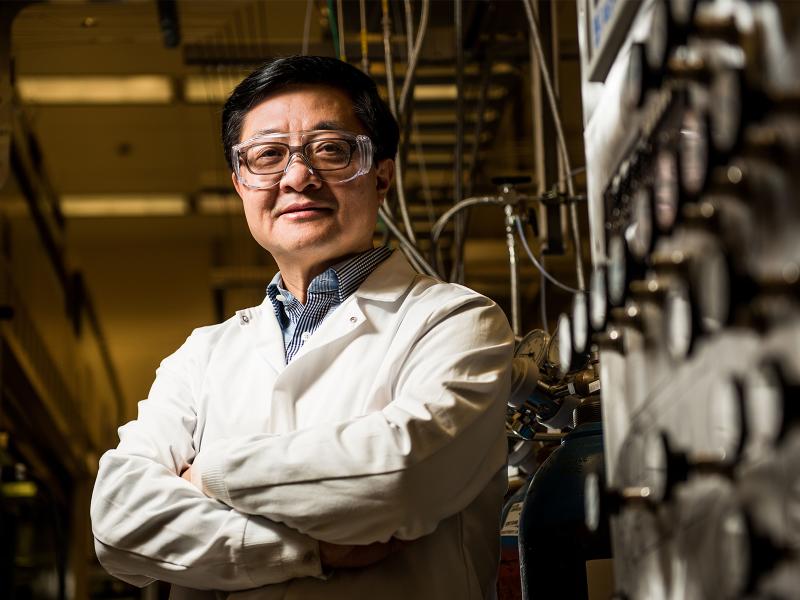
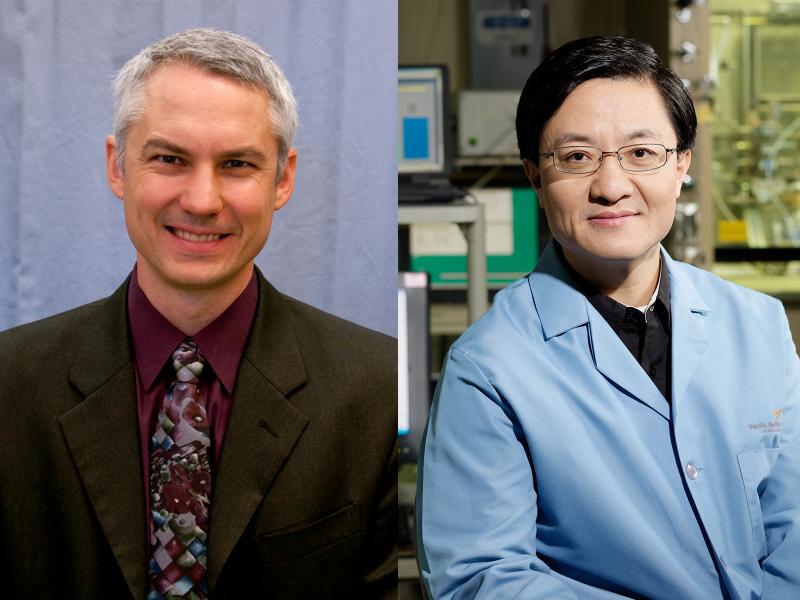
Yong Wang, associate director of PNNL’s Institute for Integrated Catalysis, has been recognized with 2021 American Chemical Society’s E.V. Murphree Award in Industrial and Engineering Chemistry.
Earth-abundant metals could potentially rival platinum-group metals as catalysts in chemical reactions, according to an article published in the Aug. 14 journal Science. But more research is needed.
PNNL lighting experts partnered with the city of Chicago to help identify the best street lighting technology and field validation approaches to Chicago’s outdoor lighting modernization effort.
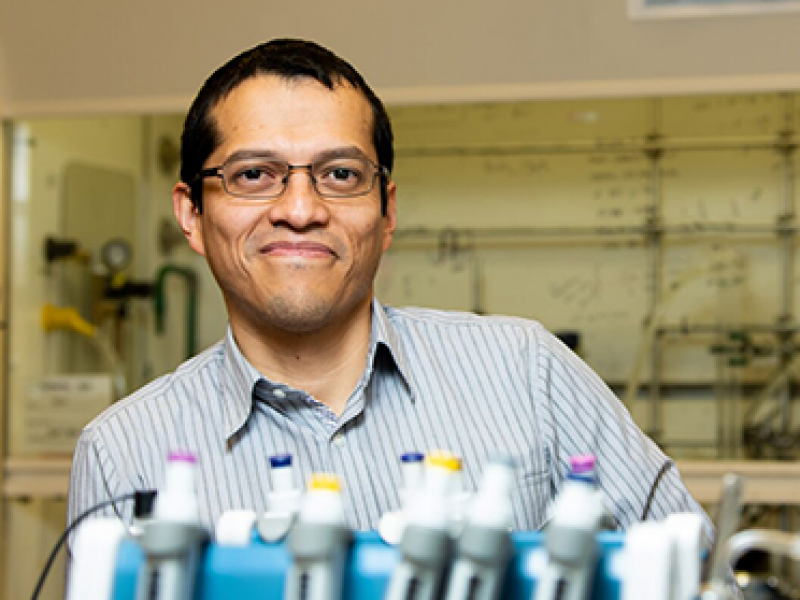
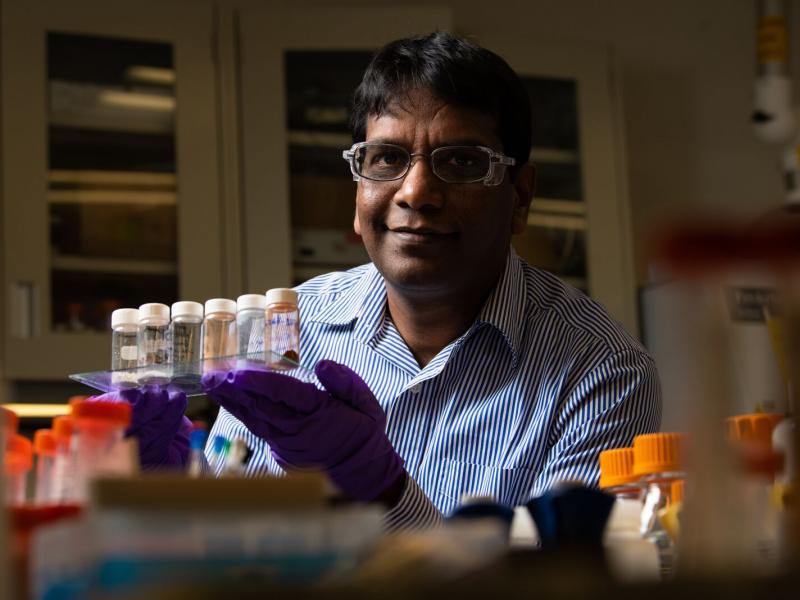
Oliver Gutiérrez leads an electrocatalytic hydrogenation research team at PNNL that focuses on next-generation catalysts at the molecular level and in an aqueous state.
This research addresses two topics that are not well understood in literature: the interplay between organic linkers and substrates during MOF crystallization, as well as the mechanisms that control heterostructure formation in solutions.
A 2011 earthquake and tsunami in Japan that knocked out a nuclear power plant helped inspire PNNL computational scientists looking for clues of future nuclear reactor mishaps by tracking radioactive iodine.
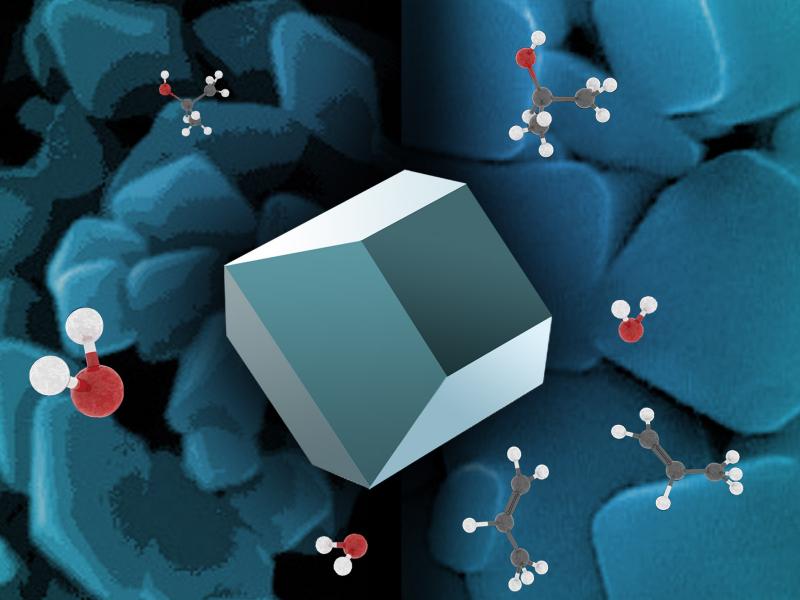
PNNL atomic-scale research shows how certain metal oxide catalysts behave during alkanol dehydration, an important class of oxygen-removal reactions for biomass conversion.
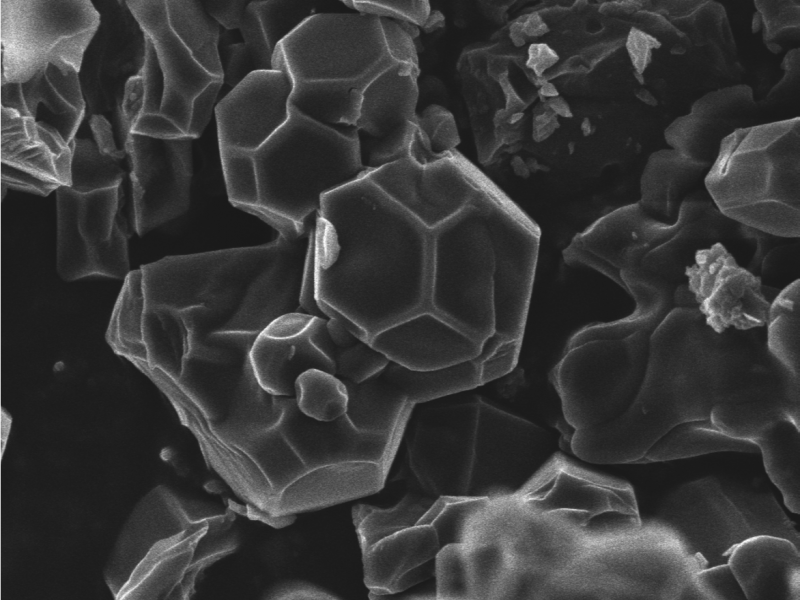
PNNL scientists have created an improved metal-organic framework (MOF) for adsorption cooling, that performs at least 40 percent better than its predecessors.
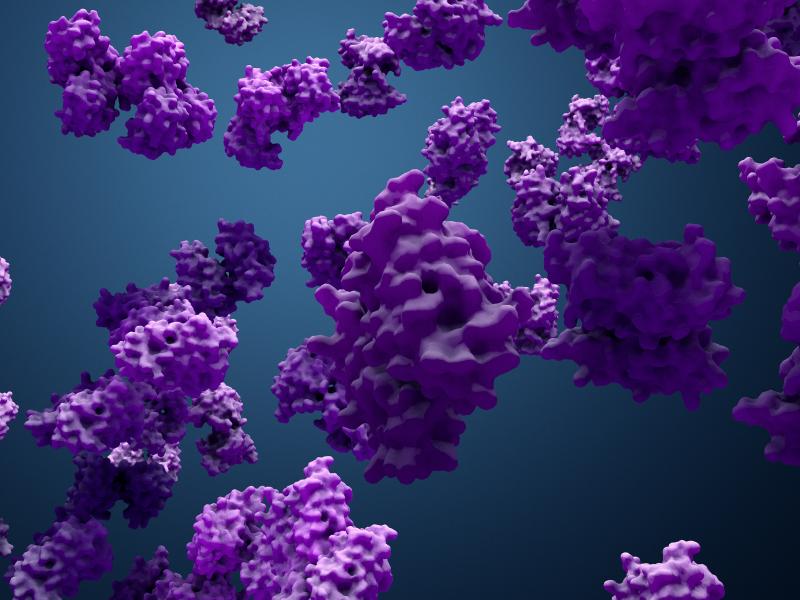
A multi-institution research team found how the protein environment surrounding some enzymes can alter the direction of a cellular reaction, as well as its rate—up to six orders of magnitude—in a phenomenon referred to as catalytic bias.
PNNL and Oklahoma State University join forces to understand the chemistry of sodium-ion and potassium-ion batteries thanks to an award from the U.S. Department of Energy's Established Program to Stimulate Competitive Research (EPSCoR).
Corresponding PNNL authors assembled a team of experts to show that supercritical carbon dioxide is a promising media for the construction of metal-organic frameworks (MOFs).
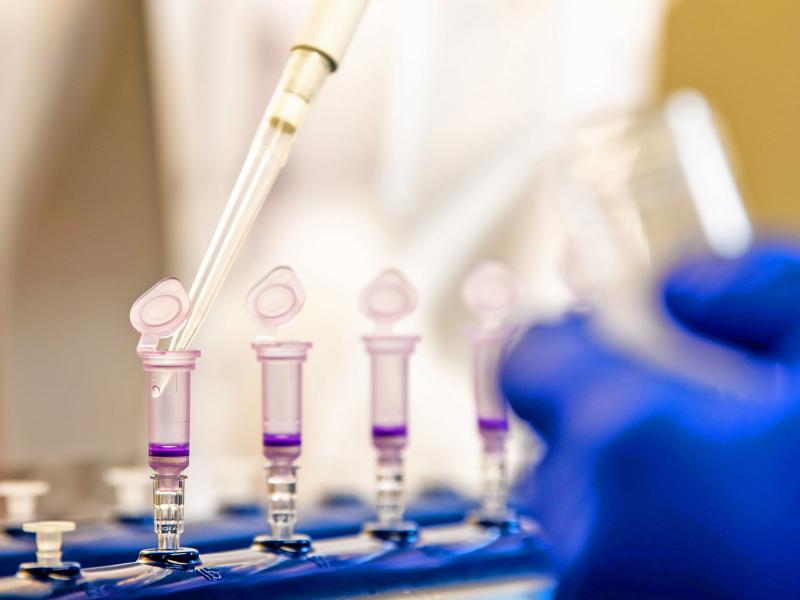
Six months into a pandemic that has claimed more than 570,000 lives worldwide, scores of PNNL scientists are engaged in dozens of projects in the fight against COVID-19.