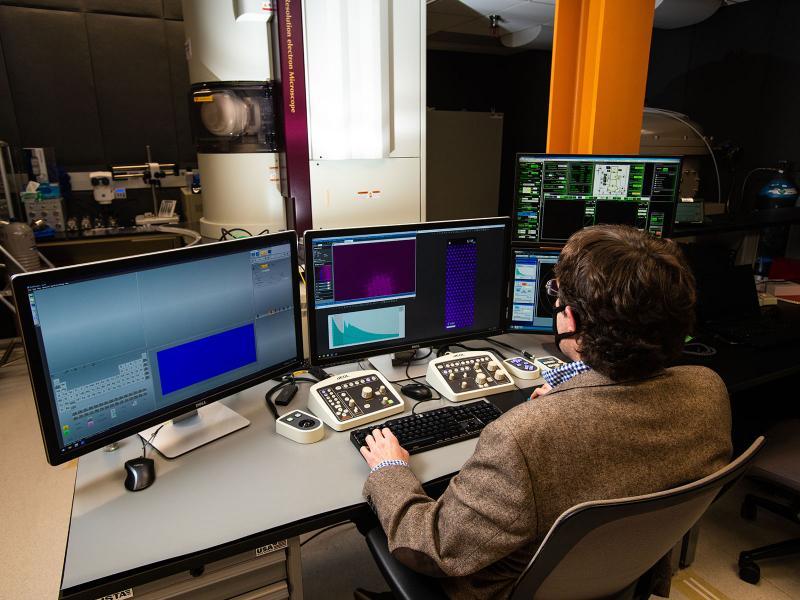
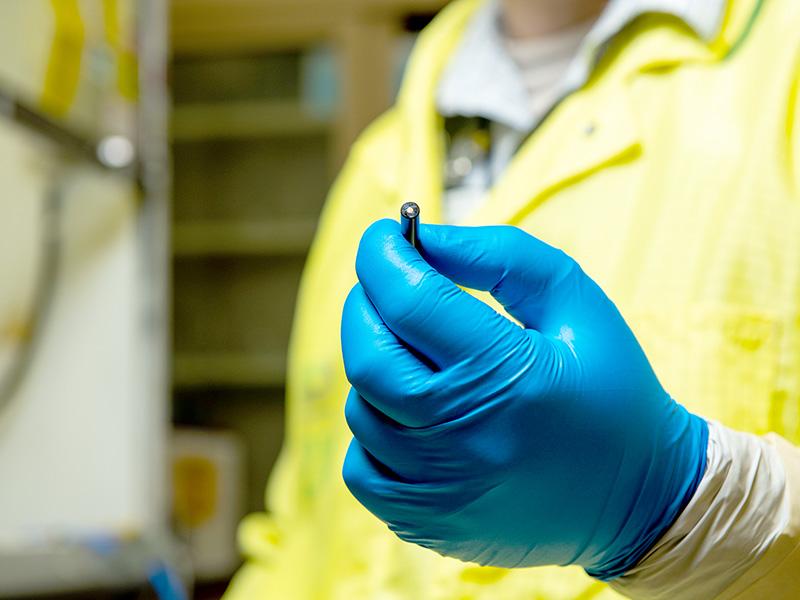
An international team used PNNL microscopy to answer questions about how uranium dioxide—used in nuclear power plants—might behave in long-term storage.
A 2011 earthquake and tsunami in Japan that knocked out a nuclear power plant helped inspire PNNL computational scientists looking for clues of future nuclear reactor mishaps by tracking radioactive iodine.
A new PNNL report says the western U.S. power system can handle large-scale vehicle electrification up to 24 million vehicles through 2028, but more than that and cities could start feeling the squeeze.
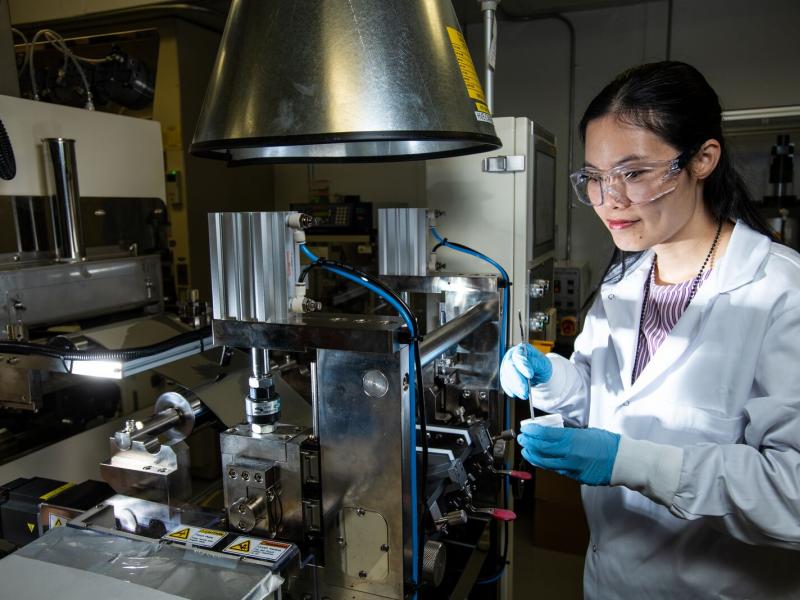
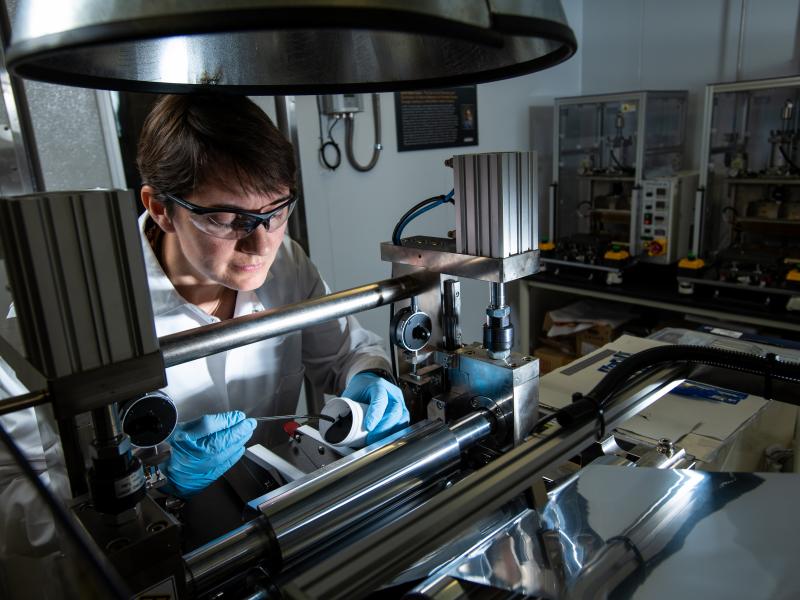
Researchers at PNNL have developed a software tool that helps universities, small business, and corporate developers to design better batteries with new materials that hold more energy.
PNNL and WSU researchers have improved the performance and life cycle of sodium-ion battery technology to narrow the gap with some lithium-ion batteries.
Environmental engineer Mike Truex presented an Environmental Protection Agency webinar about how conceptual site models must change as new data is acquired for remedy optimization.
Researchers at PNNL have come up with a novel way to use silicon as an energy storage ingredient, replacing the graphite in electrodes. Silicon can hold 10 times the electrical charge per gram, but it comes with problems of its own.
At PNNL, subsurface science inhabits two separate but interlocking worlds. One looks at basic science, the other at applied science and engineering. Both are funded by the U.S. Department of Energy (DOE).
Existing techniques to detect pertechnetate in the environment have drawbacks. PNNL’s redox sensor technology uses a gold probe to accurately and efficiently measure low levels of pertechnetate—and possibly other contaminants—in groundwater
Researchers adding water to the surface of alumina measured some surprising results that raise important questions regarding the fundamental reactions that govern chemical transformations of aluminum oxides and hydroxides.
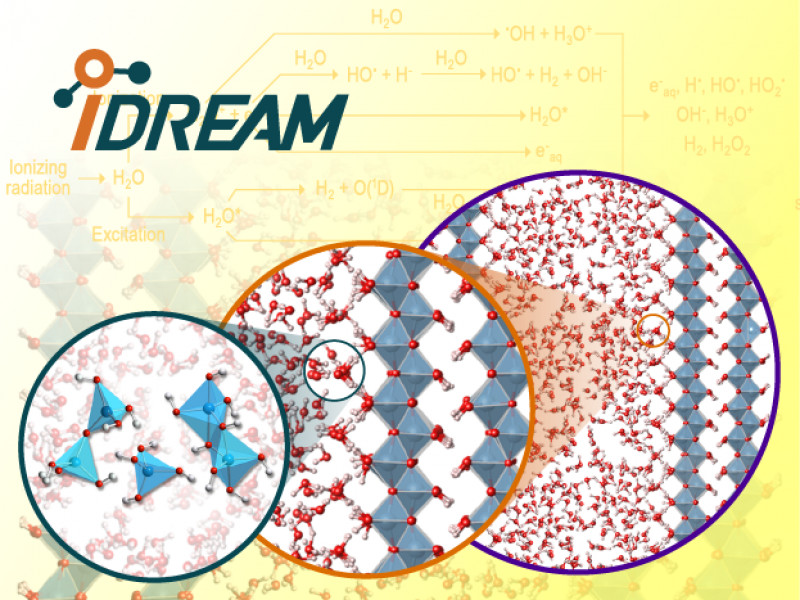
Scientists at the Interfacial Dynamics in Radioactive Environments and Materials (IDREAM) sort out which compounds are present and their concentrations, providing an important new tool with broad applicability.
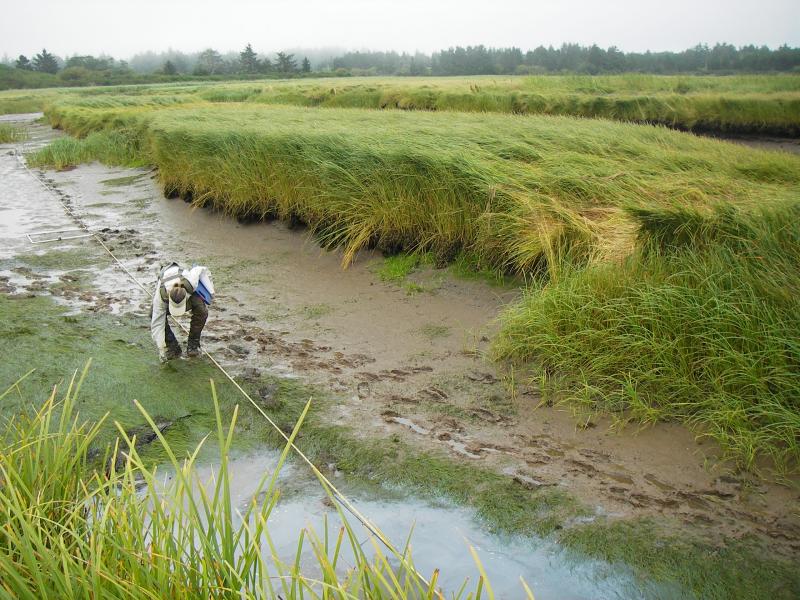
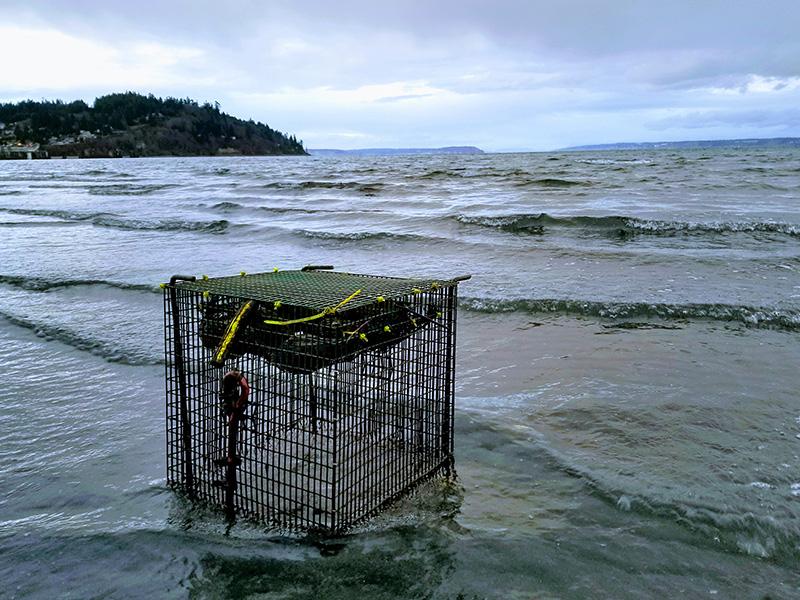
With the help of a diagnostic tool called the Salish Sea Model, researchers found that toxic contaminant hotspots in the Puget Sound are tied to localized lack of water circulation and cumulative effects from multiple sources.
PNNL coastal ecologist Heida Diefenderfer was a featured speaker in February at the National Academies of Sciences, Engineering, and Medicine’s Government-University-Industry Research Roundtable on policy and global affairs.