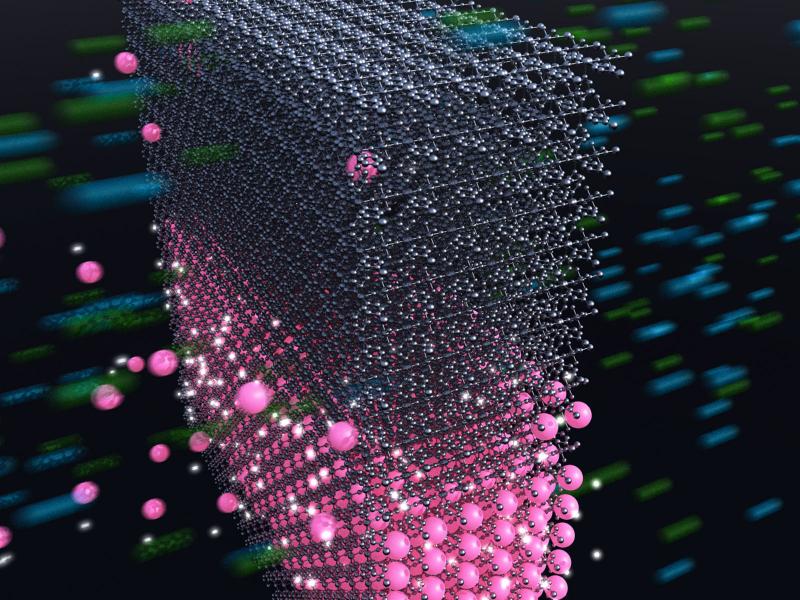
A new radiation-resistant material for the efficient capture of noble gases xenon and krypton makes it safer and cheaper to recycle spent nuclear fuel.
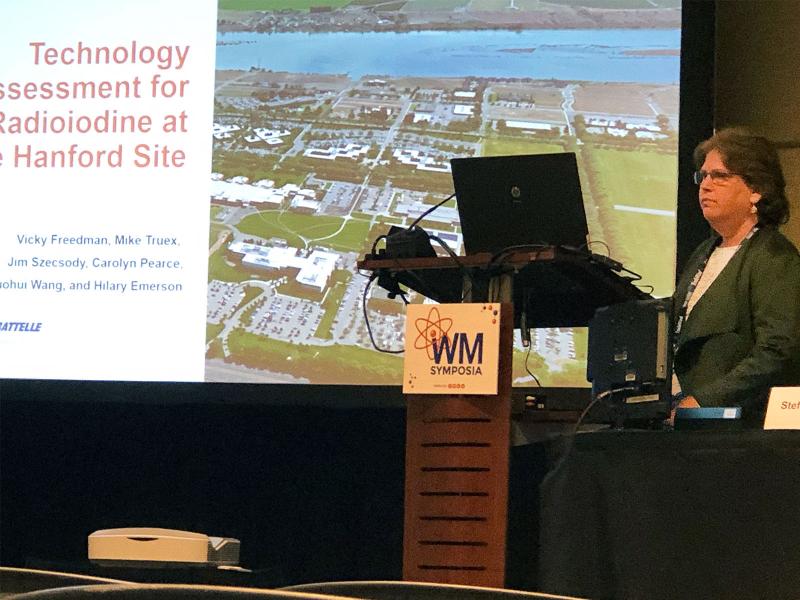
A 2011 earthquake and tsunami in Japan that knocked out a nuclear power plant helped inspire PNNL computational scientists looking for clues of future nuclear reactor mishaps by tracking radioactive iodine.
International editing team provided 15-year update, with Devanathan focused on intersection of nuclear science, materials science, and multiscale modeling.
Materials Scientist Arun Devaraj has been selected among 76 recipients nationwide to receive a 2020 Early Career Research Program award from the U.S. Department of Energy
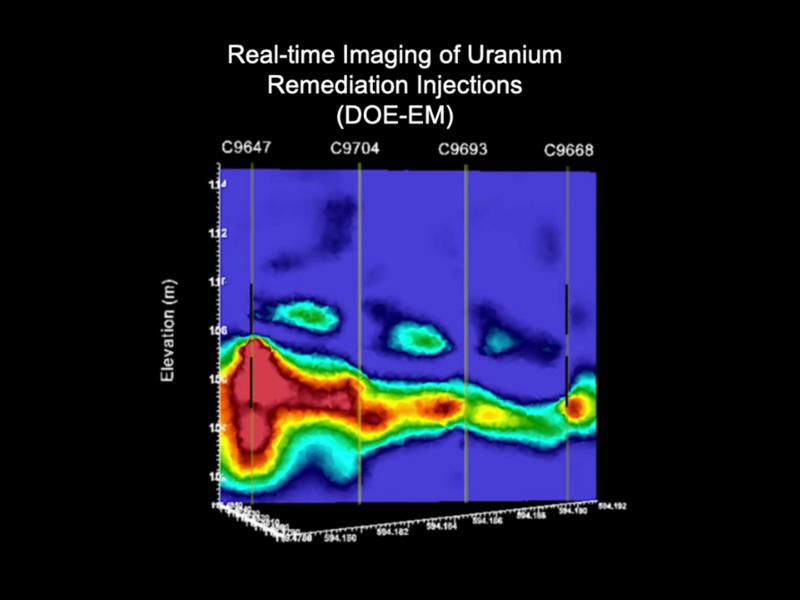
Environmental engineer Mike Truex presented an Environmental Protection Agency webinar about how conceptual site models must change as new data is acquired for remedy optimization.
At PNNL, subsurface science inhabits two separate but interlocking worlds. One looks at basic science, the other at applied science and engineering. Both are funded by the U.S. Department of Energy (DOE).
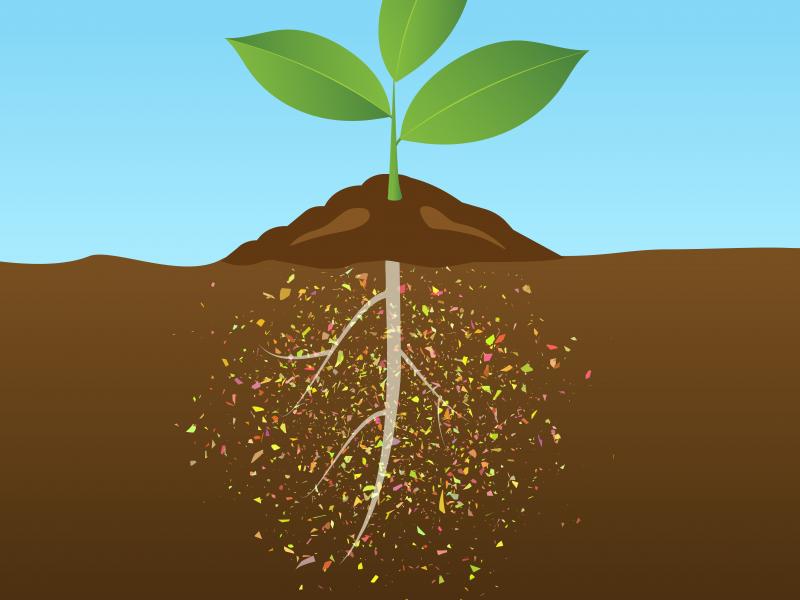
Existing techniques to detect pertechnetate in the environment have drawbacks. PNNL’s redox sensor technology uses a gold probe to accurately and efficiently measure low levels of pertechnetate—and possibly other contaminants—in groundwater
Researchers adding water to the surface of alumina measured some surprising results that raise important questions regarding the fundamental reactions that govern chemical transformations of aluminum oxides and hydroxides.
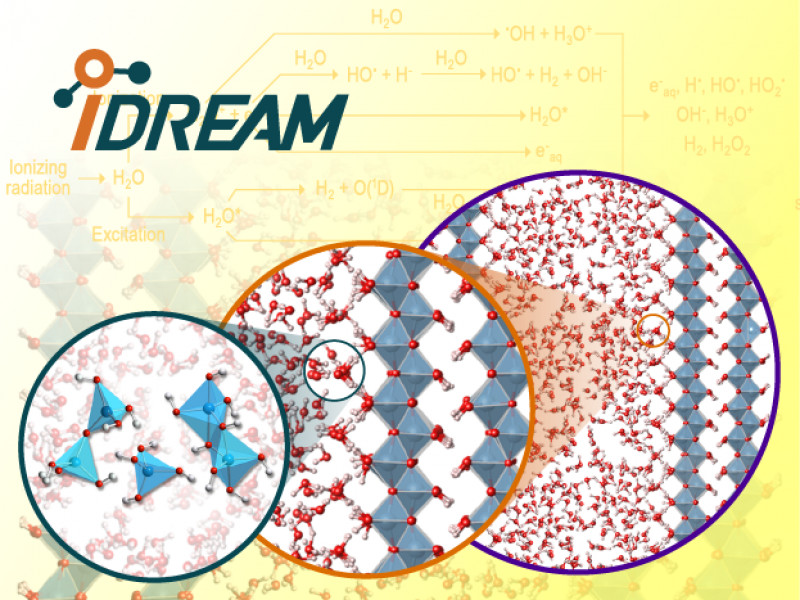
Scientists at the Interfacial Dynamics in Radioactive Environments and Materials (IDREAM) sort out which compounds are present and their concentrations, providing an important new tool with broad applicability.
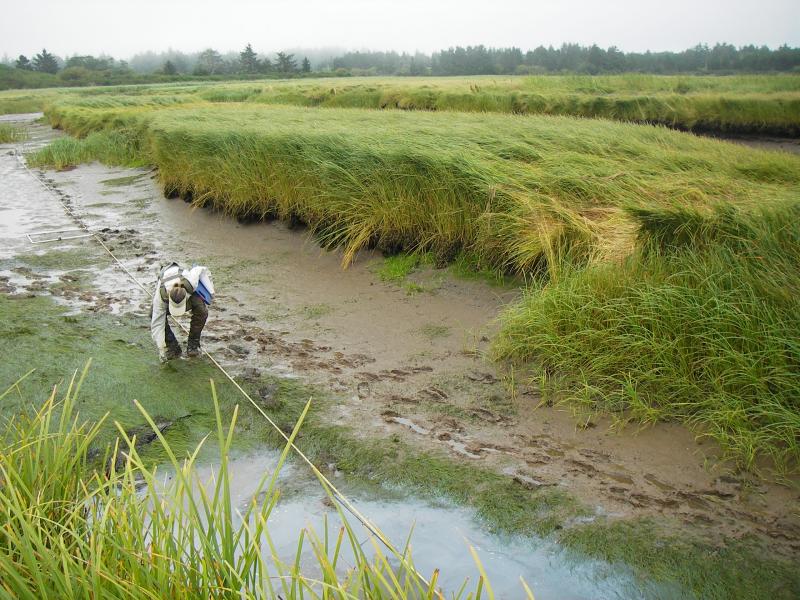
With the help of a diagnostic tool called the Salish Sea Model, researchers found that toxic contaminant hotspots in the Puget Sound are tied to localized lack of water circulation and cumulative effects from multiple sources.
Researchers found that certain oxide interface configurations remain stable in extreme environments, suggesting ways to build better performing, more reliable devices for fuel cells, space-based electronics, and nuclear energy.
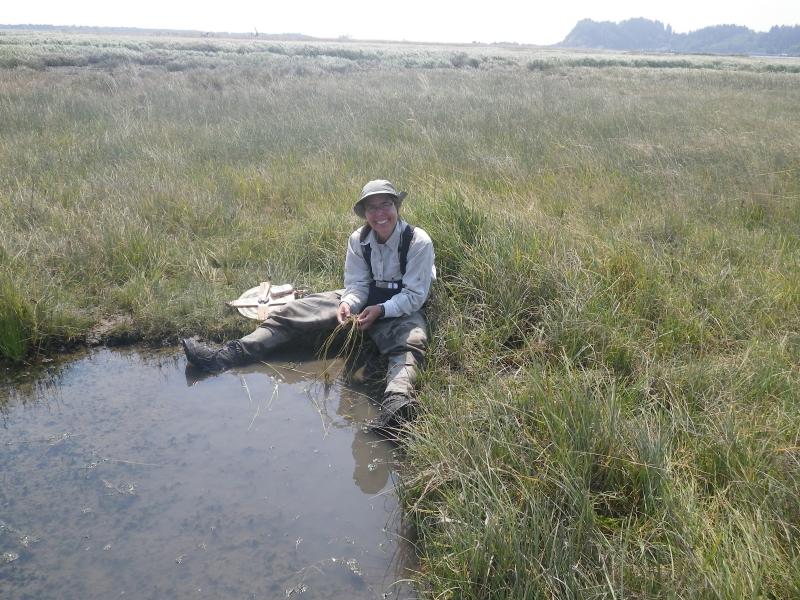
PNNL coastal ecologist Heida Diefenderfer was a featured speaker in February at the National Academies of Sciences, Engineering, and Medicine’s Government-University-Industry Research Roundtable on policy and global affairs.
The world’s largest scientific society honored Sue B. Clark, a PNNL and WSU chemist, for contributions toward resolving our legacy of radioactive waste, advancing nuclear safeguards, and developing landmark nuclear research capabilities.
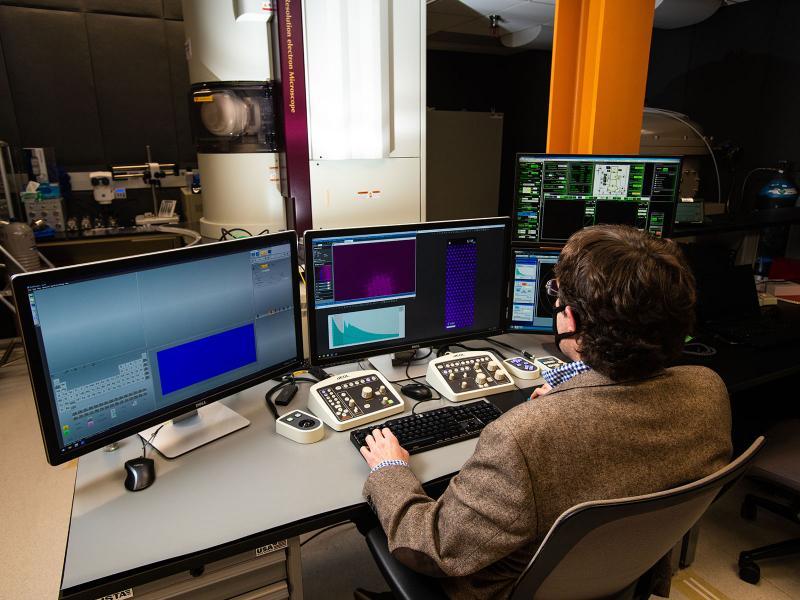
PNNL researchers demonstrated a nanoscale analysis tool to map isotopes to location in low-enriched uranium-molybdenum fuel plates for use in nuclear research reactors.