DOE CESER Leaders Explore PNNL Energy Security
Visit highlights grid protection technologies and paths to utility deployment to respond to changing grid threats

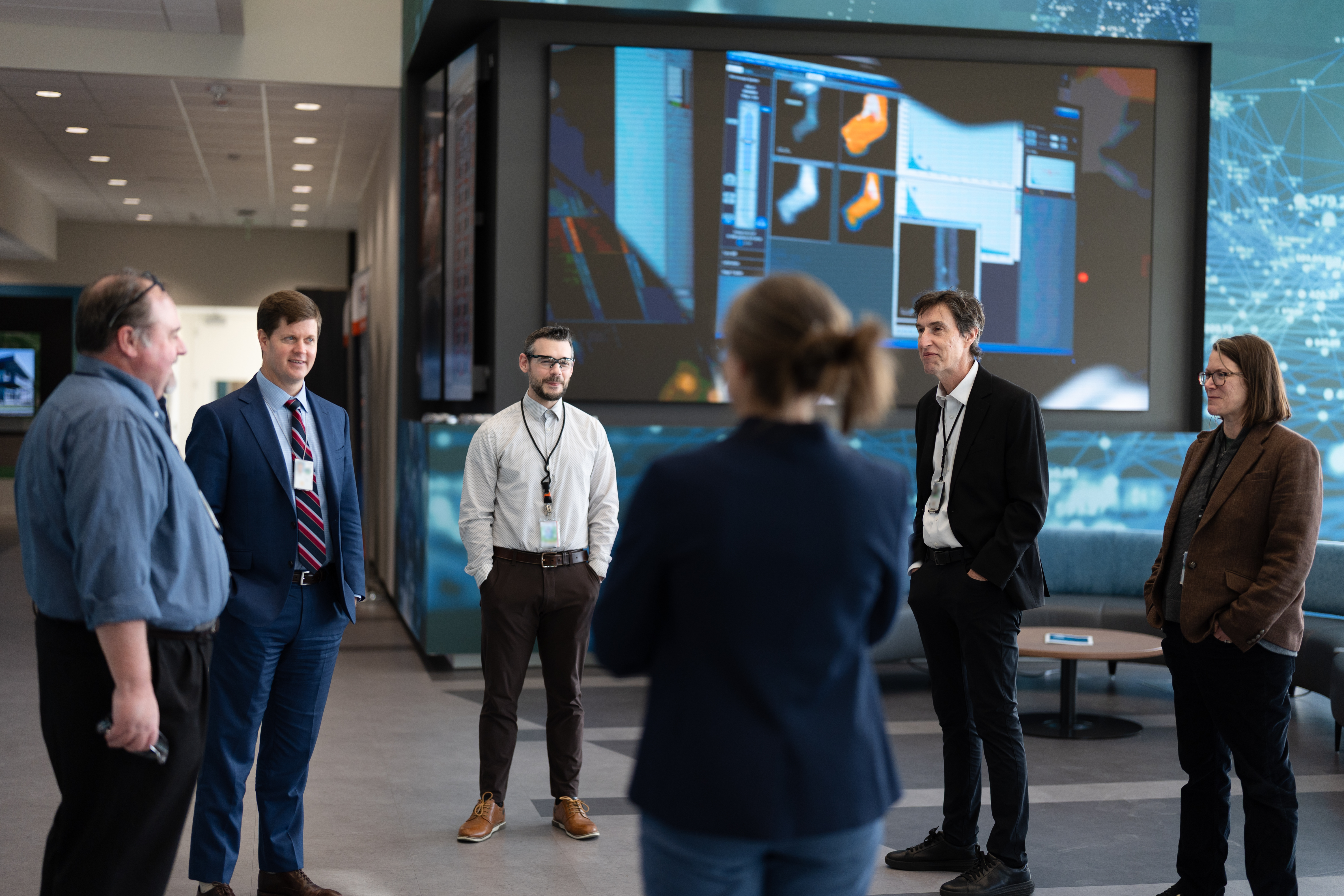
At Pacific Northwest National Laboratory’s Electricity Infrastructure Operations Center, Department of Energy Office of Cybersecurity, Energy Security, and Emergency Response (CESER) Director Andrew McClure and Deputy Director of CESER’s Infrastructure Hardening and Technology Development Division Dan LaGraffe learn about the Lab’s tools for monitoring grid conditions and assessing threats to reliable electricity service.
(Eddie Pablo | Pacific Northwest National Laboratory)
Leaders from the Department of Energy (DOE) Office of Cybersecurity, Energy Security, and Emergency Response (CESER) visited Pacific Northwest National Laboratory (PNNL) in October to explore how the Laboratory’s research can help protect the nation’s energy infrastructure.
CESER Director Andrew McClure and Deputy Director of CESER’s Infrastructure Hardening and Technology Development Division Dan LaGraffe met with researchers and toured PNNL facilities in Richland, Washington.
“PNNL understands the challenges facing the grid. Now more than ever, our long history of partnering with utilities to understand vulnerabilities and identify novel solutions is the key to responding with speed without sacrificing security, reliability, or affordability,” said Energy and Environment Directorate Associate Laboratory Director Angela Becker-Dippmann.
Presentations and discussions were centered on Director McClure’s priorities: defending against and using Super Intelligence (commonly referred to as artificial intelligence), protecting electric infrastructure important to national defense, and accelerating the adoption of new security technologies.
Researchers shared work on Super Intelligence assurance, proactive cyber defenses, supply chain security, and energy resilience, including collaborations to identify grid vulnerabilities.
“Threats to energy infrastructure are evolving rapidly, including how adversaries could use advanced artificial intelligence. PNNL combines national security expertise with a deep understanding of electric systems to anticipate those threats, evaluate defenses, and help protect the infrastructure our communities and national defense depend on,” said National Security Directorate Associate Laboratory Director Daniel Stephens.
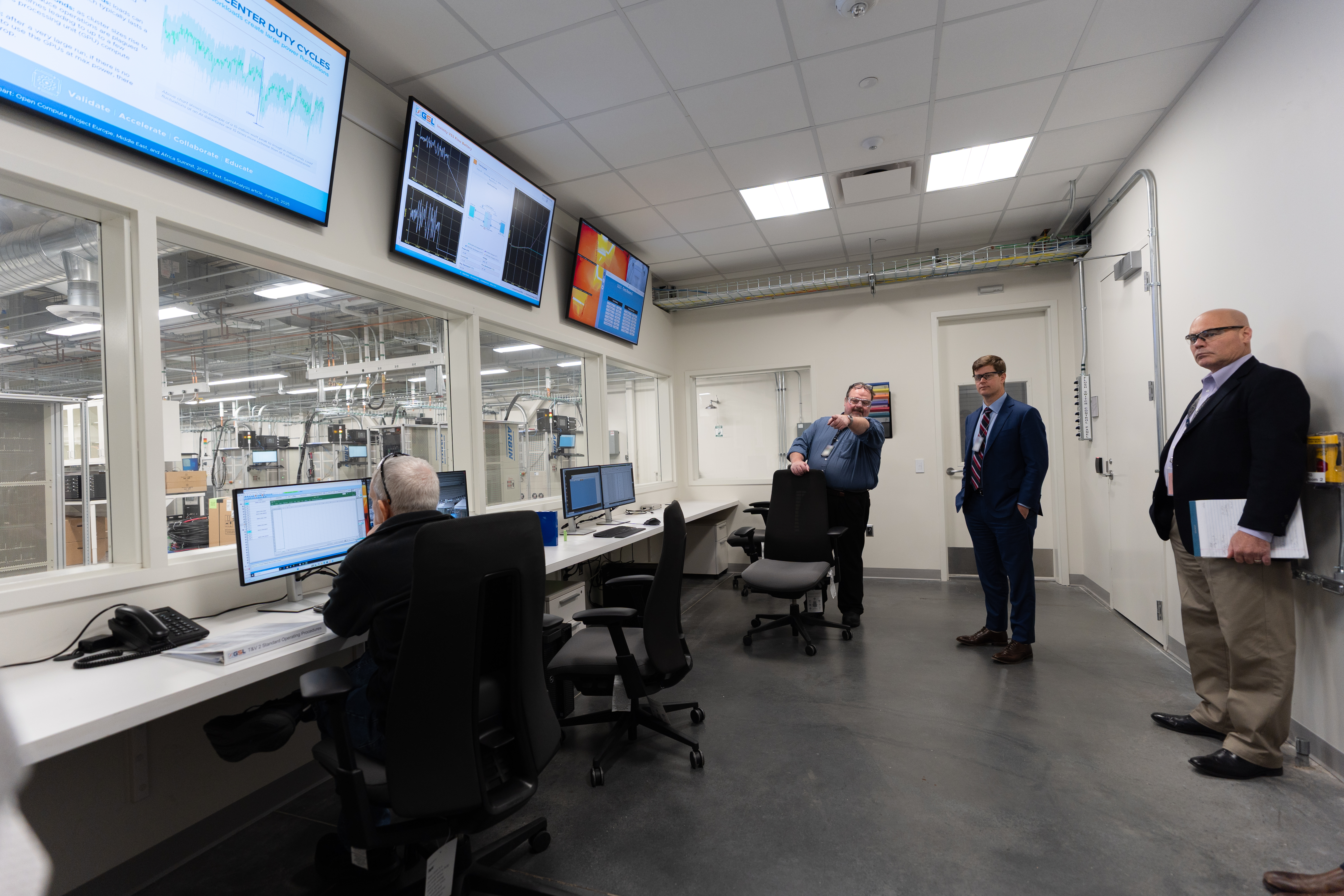
At the Electricity Infrastructure Operations Center, Director McClure and Deputy Director LaGraffe learned about wildfire risk analysis, cybersecurity technology commercialization, and advances in grid situational awareness. They also visited the Grid Storage Launchpad to discuss advances in domestic battery manufacturing and the ongoing battery testing and validation work enabling increased performance assurance for battery systems deployed on the grid.
“By working with utilities to test and refine emerging technologies, from domestically abundant battery chemistries to advancing security protections in cyber tools using Super Intelligence, PNNL is helping turn promising research into practical solutions to address today’s grid challenges,” said Electricity Infrastructure Sector Director Jim Ogle.
Published: November 18, 2026