Innovative cement and concrete technologies at PNNL enhance durability and performance through self-healing formulations and cost-effective, high-performance materials derived from waste, enabling more resilient, reliable infrastructure.
The Community Earth atmospheric Data System (CEDS) provides historical surface flux data that are used for general analysis and also for model validation through comparisons with observations.
The Center for AI @PNNL is driving a research agenda that explores the foundations and emerging frontiers of AI, combining capability development and application to mission areas in science, security and energy resilience.
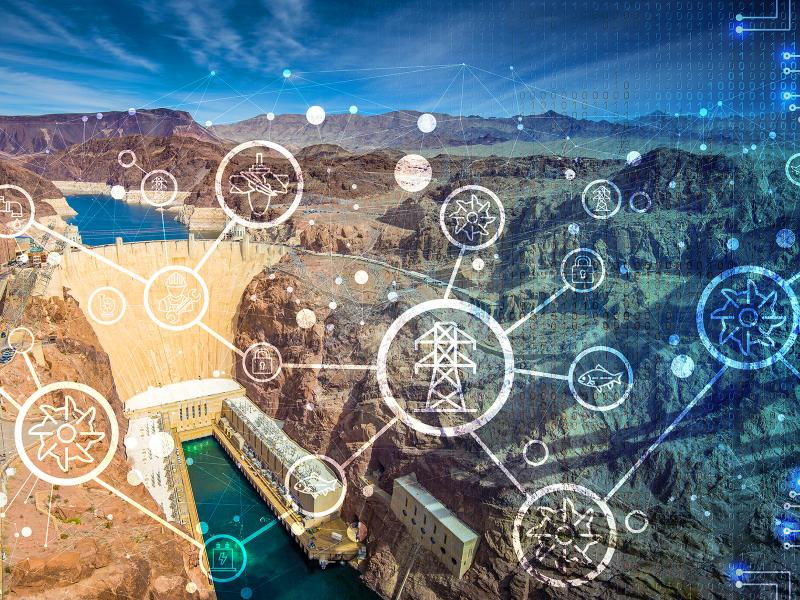
PNNL and ORNL are working together on Digital Twins to modernize the U.S. hydropower plant fleet, which will reduce operating costs, improve reliability, reduce downtime, enhance grid resiliency, and reduce environmental impacts.
Pacific Northwest National Laboratory’s (PNNL) Generative AI (GenAI) investment aims to harness this transformative technology to drive innovation across the science, energy, and security research domains.
Pacific Northwest National Laboratory (PNNL) is a key partner in the Genesis Mission, the Department of Energy’s (DOE’s) integrated ecosystem to accelerate discovery and strengthen U.S. leadership in AI-powered science.
The Ion Dynamics in Radioactive Environments and Materials (IDREAM) Energy Frontier Research Center (EFRC) conducts fundamental science to support innovations in retrieving and processing high-level radioactive waste.