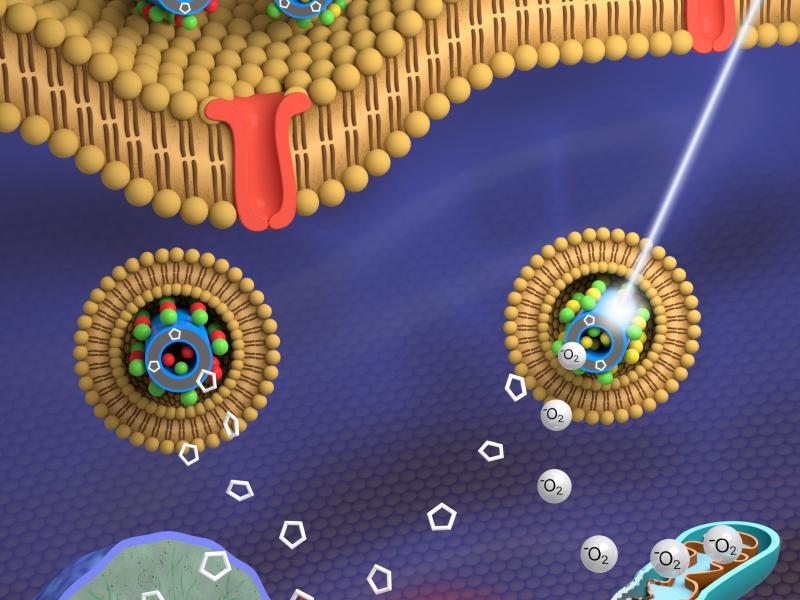
Pacific Northwest National Laboratory and Washington State University researchers have developed a novel way to deliver drugs and therapies into cells at the nanoscale without causing toxic effects that have stymied other such efforts.
A process for converting carbon-rich pollution to jet fuel powered a commercial flight for the first time, marking history and ushering in a new era for low-carbon aviation.
The vast reservoir of carbon stored beneath our feet is entering Earth's atmosphere at an increasing rate, according to a new study in the journal Nature.
Scientists are exploring the use of deep neural network to interpret highly technical data related to national security, the environment and the cosmos.
Two PNNL scientists who study the earth system have been selected to receive 2018 Early Career Research Program awards from the U.S. Department of Energy.
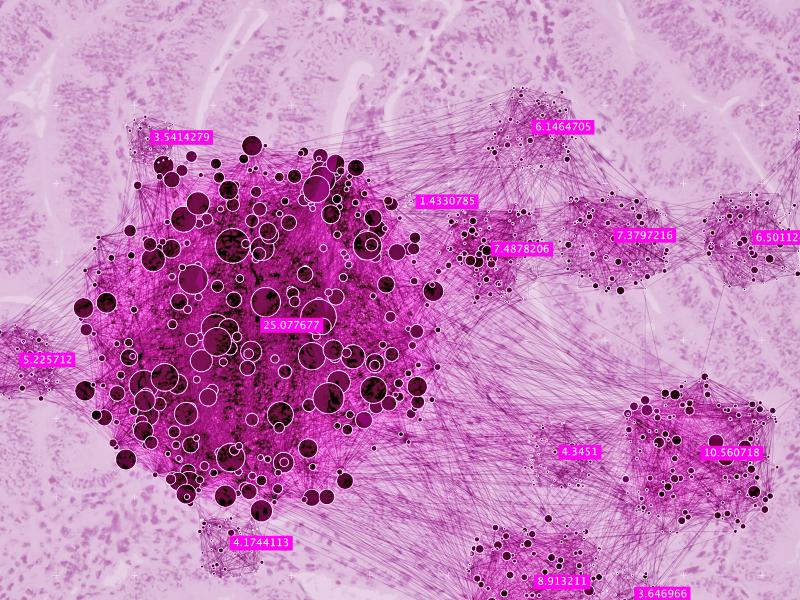
PNNL scientists have captured the most information about proteins from a single human cell, giving scientists one of their clearest looks yet at the molecular happenings inside a human cell.
For the first time, researchers have created a gram of yellowcake — a powdered form of uranium used to produce fuel for nuclear power production — using modified acrylic fibers to extract it from seawater.