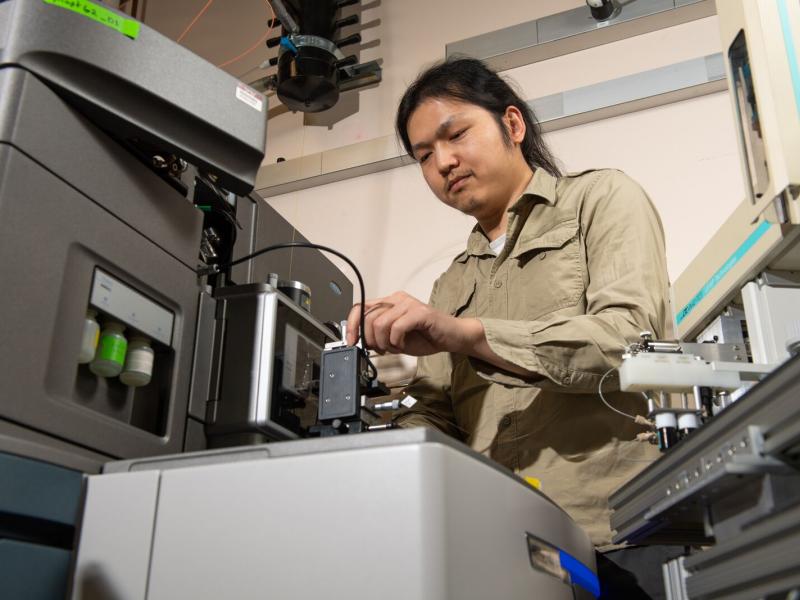
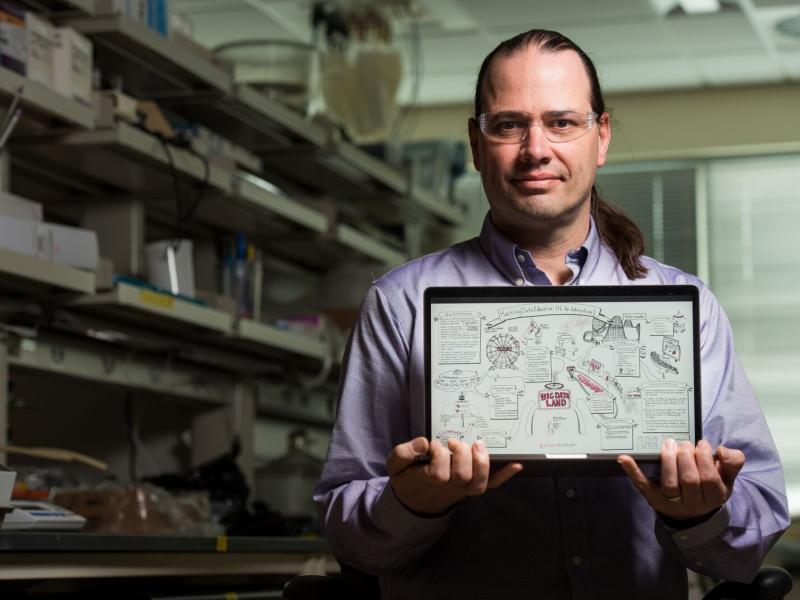
Mowei Zhou, a chemist with the Environmental Molecular Sciences Laboratory, is speaking at the ACS spring conference on his latest protein discoveries for a plant that could transform biofuels production.
Recognizing how innovation and clean technologies at the very edge of the grid can work together to transition the electricity system, PNNL takes a multidisciplinary approach to advancing and integrating renewable energy solutions.
The eighth Arab-American Frontiers of Science, Engineering, and Medicine Symposium, co-organized by PNNL engineer and research line manager Leonard Pease, brought together multi-disciplinary researchers from around the globe.
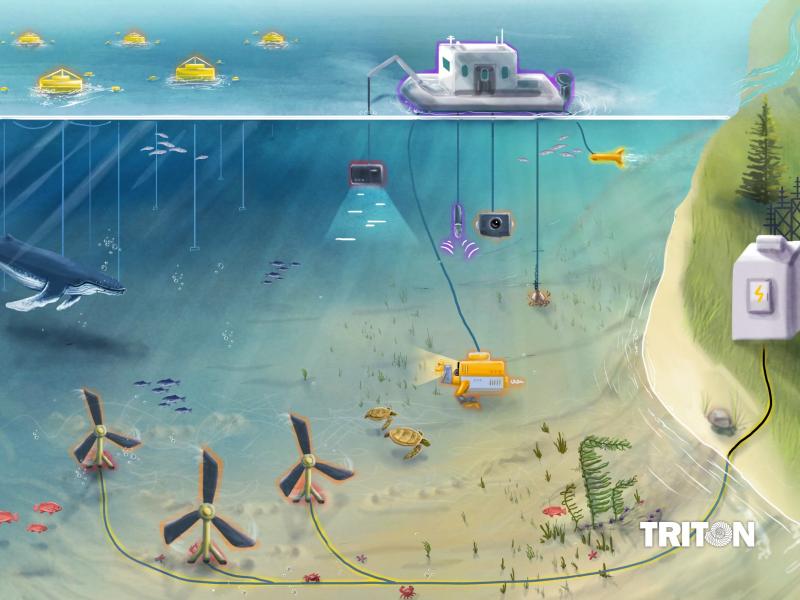
The Triton Initiative highlights different creative science communications, including photography, writing, and science art, and the impact they have on the project's marine energy research.
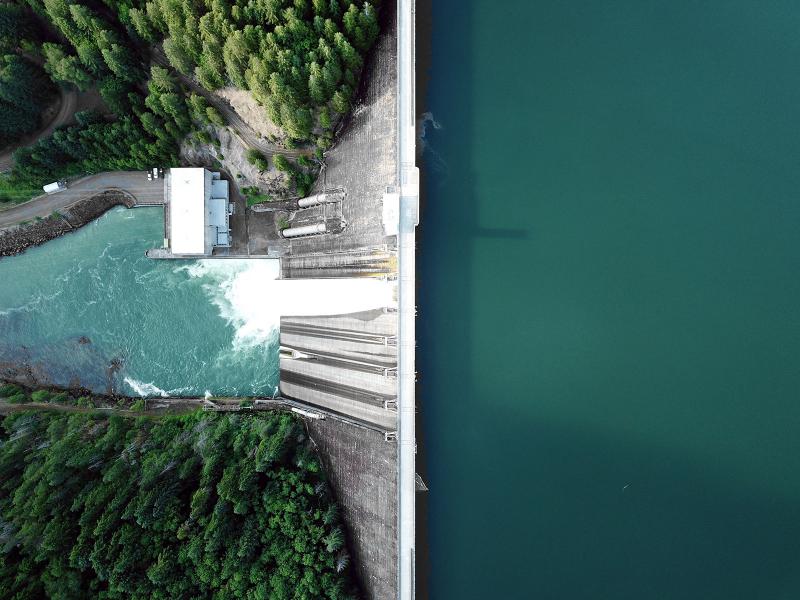
A new PNNL study quantifies hydropower's contribution to grid stability. When other power sources go out, hydropower can ramp up, recoup shortfalls, and stabilize the grid nearly instantaneously.
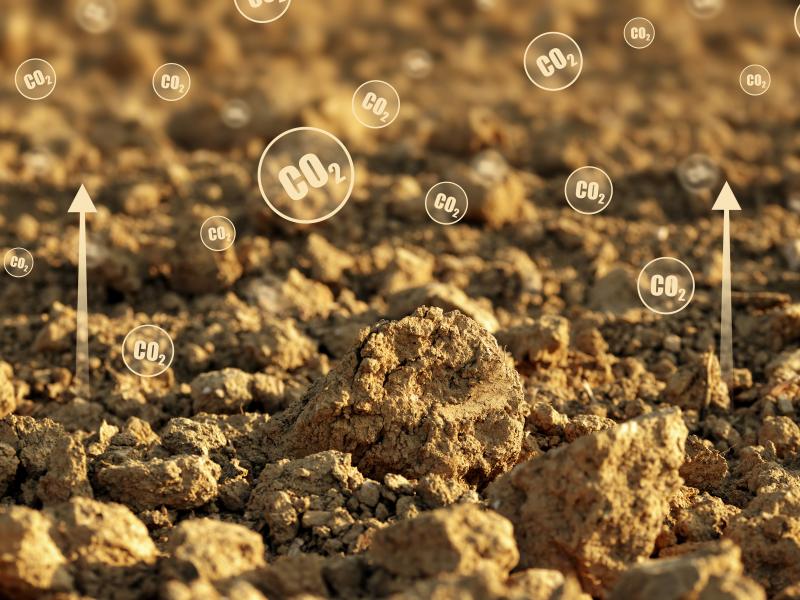
Developing conceptual models for microbial-environmental–ecosystem interactions is key to enhancing the ability of models to predict future ecosystem function.