PNNL’s Patrick Balducci delivered an information-packed tutorial on grid energy storage valuation at the Naval Postgraduate School in Monterey, California.
Ten staff members from PNNL were invited to attend and lead the various breakout sessions at the Department of Energy Office of Science 5G Enabled Energy Innovation Workshop (5GEEIW), which was held in early March.
At PNNL, subsurface science inhabits two separate but interlocking worlds. One looks at basic science, the other at applied science and engineering. Both are funded by the U.S. Department of Energy (DOE).
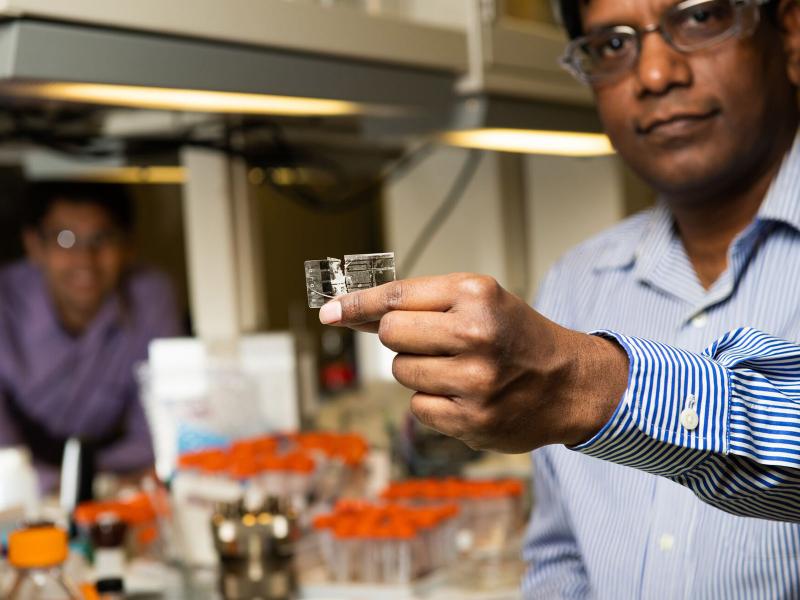
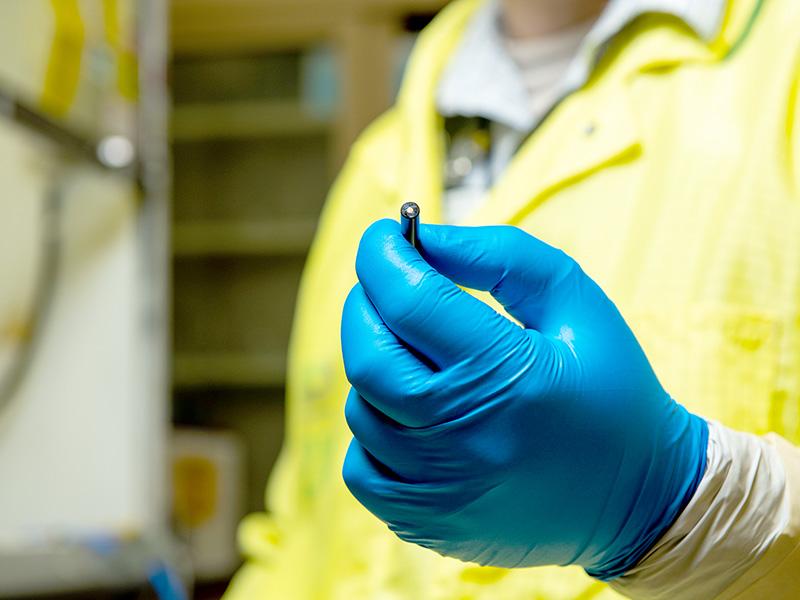
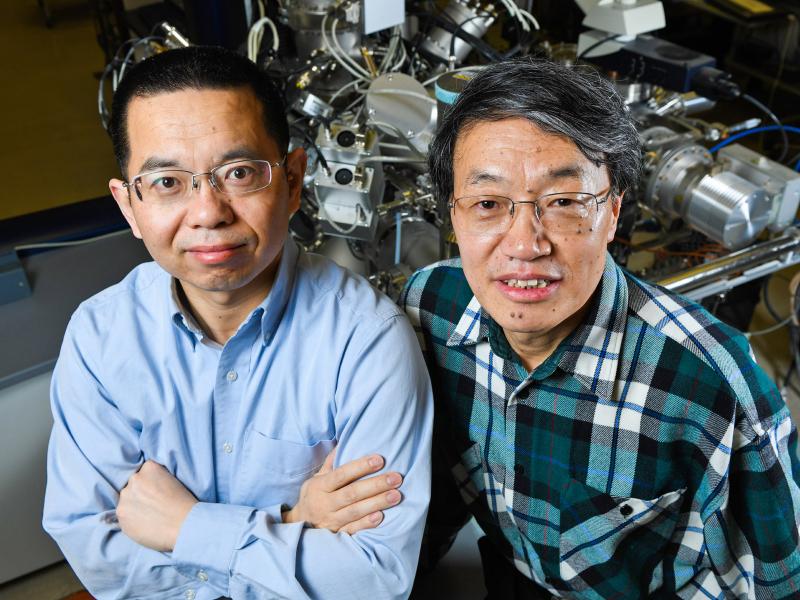
Existing techniques to detect pertechnetate in the environment have drawbacks. PNNL’s redox sensor technology uses a gold probe to accurately and efficiently measure low levels of pertechnetate—and possibly other contaminants—in groundwater
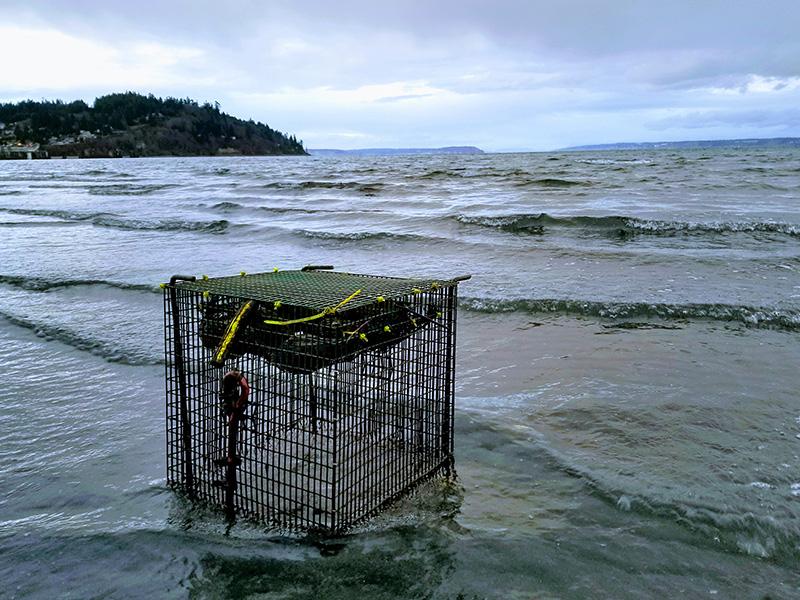
With the help of a diagnostic tool called the Salish Sea Model, researchers found that toxic contaminant hotspots in the Puget Sound are tied to localized lack of water circulation and cumulative effects from multiple sources.
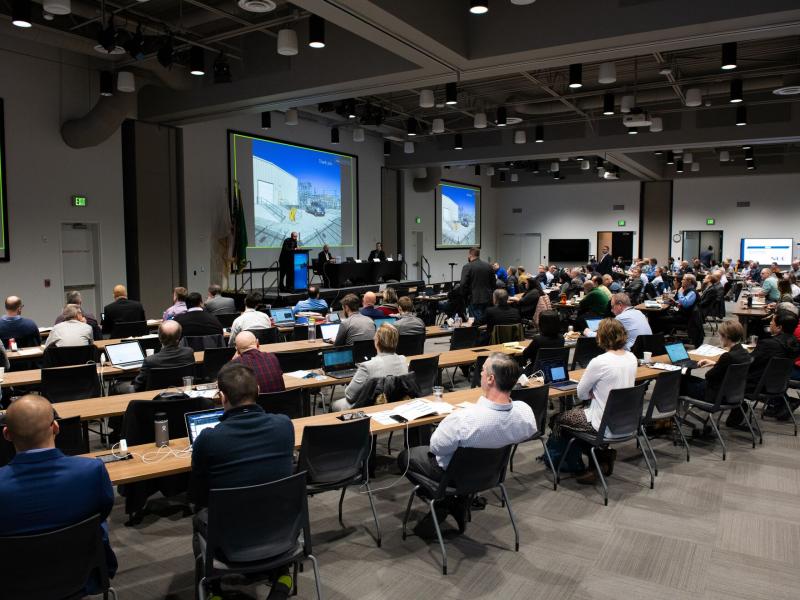
The Energy Storage System Safety and Reliability Forum at PNNL brought together more than 120 energy storage experts from the U.S. Department of Energy, the national laboratories, utilities, industry and academia.
Verizon recently announced a partnership that will make Pacific Northwest National Laboratory the U.S. Department of Energy’s first national laboratory with Verizon 5G ultra wideband wireless technology.
David Manz, a PNNL cybersecurity scientist working to build more resilient architectures for the nation’s critical infrastructure, was inducted to the National Science Foundation’s CyberCorps: Scholarship for Service (SFS) Hall of Fame.
PNNL’s Juliet Homer was an invited panelist at a California Energy Commission workshop, which highlighted research on water treatment, delivery, and energy.
In a special edition of the Journal of Information Warfare, Pacific Northwest National Laboratory researchers explore the revolution of technologies defending the nation’s critical infrastructure.
PNNL and the 13 other national laboratories of the Grid Modernization Laboratory Consortium (GMLC) will be sharing their R&D work and technologies for grid modernization at DistribuTECH International in San Antonio Jan. 28-30.
Sonja Glavaski and Kevin Schneider, both electrical engineers at PNNL, have been named as IEEE fellows. IEEE is the world's largest technical professional organization dedicated to advancing technology for the benefit of humanity.
PNNL will lead three new grid modernization projects funded by the Department of Energy. The projects focus on scalability and usability, networked microgrids, and machine learning for a more resilient, flexible and secure power grid.
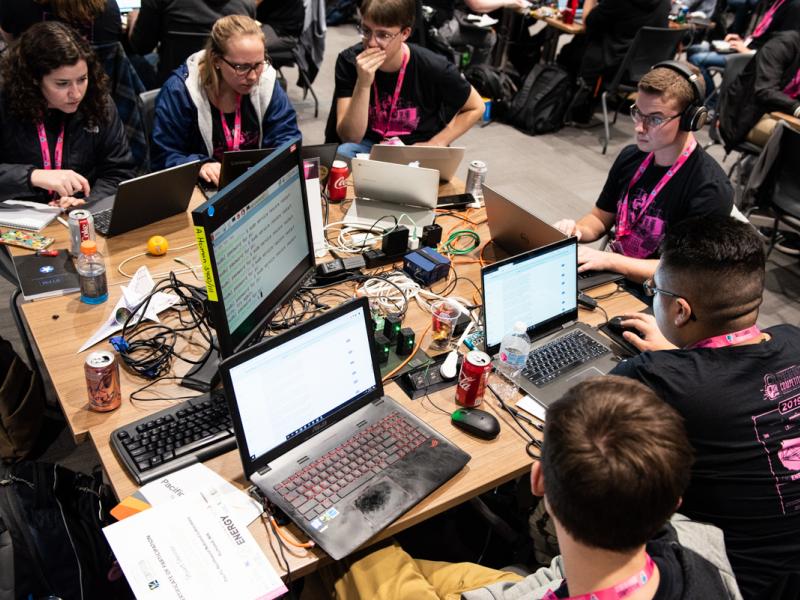
Seventeen teams from regional colleges and universities gathered at PNNL Nov. 16 to put their cyber skills to the test by protecting critical energy infrastructure against simulated cyberattacks as part of DOE's CyberForce Competition.