Advancing the science of radiation, especially among students at minority-serving institutions, is the goal of one of the Department of Energy’s newest consortia.
Kate Doty was invited to lend her expertise as guest editor for the International Journal of Nuclear Security on a special issue on women in nuclear security.
Twenty years after the first radiation portal monitor was installed, PNNL continues supporting the Department of Homeland Security’s efforts to detect and prevent terrorist weapons from crossing our borders.
PNNL research, featured on the cover of two science journals, describes advancements in using Raman spectrometry for Hanford Site nuclear waste remediation.
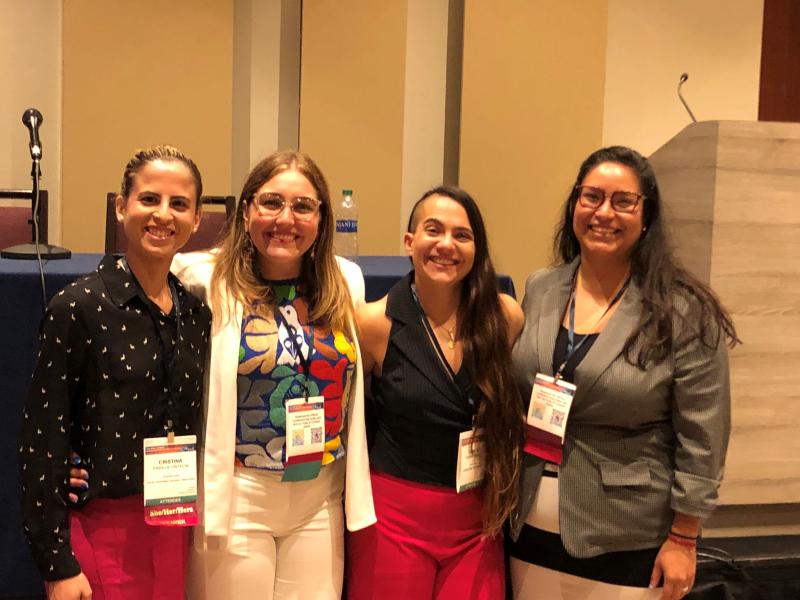
The American Chemical Society Richland Section has been recognized by its national organization with the Best Overall Section Minority Affairs award for 2022.
Nonproliferation Policy and Law Analyst, Chanel Chauvet, served as the legal expert in the International Atomic Energy Agency's effort to update Uzbekistan's Integrated Nuclear Security Support Plan.
John VerWey, East Asia national security advisor, delivered remarks on competition in global supply chains at a U.S.-China Economic Security Review Commission hearing in June 2022.
A paper from PNNL and Southern California Edison describing new methodologies for assessing electric vehicle impacts to the grid was selected as a best paper by IEEE.
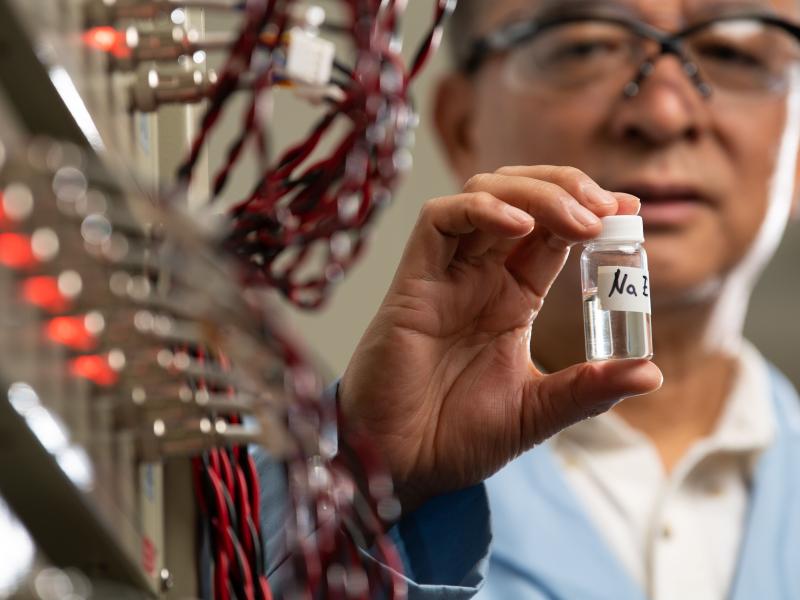
A new longer-lasting sodium-ion battery design is much more durable and reliable in lab tests. After 300 charging cycles, it retained 90 percent of its charging capacity.
Arun Veeramany furthers the field of risk, reliability, and resilience in civil and mechanical engineering in his new role as an American Society of Civil Engineers-American Society of Mechanical Engineers journal editorial board member.