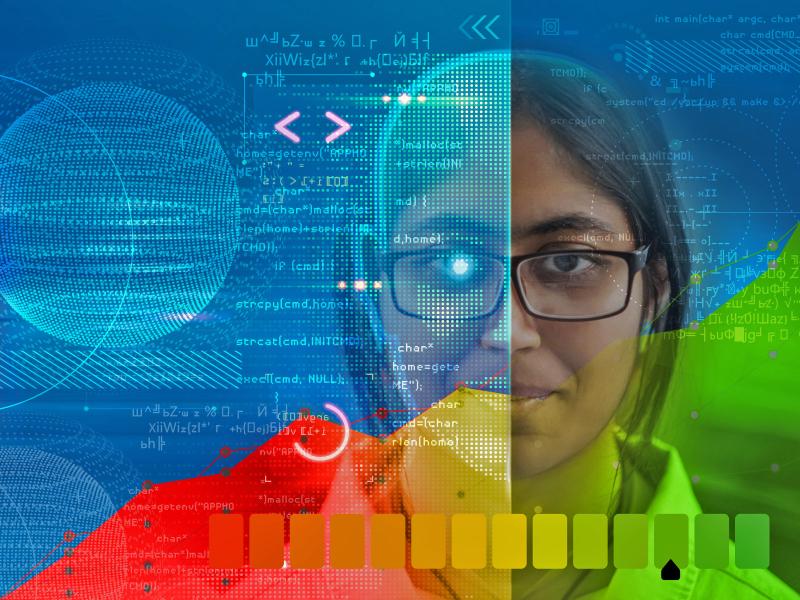
Steven Spurgeon’s research is featured in the cover of the MRS Bulletin along with his team’s invited perspective on the future of machine learning for electron and scanning probe microscopy.
As leaders in AI and machine learning, PNNL experts are sharing their latest findings at the 36th annual Neural Information Processing Systems (NeurIPS) Conference, Nov. 28–Dec. 9, 2022.
A new web-based tool provides easy-to-understand progress metrics and other data about groundwater cleanup sites overseen by the DOE Office of Environmental Management.
Scientists are pioneering approaches in the branch of artificial intelligence known as machine learning to design and train computer software programs that guide the development of new manufacturing processes.
Diefenderfer, Earth scientist who focuses on coastal ecosystems at PNNL, recently published “Ten Years of Gulf Coast Ecosystem Restoration Projects Since the Deepwater Horizon Oil Spill,” a cover article.
Eight PNNL research papers were recognized by the 2022 Waste Management Symposia as “Papers of Note” and “Superior.” One paper received a Best Oral Paper/Presentation Award.
PNNL scientists have proposed an "adaptive site management" cleanup strategy for the Hanford Site's Central Plateau that incorporates a structured, flexible approach to environmental remediation.
Sue Southard's one thousand dives as a PNNL staff member leave a ripple effect on efforts to keep our ocean healthy, our economy thriving, and our waters safe.
A PNNL team is leading the design, fabrication, and regulatory testing, and delivery of new packaging units that will be used to ship radioactive materials safely and securely.
PNNL Chief Scientist for Computing Jim Ang will be part of a DOE Office of Science virtual discussion regarding industry collaborations on AI hardware.