Researchers created the first four-dimensional whole-cell model of a photosynthetic microbe, revealing how a protein complex helps the cell adjust to changing light.
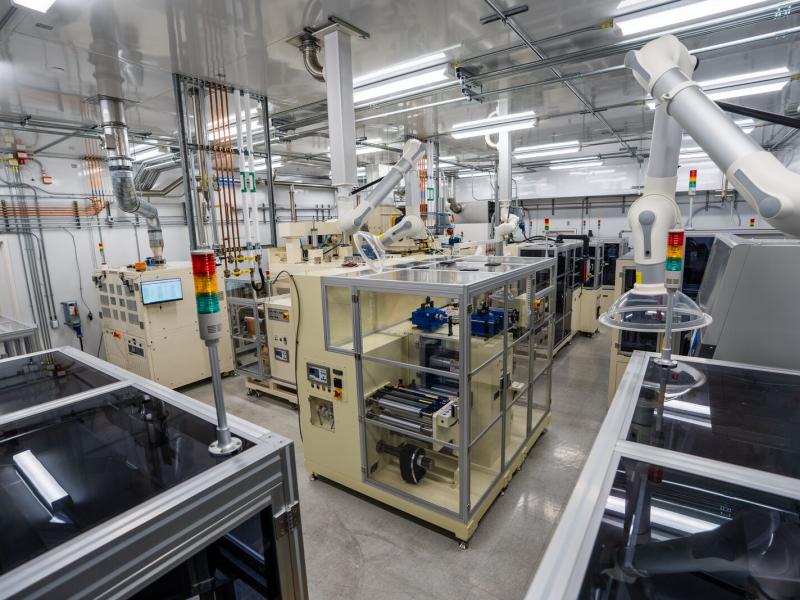
The Battery Manufacturing Accelerator will integrate Super Intelligence and advanced manufacturing to speed energy storage innovation from lab to market.
The Microbial Molecular Phenotyping Capability has been designed to transform how we could put microbes to work for American manufacturing competitiveness and human health advances, among other benefits.
Scientists combined detailed images and coordinated time-series multiomics data to show how protein complexes regulate carbon fixation as light conditions change.
An AI agent that can auto-tune an amplifier could speed up quantum computing development and dark matter discovery. Researchers at PNNL are working to find out with a Genesis Mission–funded project.
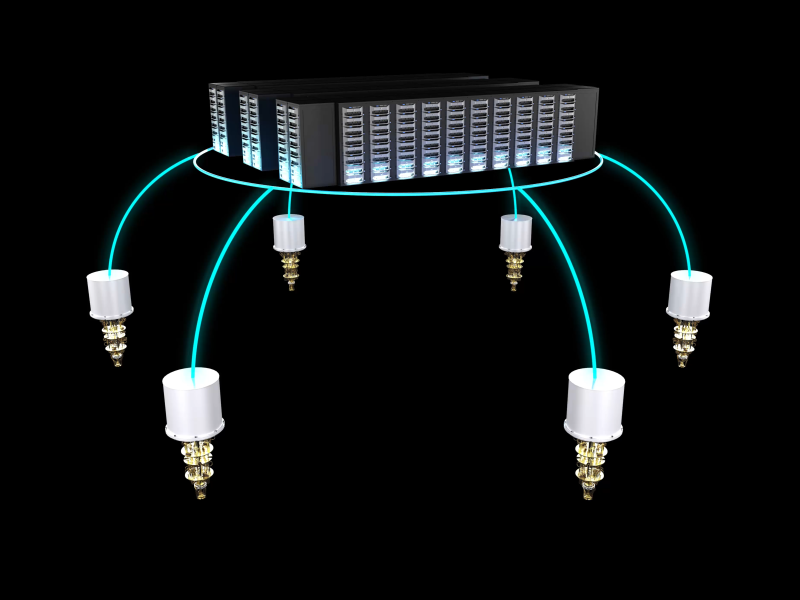
PNNL convenes leaders from the Department of Energy, national laboratories, computing industry and academia for a two-day workshop to advance quantum computing for computational chemistry.
A research team from Pacific Northwest National Laboratory used machine reasoning to schedule scientific workflows while guaranteeing quality of service (QoS).
Researchers at PNNL have developed an interpretable, lightweight AI model that can easily predict weld microstructure features using only basic machine sensor inputs.
PNNL researchers highlighted advances in AI for scientific discovery at the AI+ Expo, showcasing generative AI, autonomous research workflows, and scalable AI systems supporting energy, security, and national competitiveness.