August 24, 2026
News Release

Airline Passengers Face Fewer Bag Checkpoints, Thanks to PNNL, Partners

National lab works with partners to streamline baggage screening 

The photo shows 20-plus  people waiting in a queue inside an airport, most with their backs toward the camera.

Many airline passengers arriving in the United States are no longer required to stand in long lines and can now move more swiftly through the airport,  since additional baggage screening has already occurred during their flight.

(Photo by Vinnikava Viktoryia | Shutterstock.com)

RICHLAND, Wash. — Passengers on some U.S.-bound flights from Asia and Europe are finding the U.S. Customs and Border Protection process more efficient, thanks to a partnership between several federal agencies, airlines and the Department of Energy’s Pacific Northwest National Laboratory.

A new system screens and analyzes checked baggage before it lands in the United States, minimizing the need for passengers on some connecting flights to retrieve their bags and put them through security again. Instead, their bags are forwarded directly to their next flight with no need for additional inspection, unless specifically referred by CBP for further inspection.

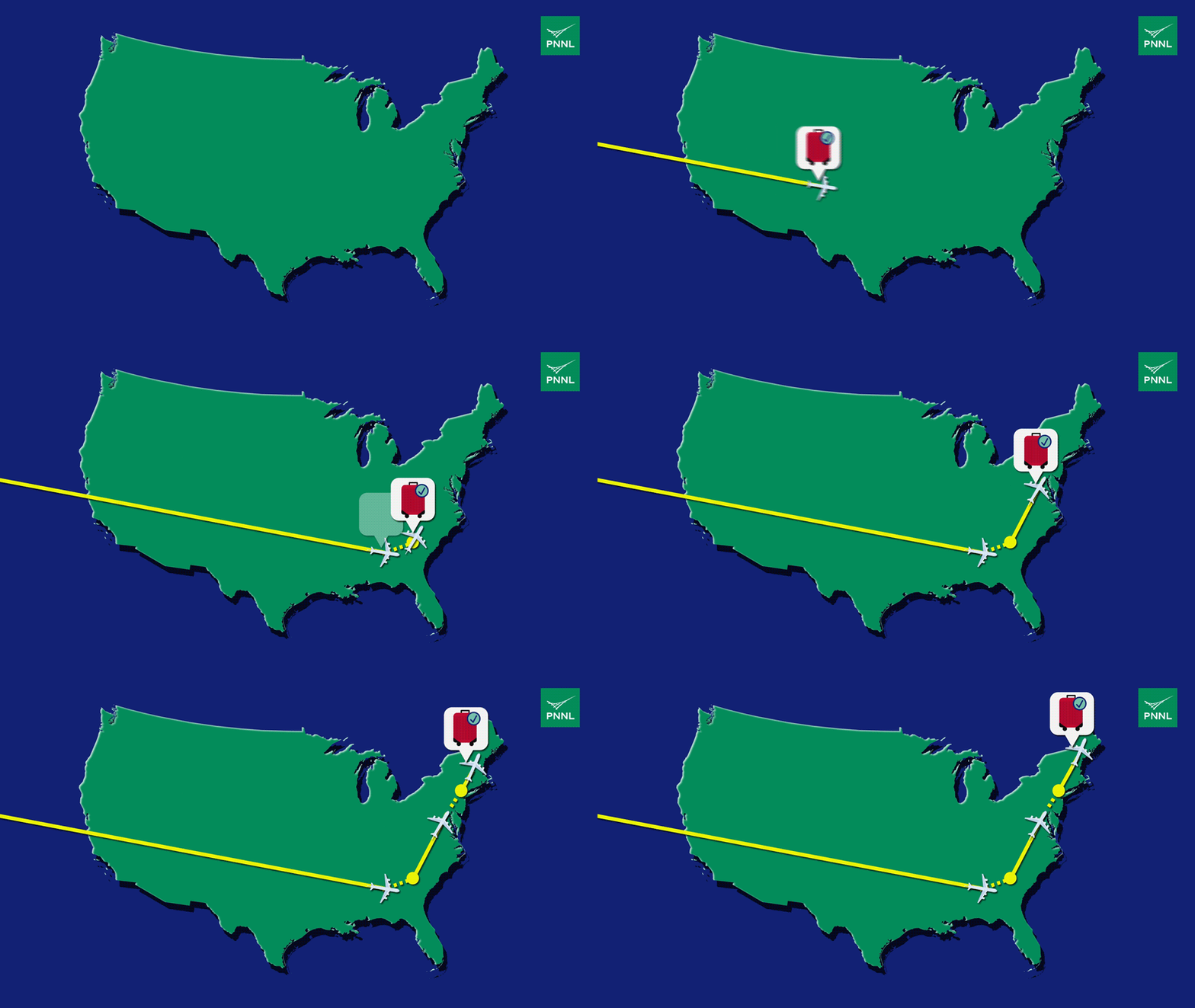
The animation shows a yellow arrow depicting a flight arriving in the U.S. from the west, landing in the southeastern U.S., , then going on to additional destinations in the northeastern U.S.
Animation by Sara Levine | Pacific Northwest National Laboratory

In the past year, the new system has been implemented on several international routes, including flights arriving at Hartsfield-Jackson Atlanta International Airport from London-Heathrow and Seoul and on arrivals in Minneapolis-St. Paul and Detroit from Seoul.

The effort to create the International Remote Baggage Screening system, or IRBS, was led by CBP and the Transportation Security Administration, along with airline partners including Korean Air, Virgin Atlantic and Delta Air Lines. The research supports TSA’s One Stop Security program to improve the passenger experience by removing the need for some international passengers to recheck their luggage when they arrive in the United States.

The development shifts some screening from the ground, where it has been necessary for some passengers to navigate an additional checkpoint, to the air while the plane is in flight.

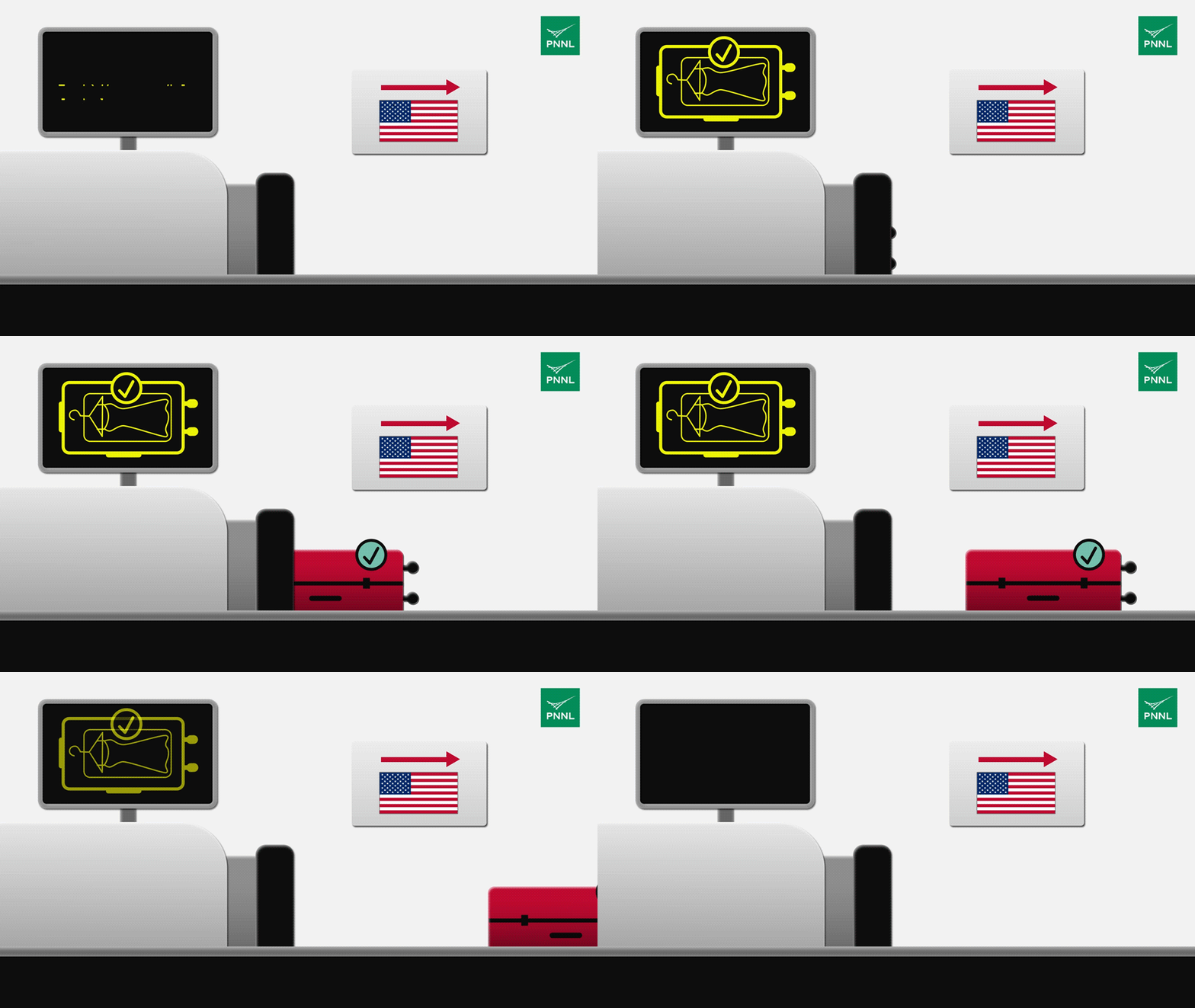
The animation shows a red suitcase on a belt, moving from left to right, exiting a scanner and then on its way to the U.S., signified by a U.S. flag and an arrow.
Animation by Sara Levine | Pacific Northwest National Laboratory

PNNL’s role in the program draws upon its decades of experience developing new technologies to keep airline travel safe. For example, the Laboratory’s millimeter-wave technology screens passengers in most of the world’s airports. Laboratory scientists and engineers also do extensive research in data analytics, bringing together multiple feeds of information and drawing conclusions through its analysis.

PNNL weaves this into its long history of working with international partners on complex problems to come up with mutually beneficial solutions. In this case, PNNL scientists and engineers worked with multiple U.S. agencies, governing bodies from other nations, and security organizations to create agreements to work together, ensure security safety and respect the privacy laws and requirements of all partners.

###

About PNNL

Pacific Northwest National Laboratory draws on its distinguishing strengths in chemistry, Earth sciences, biology and data science to advance scientific knowledge and address challenges in energy resiliency and national security. Founded in 1965, PNNL is operated by Battelle and supported by the Office of Science of the U.S. Department of Energy. The Office of Science is the single largest supporter of basic research in the physical sciences in the United States and is working to address some of the most pressing challenges of our time. For more information, visit the DOE Office of Science website. For more information on PNNL, visit PNNL's News Center. Follow us on Twitter, Facebook, LinkedIn and Instagram.

Published: August 24, 2026