PNNL has developed a next-generation electrical resistivity tomography system for DOE that uses E4D software and AI-enhanced modeling to produce real-time subsurface images that help guide environmental remediation decisions.
From developing new energy storage materials to revealing patterns of Earth’s complex systems, studies led by PNNL researchers are recognized for their innovation and influence.
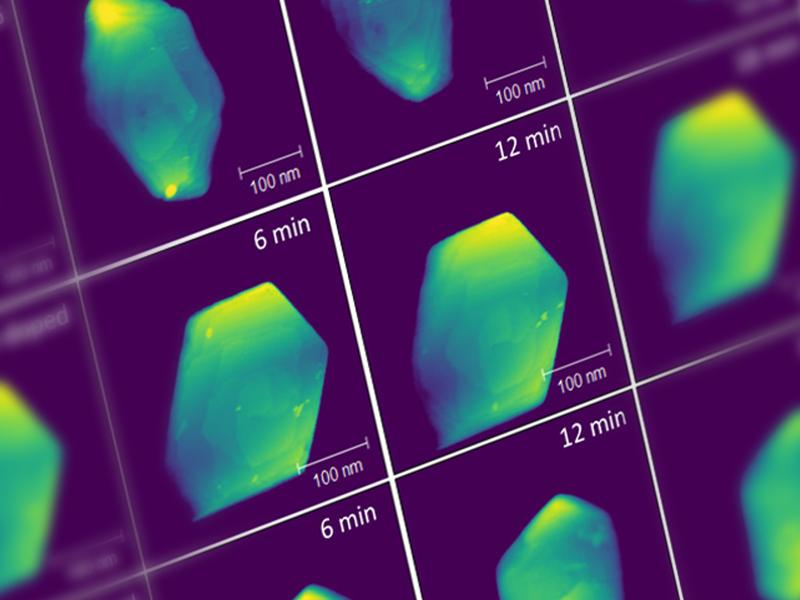
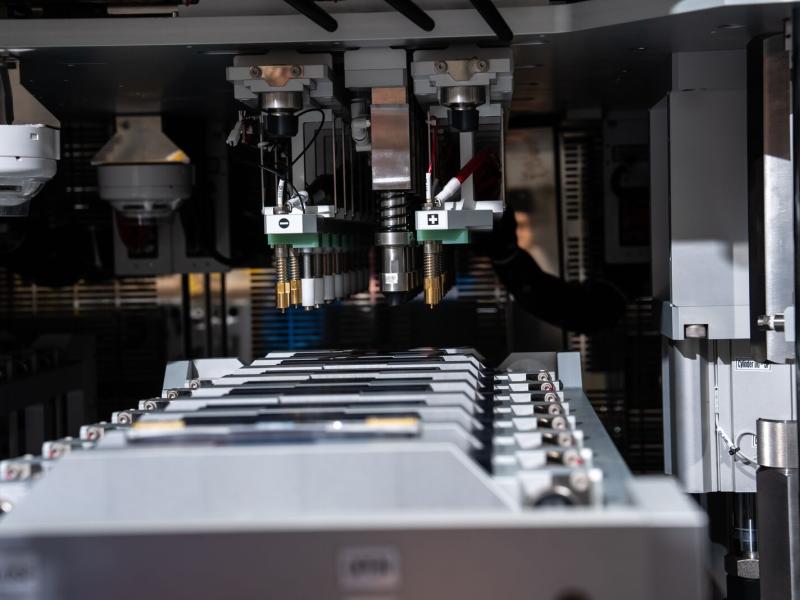
Ampcera has an exclusive licensing agreement with PNNL to commercially develop and license a new battery material for applications such as vehicles and personal electronics.
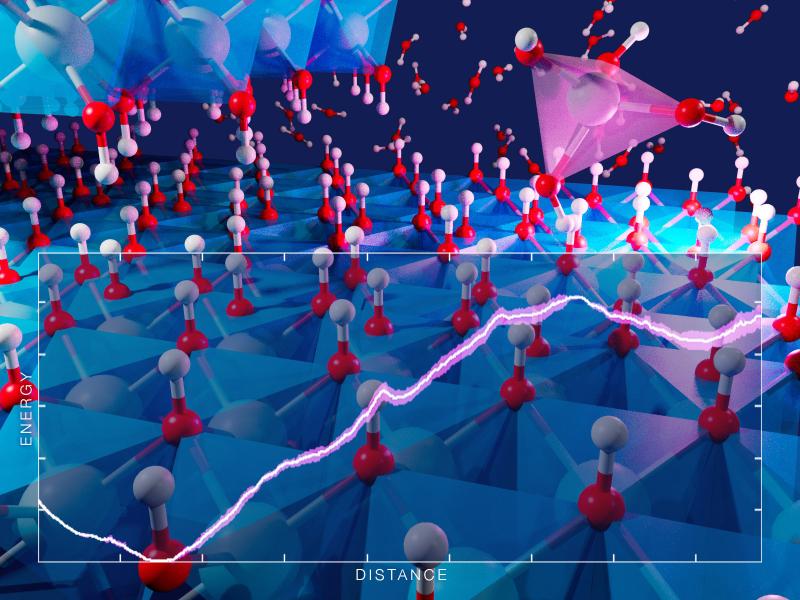
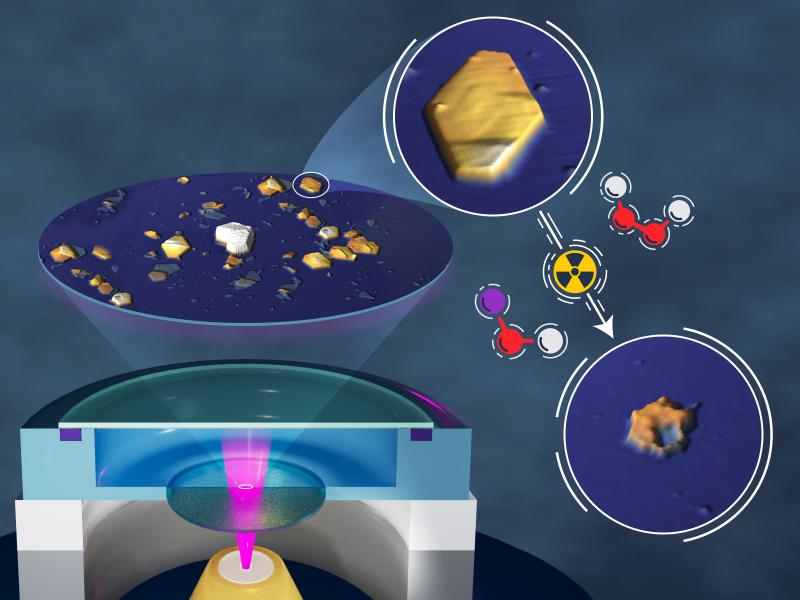
To improve our ability to “see” into the subsurface, scientists need to understand how different mineral surfaces respond to electrical signals at the molecular scale.
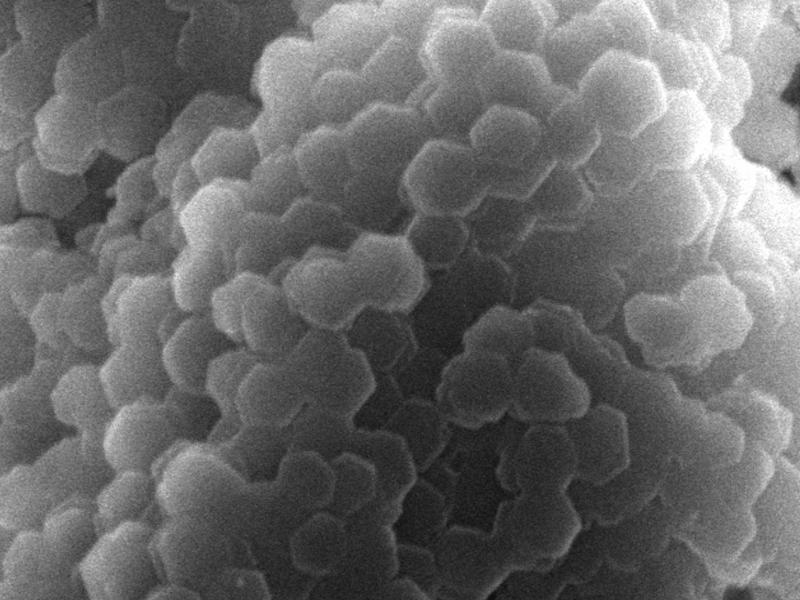
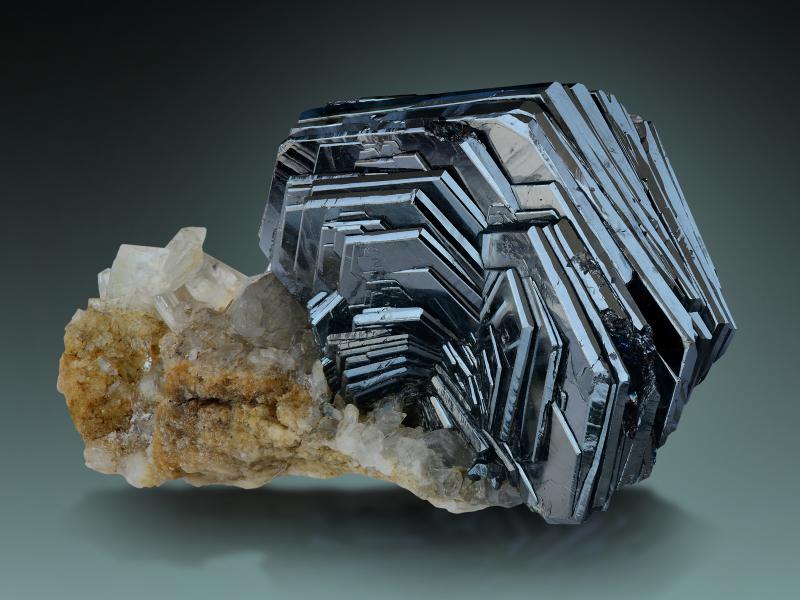
Researchers investigated how stable nanoparticle suspensions form using facet engineering on hematite nanoparticles, demonstrating that controlling the faceting of nanoparticles can effectively maintain particle dispersity.
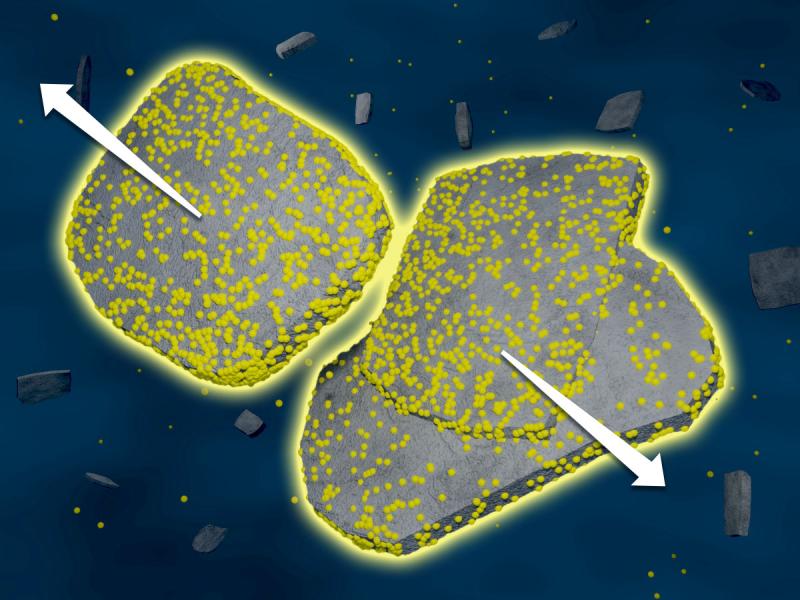
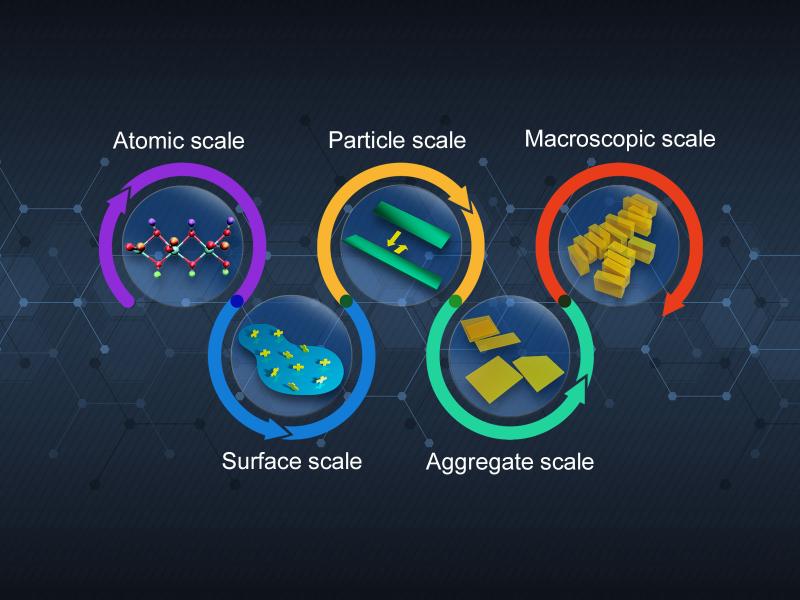
Resolving how nanoparticles come together is important for industry and environmental remediation. New work predicts nanoparticle aggregation behavior across a wide range of scales for the first time.
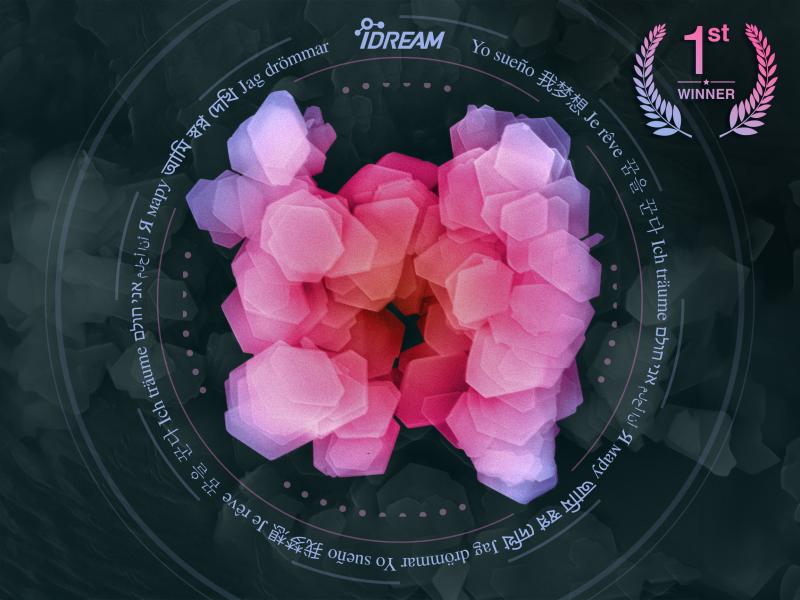
A poem inspired by radioactive tank waste—“Can a Scientist Dream it Alone?”—was awarded first place in the Department of Energy’s Poetry of Science Art Contest.