PNNL researchers used the Global Change Analysis Model (GCAM) to explore 15 different global scenarios that consisted of combinations of five different socioeconomic futures and four different climatic futures.
A team of researchers led by scientists from PNNL simulated carbon cycling and community composition during 100 years of forest regrowth following disturbance.
This study examines the roles of the semi-annual variation of solar radiation and soil moisture on the Madden-Julian Oscillation (MJO) propagation across the Maritime Continent islands.
University of Maryland, NASA Goddard Space Flight Center, and PNNL scientists explored how radiation-cloud-convection-circulation interactions (RC3I) affect the Intertropical Convergence Zone (ITCZ) and circulation at the global scale.
A study led by scientists at PNNL points to a new frontier for understanding the coupled climate system from the perspective of a nonlinear dynamical system.
By quantifying the contribution of snowpack to runoff and extreme flooding in mountainous regions in the western United States, PNNL researchers provided a unified view of the interactions between snowpack and precipitation.
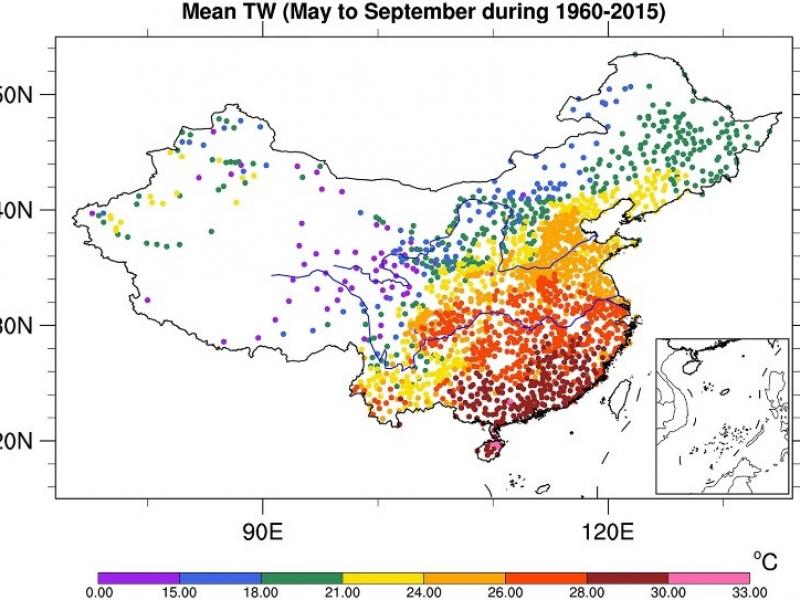
This study explores the relative role of temperature and humidity in extreme wet-bulb events and spurs further research into how these factors may change the frequency and intensity of life-threatening events in the future.