How Can Biology Help Recover Critical Minerals?
Table of Contents
- What is bio-enabled critical mineral recovery?
- Why use biology to recover critical minerals?
- How do biological systems recover critical minerals?
- Where could bio-enabled recovery be used?
- What challenges must researchers solve?
- Critical mineral recovery research at PNNL
- EMSL: user facility at PNNL with opportunities for critical minerals research
What is bio-enabled critical mineral recovery?
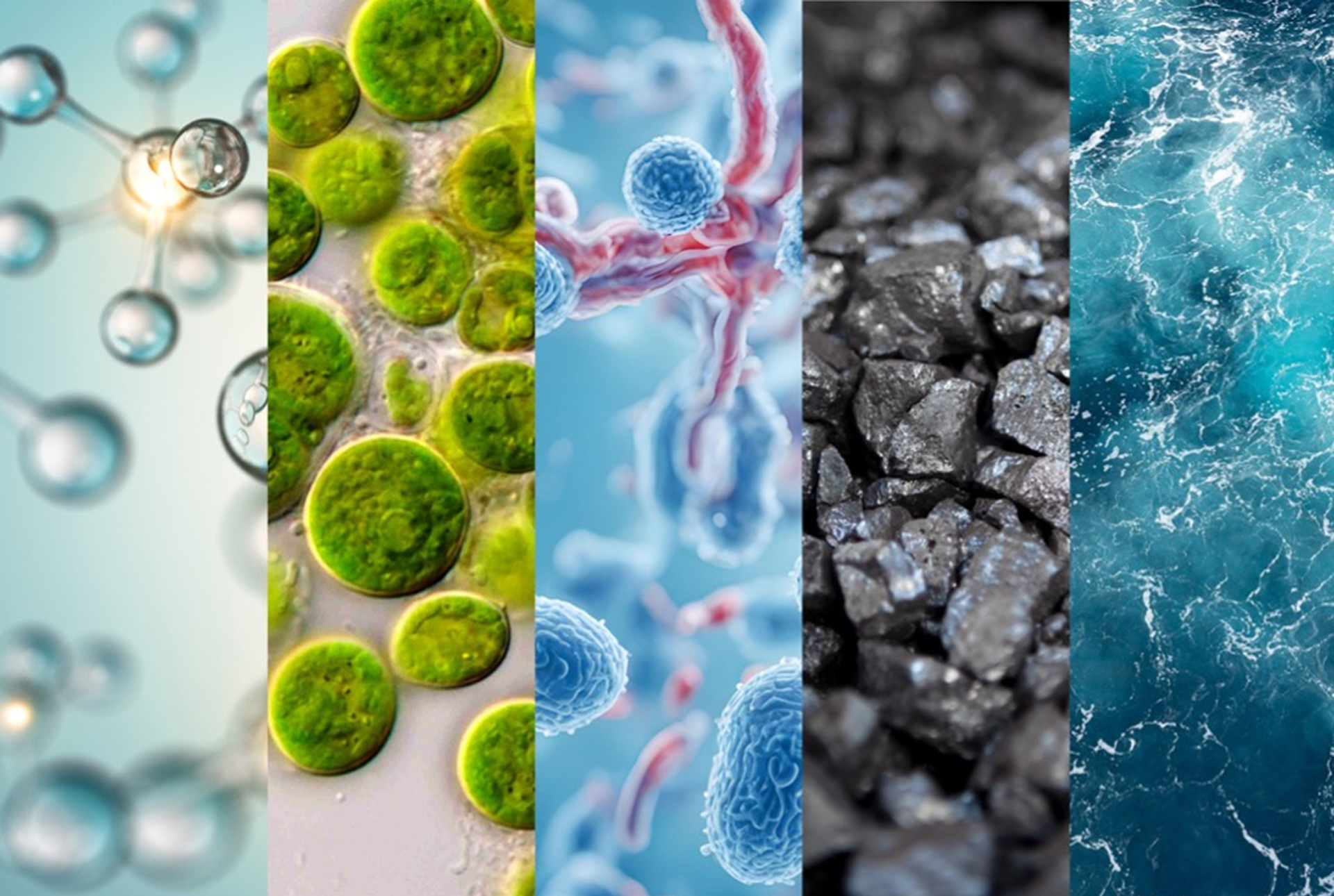
Bio-enabled critical mineral recovery uses living organisms, biological molecules, or processes inspired by biology to extract, separate, and concentrate critical minerals. These approaches may use microbes to release metals from rocks, algae to accumulate elements from water, or engineered proteins to capture a specific metal from a complex mixture.
Critical minerals are essential to technologies used in energy, transportation, electronics, communications, manufacturing, and national security. They include rare earth elements such as neodymium and dysprosium, as well as lithium, cobalt, nickel, copper, and manganese.
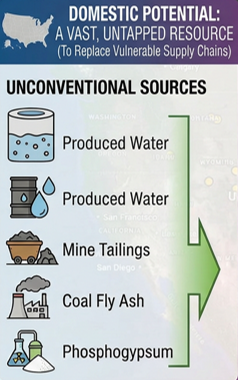
Critical minerals have traditionally been extracted from ore bodies where valuable elements are concentrated enough to mine economically. Researchers are now also examining secondary and unconventional sources, such as mine waste, industrial residues, brines, and seawater where the concentrations of critical minerals are typically much lower than primary sources (mineral deposits). Because target elements in these materials may occur at low concentrations or alongside many other substances, each source may require a different combination of extraction, separation, concentration, and purification methods.
Biology offers another set of tools. Organisms have evolved ways to sense, bind, transport, transform, store, and tolerate metals. Researchers are working to understand these mechanisms and adapt them for critical mineral extraction and separation.
Why use biology to recover critical minerals?
Biological approaches could help recover critical minerals from sources that are too dilute or chemically complex for conventional methods alone.
Potential sources include low-grade ores, mine tailings, industrial residues, produced waters, geothermal brines, acid mine drainage, electronic waste, and seawater. Biological systems may complement established extraction methods by operating under relatively mild conditions and recognizing particular elements within complex mixtures.
This selectivity is especially important for rare earth elements, which have similar chemical properties and can be difficult to separate. Some proteins and other biologically produced molecules contain binding sites that favor one metal ion over another. Researchers could potentially use or engineer this molecular recognition to capture a target element while leaving unwanted elements behind.
Bio-enabled processes are not automatically more efficient, economical, or sustainable. Researchers must evaluate the entire process, including its energy and water use, recovery rate, product purity, reagent requirements, waste generation, and ability to reuse biological components.
How do biological systems recover critical minerals?
Bio-enabled recovery generally involves three processes: liberate the metal from the source material (release) by dissolutions and/or complexation, selectively separate the metal/material from competing elements, and concentrate and recover a purified product. Different biological systems can contribute at each stage.
Releasing minerals with bioleaching
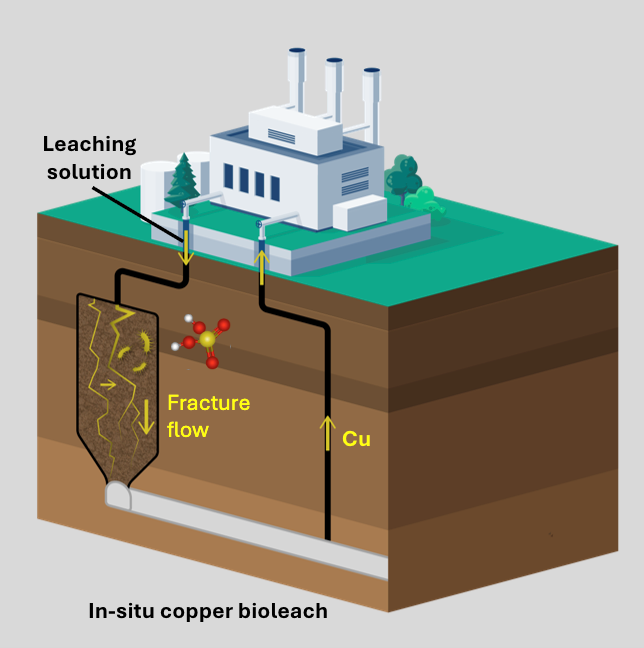
In bioleaching, microbes or biologically produced compounds help dissolve minerals and release metal ions into a liquid. Microbes can produce acids, transfer electrons, or alter the chemical form of a metal or surrounding mineral.
Mineral composition, temperature, acidity, oxygen, nutrients, fluid flow, and microbial metabolism can all affect the rate of release. Understanding these interactions helps researchers predict whether a biological process could work beyond a laboratory experiment.
Capturing and concentrating metals
In biosorption, metals bind to chemical groups on a cell surface, biofilm, or nonliving biological material. In bioaccumulation, a living organism transports metals into its cells and may store them in specific locations. Algae and seaweed, for example, can concentrate certain elements from water in their tissues.
Biological activity can also cause dissolved elements to form solid mineral phases through biomineralization. Depending on the goal, this process could immobilize an unwanted element or concentrate a target element in a recoverable solid.
Separating similar elements
Proteins, peptides, and other biological molecules can distinguish among metal ions based on characteristics such as size, charge, shape, and chemical bonding. Metallophores, for example, are small molecules that organisms produce to (selectively and non-selectively) bind and acquire metals.
Researchers are identifying the molecular features responsible for metal recognition and engineering them to improve selectivity, binding strength, stability, or release. A useful recovery material must capture the target element and then release it under controlled conditions so the element can be collected and the material potentially reused.
Using immobilization, continuous bioreactors, and bioelectrochemical systems
Cells or biomolecules can be immobilized—or attached to solid supports—inside a bioreactor. A metal-containing liquid can then flow through the system while the biological material binds, accumulates, or transforms target elements. Immobilization can help retain and protect the biological component and enable continuous processing.
Bioelectrochemical systems combine biological activity with electrodes or other conductive materials. Because some microbes exchange electrons with minerals and conductive surfaces, researchers can adjust electrical conditions to influence whether an element dissolves into a liquid or forms a recoverable solid.
Where could bio-enabled critical mineral recovery be used?
Bio-enabled approaches could be applied across three broad types of feedstocks:
- Terrestrial feedstocks, including low-grade ores, mine tailings, mineral-rich soils, and other solid wastes
- Marine feedstocks, including seawater and marine biomass
- Pre-concentrated feedstocks, including produced water, geothermal brines, acid mine drainage, industrial wastewater, and recycled materials.
Bio-enabled technologies could improve individual stages of critical mineral recovery. For example, researchers can use microbes to release metals from solids, plants or algae to concentrate elements, or proteins to separate similar metals from mixed solutions. PNNL is developing adaptable capabilities that can be tailored to different feedstocks and recovery needs. These technologies could make individual steps more efficient and eventually be combined into integrated bioprocesses that support the recovery of critical minerals and materials from complex resources and waste streams.
These approaches may be particularly valuable when target elements occur at low concentrations or must be separated from elements with similar chemical properties.
What challenges must researchers solve?
A biological system that works in a controlled experiment may not perform as effectively with large volumes of complex, real-world material. Key research challenges include:
- Selectivity: A microbe or protein that recognizes a target element in a simple solution may capture competing elements in a realistic feedstock.
- Stability and tolerance: High metal concentrations, contaminants, and changing conditions can inhibit cells or reduce the effectiveness of engineered biological traits.
- Rate and capacity: A practical system must capture enough material at a useful rate and continue functioning through repeated cycles.
- Mineral release and reuse: The target element must be removed from the biological material so both can be recovered and, when possible, the material reused.
- Scale and process integration: Biological extraction must connect with separation, purification, waste management, and production of a usable material.
- Consistent measurement: Shared methods are needed to compare selectivity, capacity, speed, stability, and total recovery across biological systems and feedstocks.
Critical mineral recovery research at PNNL
PNNL is helping lead the development of bio-enabled critical mineral recovery by combining biology, chemistry, Earth and marine sciences, data science, and engineering.
Researchers investigate the mechanisms operating where microbes, minerals, and water meet. These interfaces determine how organisms release, bind, transport, and store critical minerals. PNNL applies this mechanistic knowledge across terrestrial feedstocks such as ores and mine wastes, marine sources such as seawater, and pre-concentrated streams such as brines and industrial wastewater.
Engineering microbes to recover rare earth elements
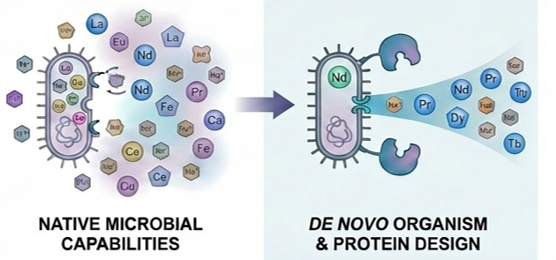
PNNL researchers are investigating how microbes bind, transport, concentrate, store, and release rare earth elements. This work uses synthetic biology to develop microbial chassis—organisms that serve as platforms for engineered biological functions—and artificial intelligence to improve individual components. The goal is to establish design principles for microbial systems that could recover rare earth elements from dilute, chemically complex sources.
Discovering and designing selective metal-binding proteins
Microorganisms produce proteins that recognize and bind metals, but much of this biological diversity remains unexplored. PNNL researchers combine environmental genetic data, predictive modeling, field sampling, and molecular characterization to discover proteins that interact with rare earth elements.
Artificial intelligence can help predict protein structures and design binding sites that favor a particular element. Machine learning can also connect environmental and geologic data with microbial genes, helping researchers identify locations likely to contain organisms with useful metal-binding functions. Promising proteins could inform the development of reusable materials that selectively capture and separate elements from mixed solutions.
Concentrating critical minerals with algae and seaweed
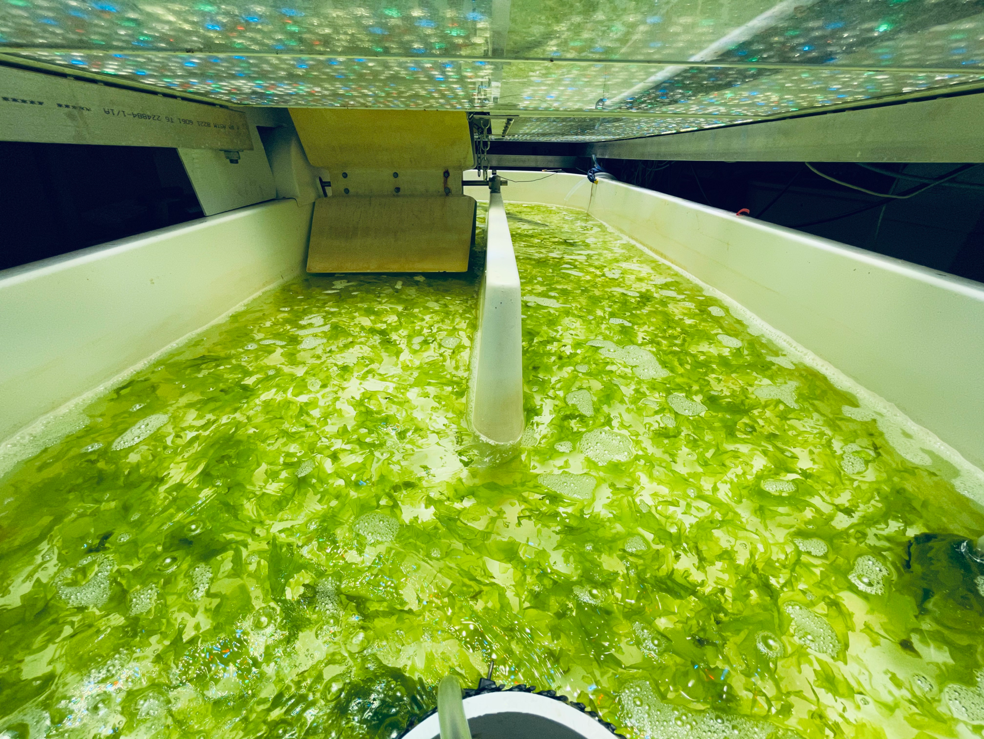
At PNNL-Sequim, researchers study how seaweed and microalgae accumulate critical minerals from seawater, geothermal brines, and other saline or aquatic sources. Some species can concentrate elements by several orders of magnitude, transferring them from highly dilute water into biomass that can be collected and processed.
High-throughput screening allows researchers to compare algae with different mineral-accumulation abilities and tolerance to challenging conditions. Researchers are also developing methods to release, further concentrate, and separate the accumulated elements.
Advancing biological lithium recovery
PNNL is exploring how engineered proteins and naturally occurring microbes could help recover lithium from brines and industrial/electronic waste streams. AI and computational modeling can help researchers redesign protein-binding sites to favor lithium over competing ions. Experimental results can then inform subsequent rounds of protein design.
Researchers are also identifying microbial pathways involved in lithium accumulation and developing imaging technologies to observe how lithium binds to and moves through cells. These insights could support selective and reusable lithium recovery systems.
Developing continuous and bioelectrochemical recovery systems
PNNL researchers are studying how cells, proteins, and biofilms could be immobilized in reactors that process a continuous flow of mineral-containing liquid. This research examines how support materials, fluid movement, biological activity, and mineral release affect recovery performance and reuse.
PNNL also investigates bioelectrochemical hybrids that combine microbial functions with controlled electrical conditions. These systems could provide another way to influence mineral dissolution, transport, separation, or formation of recoverable solids.
Accelerating discovery through autonomous phenotyping
PNNL’s automated and high-throughput research platforms can test combinations of organisms, genes, minerals, and environmental conditions. Autonomous phenotyping links these experiments with advanced measurements and AI to determine how biological traits affect metal binding, uptake, tolerance, and release.
This iterative approach can help researchers identify promising organisms and biomolecules, improve engineered systems, and determine which recovery conditions should be tested next.
EMSL: user facility at PNNL with opportunities for critical minerals research
Pacific Northwest National Laboratory is home to the Environmental Molecular Sciences Laboratory (EMSL), a Department of Energy Office of Science user facility where researchers from around the world can submit proposals to access advanced instruments and expertise in the fundamental biological, environmental, and computational sciences. EMSL’s community science campaigns bring together researchers from multiple institutions to address complex scientific challenges through coordinated projects. Several EMSL community science campaigns support critical minerals research by investigating metal-binding biomolecules, microbial and mineral interactions, plant-based mineral recovery, and AI-assisted modeling. Together, these efforts can help reveal the biological processes that control mineral extraction and separation and guide the development of future recovery technologies. Learn more about EMSL community science campaigns on the EMSL website.
* The initial draft of this document was created using ChatGPT Enterprise (GPT-5.5). The language and content were subsequently edited by the author, subject matter experts, and an editor for grammar, clarity, and accuracy. The final document was then again reviewed by the author before publishing.